























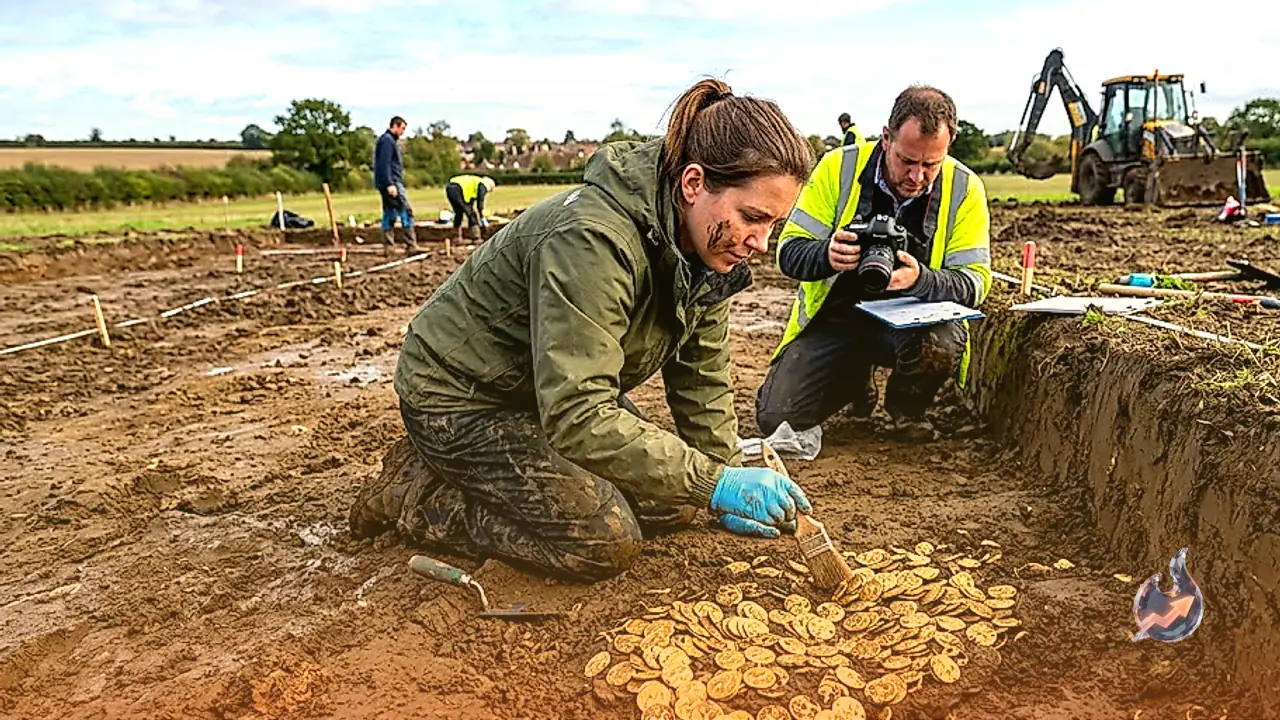

A clandestine metal detector outing in the Great Baddow area of Essex has led to an extraordinary archaeological discovery, bringing to light 933 ancient gold coins buried underground for roughly two millennia. The discovery, which has stunned historians and researchers, represents Britain's largest known hoard of Iron Age gold coins. Now formally recognised as the Great Baddow Discovery, the find provides a rare glimpse into a transformative and turbulent epoch in ancient British history.
Unauthorised Excavation and Legal Ramifications
The discovery took place on private farmland where the finder lacked permission to operate a metal detector. Compounding the issue, the discovery was not initially reported in accordance with the statutory procedures established under the Treasure Act 1996. Because of this unregulated retrieval, valuable archaeological context regarding the exact layer, arrangement, and environmental conditions of the burial was permanently lost to science. Nevertheless, the physical recovery of the coins themselves has succeeded in opening a vital window into the past.
Composition and Origins of the Gold Hoard
Archaeological analysis of the 933 gold pieces revealed distinct regional and minting profiles. The vast majority of the hoard consists of 930 Eastern British staters classified as Whaddon Chase types, manufactured between roughly 60 BC and 20 BC in the territory north of the Thames. Alongside these dominant coins, researchers identified a single quarter stater, a continental Gallo-Belgic E type piece, and a Norfolk Wolf stater originating from East Anglia. Fragmentary remnants believed to belong to a ceramic pot or vessel were also recovered alongside the coinage, suggesting the treasure was intentionally stored in a container before being buried.
The Julius Caesar Connection
Following the disclosure of the find, specialist archaeological teams conducted a systematic survey of the field to retrieve any lingering traces. During this re-examination, investigators discovered one additional coin, though no other significant archaeological materials came to light. The most compelling historical inquiry surrounding the cache is whether its deposition was linked to Julius Caesar. The Great Baddow site is historically associated with the Trinovantes territory, whereas the bulk of the recovered coinage points to an area later affiliated with the Catuvellauni. Historical records document Caesar leading an expedition into Britain in 54 BC. Consequently, specialists have hypothesised that the intense production of gold staters across eastern Britain during this timeframe was directly spurred by the disruptions and pressures of the Roman invasion.
Acquisition by Chelmsford Museum and Exhibition Schedule
In May 2025, the Museum of Chelmsford formally acquired the hoard with financial backing from several organisations, including a £250,000 grant from the National Lottery Heritage Fund. The public received its first opportunity to view the ancient treasure during a dedicated temporary exhibition in the summer of 2026. Curators are currently preparing a permanent public display intended to launch in 2027. Hidden beneath agricultural soil for around two millennia, the 933 gold coins stand as critical historical evidence documenting local tribal powers, wealth distribution, and societal upheavals immediately preceding the arrival of the Roman Empire.