






















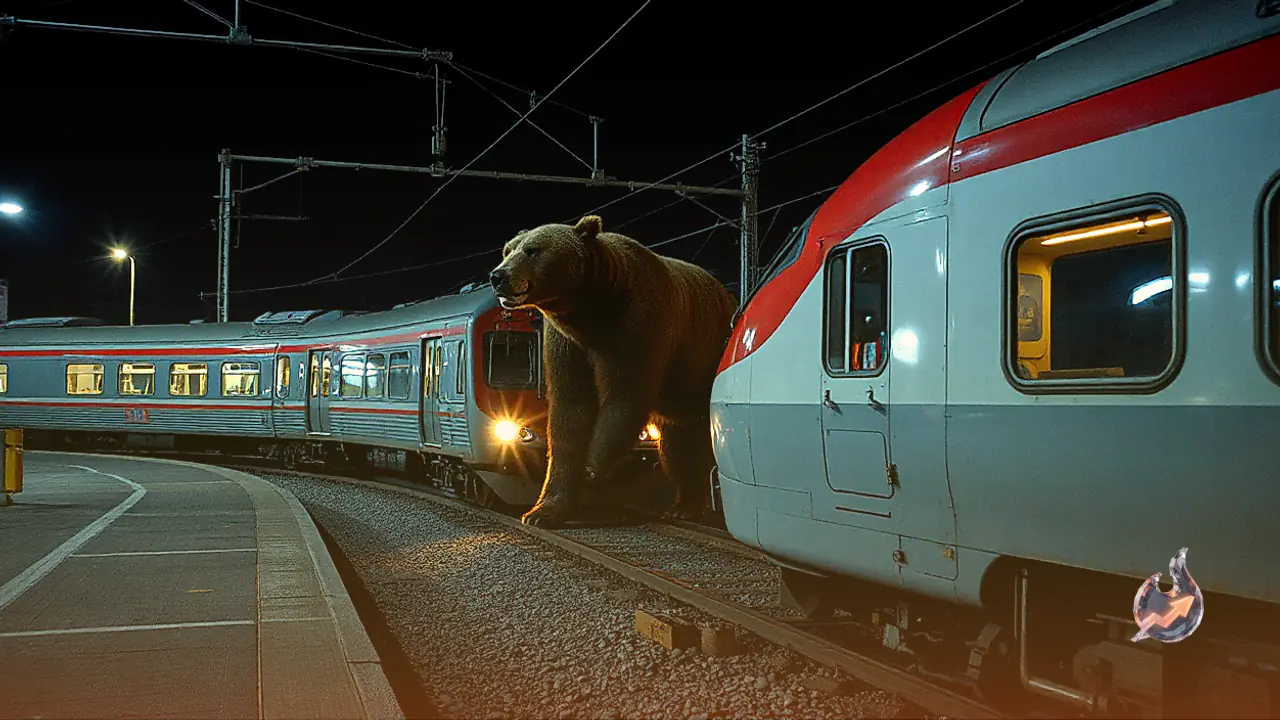

A high-speed express train derailed in the northern Japanese island of Hokkaido during the late hours of the night after an unexpected collision with a massive bear. The impact threw both the locomotive and passenger carriages off the rails. Traveling along the route connecting Asahikawa to the city of Wakkanai, the train was carrying 34 passengers and crew members when the disaster occurred. Fortunately, none of the occupants sustained serious physical injuries, but the derailment left the train immobilised deep inside an isolated wooded region, forcing everyone on board to spend the entire night trapped inside the carriages.
Mid-Track Collision in the Dead of Night
The accident occurred at approximately 10:50 pm as the express service was traversing rural tracks at its regular operational speed. Suddenly, an enormous wild bear crossed directly into the path of the oncoming train. The collision occurred before the operator could bring the emergency braking system into effect. The sheer force of the blow derailed the cars, abruptly cutting electrical power inside the passenger compartments and plunging the carriages into total darkness.
Because the train came to an abrupt halt in a desolate, heavily forested location, immediate rescue assistance could not access the site during the dark hours. The stranded travelers had no choice but to remain sealed inside the disabled train cars until daylight. Emergency responders finally arrived on the scene on Saturday morning, successfully evacuating all occupants and relocating them to safety by around 9:30 am. It could not be determined whether the bear survived the high-speed impact.
Escalating Wildlife Conflicts Across Japan
The incident highlights a dramatic escalation in wild bear encounters throughout Japan in recent years. Environmental specialists link this surge to widespread rural depopulation, as inhabitants move to larger cities and abandon countryside farming. The disappearance of active farmland has eliminated the buffer zones separating human communities from deep wilderness, allowing wildlife to roam unchecked toward settlements. Concurrently, shifting climatic conditions have caused acute food shortages in native forest habitats, driving hungry bears into populated districts, schools, and supermarkets.
Official records show that bear attacks claimed a record 13 lives across Japan last year. The deadly trend has persisted, with five additional deaths recorded between April and June of the current year alone. Official government data estimates that the total brown bear population in Japan has now climbed beyond 12,000 individuals, raising alarms among regional authorities.
Massive Island Predators and Military Mobilisation
The brown bears native to Hokkaido are particularly massive predators. An adult male can measure up to two meters in length and reach a body weight of 400 kilograms. Impacting an animal of such massive bulk and density at regular line speed made train derailment virtually inevitable. Faced with uncontrollable wildlife encounters, the central government in Tokyo has reinstated legal permits for hunting Asian bears for the first time in 20 years.
Under the revised regulations, authorities are permitted to cull bears found roaming close to urban perimeters and riverbanks. Earlier, regional authorities in Akita prefecture were forced to deploy military personnel to safeguard residents after bear sightings multiplied sixfold to exceed 8,000 incidents. In the wake of this rail accident, transport and wildlife officials are reviewing plans to implement strict physical barriers and monitoring protocols along wilderness railway corridors.