
















Widespread civilian and labor discontent erupted on Monday across two major South Asian urban centers as ordinary citizens pushed back against deteriorating public utilities and wages crushed by rising living costs. In Pakistan's commercial capital of Karachi, residents took to the streets to protest crippling power outages and persistent natural gas shortages that have severely paralyzed daily life. Simultaneously, across Bangladesh's core industrial zones near Dhaka, thousands of ready-made garment workers blocked critical regional expressways to demand an increase in their statutory minimum monthly earnings, prompting aggressive dispersal measures from law enforcement.
Karachi Residents and PPP March Against 16-Hour Blackouts and Gas Scarcity
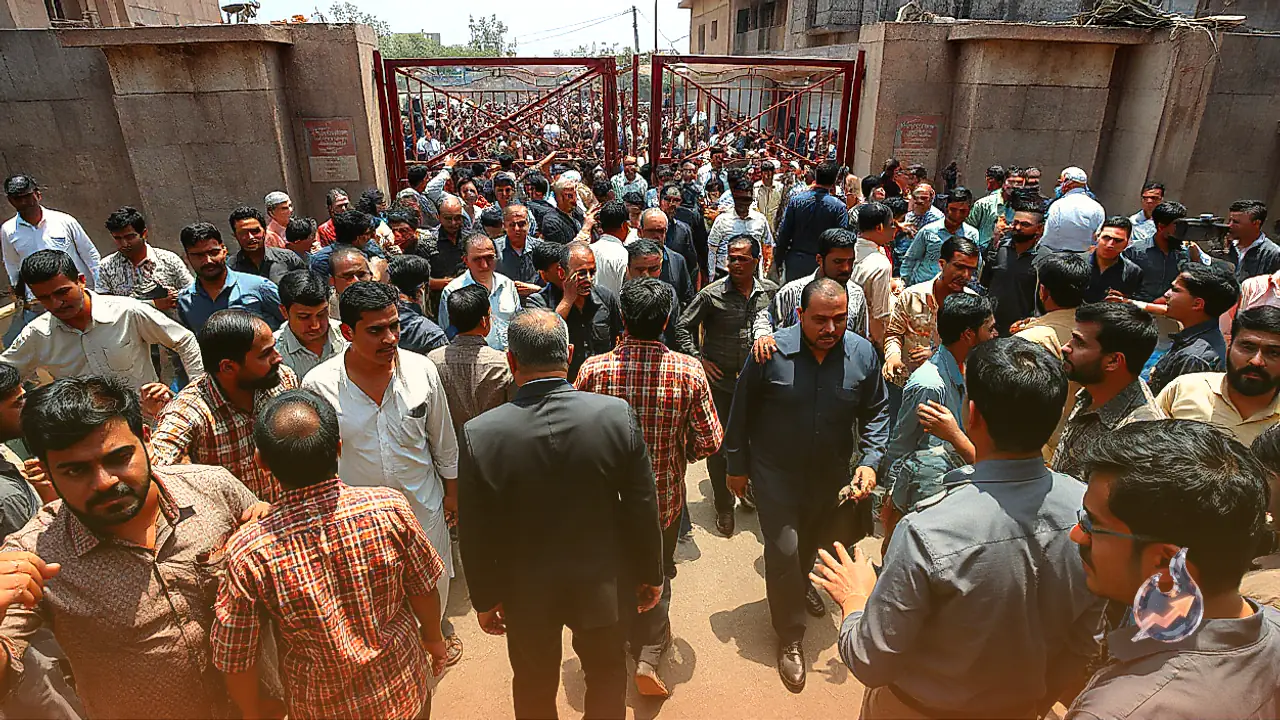
In Karachi, the ruling Pakistan Peoples Party organized a massive public rally to challenge utility providers over chronic infrastructure failures. The demonstration originated at Lyari Gate and concluded outside the Karachi Press Club, drawing an extensive cross-section of society including political leaders, grassroots activists, local neighborhood residents, and women. Demonstrators arrived from densely populated working-class and commercial quarters including Lyari, Saddar, Burns Road, and Garden, alongside neighboring localities that have endured severe service disruptions.
The marchers voiced sharp opposition toward the city's private electric utility, K-Electric, and fuel provider Sui Southern Gas Company, demanding an immediate end to unannounced disconnections and the stabilization of basic energy supplies.
The rally was led by PPP South District president Javed Nagori, accompanied by parliamentarian Sardar Nabil Gabol. Javed Nagori stated that several areas within Lyari have been subjected to power cuts lasting up to 16 hours daily, rendering normal household and commercial activities impossible. Addressing the gathering, Sardar Nabil Gabol challenged the operational performance of K-Electric, emphasizing that multiple rounds of discussions had already been held with top utility executives at both national and provincial assembly levels, yet those deliberations produced no substantive improvement in field-level electricity delivery.
Garment Workers Block Major Arteries Demanding 30,000 Taka Minimum Wage
In Bangladesh, tensions escalated across manufacturing hubs as industrial workers intensified their campaign for economic relief. Thousands of garment factory employees staged mass road blockades demanding a minimum monthly wage revision to 30,000 taka (approximately ₹22,916). Striking laborers argued that current compensation packages are entirely inadequate to survive amidst escalating commodity inflation, leaving them with no option but to organize collective street actions.
During early morning hours, an estimated 1,000 workers assembled at the Palli Bidyut intersection along the Dhaka-Tangail highway, cutting off vehicular movement on both carriageways. Gazipur Industrial Police Superintendent Mohammad Amjad Hosen confirmed that vehicular traffic on the vital freight corridor was completely halted as a consequence of the blockade. To clear the arterial thoroughfare, riot police deployed tear gas shells and aimed water cannons directly at crowds to force their dispersal.
Factory Walkouts in Ashulia and Push to Eliminate Worker Blacklisting
Labor unrest quickly expanded beyond Gazipur into neighboring manufacturing clusters. In the Ashulia industrial district on the outskirts of Dhaka, laborers walked out of multiple manufacturing facilities and attempted to shut down the Nabinagar-Chandra highway. Security personnel once again deployed tear gas canisters and high-pressure water cannons to prevent workers from consolidating control over the transport junction.
Representatives among the protesting laborers emphasized that their mobilization extends beyond headline wage adjustments. They are actively demanding an unconditional halt to the industrial practice of worker blacklisting, alongside a prompt review of related factory grievances. Employees reiterated that the relentless rise in the cost of essential food and housing has made it impossible to sustain basic livelihoods on current pay structures.
Clashes, Arson at Police Post, and Over 40 Arrests
The confrontations on Monday followed an initial outbreak of violence the previous day. On Sunday, workers pressing for wage increases blocked the Dhaka-Tangail highway in Gazipur, leading to prolonged clashes with law enforcement. During that standoff, a police box was set on fire in the Konabari neighborhood, sparking hours of skirmishes between security personnel and stone-throwing demonstrators.
In response to the property damage and public disorder, authorities launched widespread enforcement sweeps across industrial sectors. Police confirmed the detention of 29 individuals from Mirpur and an additional 20 individuals from the Gazipur industrial zone on charges related to vandalism, arson, and violent conduct during the demonstrations.
Rights Group Condemns Force Against Laborers
The aggressive policing of economic protests drew sharp criticism from international advocacy circles. France-based human rights body Justice Makers Bangladesh in France issued a statement condemning the use of force, tear gas, water cannons, and punitive detentions against workers, particularly noting the targeting of female laborers and students. The watchdog called for an independent inquiry into the police response and urged authorities to safeguard the rights and physical safety of detained workers and labor organizers.
Shahanur Islam, founding president of the organization, emphasized that laborers are seeking higher wages purely as a response to severe inflationary pressures, warning that meeting legitimate economic demands with state coercion and mass detentions undermines basic human rights protections.