




















North Korean leader Kim Jong Un is confronting growing complications in his foreign policy as the historical support from his two primary partners appears to be wavering. For decades, Pyongyang has counted on China and Russia as essential buffers against American pressure and as vital levers on the international stage. Yet recent developments reveal that these partnerships are no longer functioning as smoothly as North Korea had envisioned. Hopes that Moscow could broker direct diplomatic breakthroughs with Washington have stalled, while outreach toward Beijing has met with uncharacteristic restraint, leaving North Korea in an increasingly isolated diplomatic corner.
Cool Reception in Dandong as Top Leadership Talks Fail to Materialize
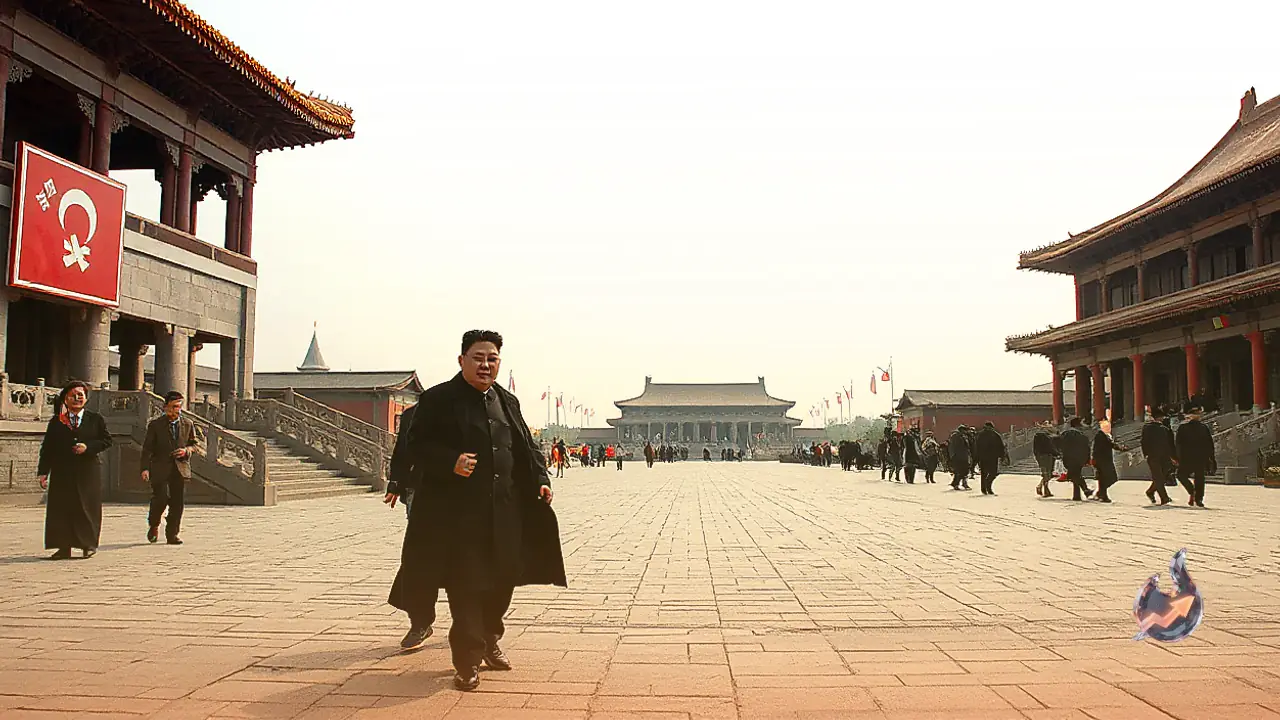
The extent of this diplomatic friction became evident on October 24, when Kim Jong Un made an unannounced trip to the Chinese border city of Dandong. The primary objective behind the visit was widely understood to be securing a direct meeting with Chinese President Xi Jinping. Through such high-level dialogue, Pyongyang hoped to lay the diplomatic groundwork for reopening talks with the United States, especially with an eye on the Asia-Pacific Economic Cooperation (APEC) summit scheduled for November. However, the anticipated summit with Xi did not take place.
Instead of meeting China's head of state, Kim Jong Un was received by Wang Huning, the fourth highest-ranking official within the Chinese Communist Party. Their schedule was restricted to lower-level ceremonial and economic stops, including a visit to a war memorial and an inspection tour of a local bus manufacturing plant. The absence of a face-to-face meeting with Xi sends a clear signal that Beijing is intentionally moderating its public warmth toward Pyongyang, unwilling to simply validate North Korea's diplomatic timeline on demand.
Heavy Military Aid to Russia Yields Minimal Diplomatic Leverage
Simultaneously, North Korea has invested heavily in deepening its strategic and military cooperation with Russia. Amid the ongoing conflict in Ukraine, Pyongyang has supplied Moscow with substantial military hardware, munitions, and active troop deployments. In exchange, North Korea counted on securing advanced military technology and critical economic relief. The formal foundation for this alliance was laid through a 2024 comprehensive strategic partnership treaty, which explicitly contains provisions for mutual military assistance. The Congressional Research Service has similarly documented that North Korea provided Russia with artillery shells, ballistic missiles, and military personnel.
Yet, despite committing significant military resources to Russia's war effort, Kim Jong Un has not realized the broader diplomatic breakthroughs he sought. The prospect that Russian President Vladimir Putin could serve as a successful intermediary to facilitate discussions with US President Donald Trump has failed to produce any tangible movement. Despite robust battlefield cooperation, Pyongyang finds itself without the high-level diplomatic leverage it had banked on securing through the Kremlin.
Rising Peninsular Tensions and Beijing's Strategic Calculations
Beijing's principal concern remains the escalating military friction across the Korean Peninsula. North Korea's unrelenting drive to expand its nuclear arsenal, test advanced ballistic missiles, and upgrade its weapons capabilities has elevated regional volatility. Moreover, Pyongyang's deepening operational alignment with Russia poses a distinct strategic dilemma for China, raising concerns that growing reliance on Moscow could gradually dilute Beijing's historical leverage over its neighbor.
Analysts indicate that Chinese leadership would prefer to see North Korea focus on economic stability, trade, and modernization rather than persistent saber-rattling and weapons modernization. China remains North Korea's dominant commercial liftoff, while Russia functions as its key military collaborator. Consequently, any emerging friction or misalignment with either power directly undermines Pyongyang's core survival playbook. While neither Beijing nor Moscow has severed ties completely, the refusal of Xi to meet Kim and the stalled progress with Washington via Russia highlight the serious limitations confronting North Korea's current external strategy.