






















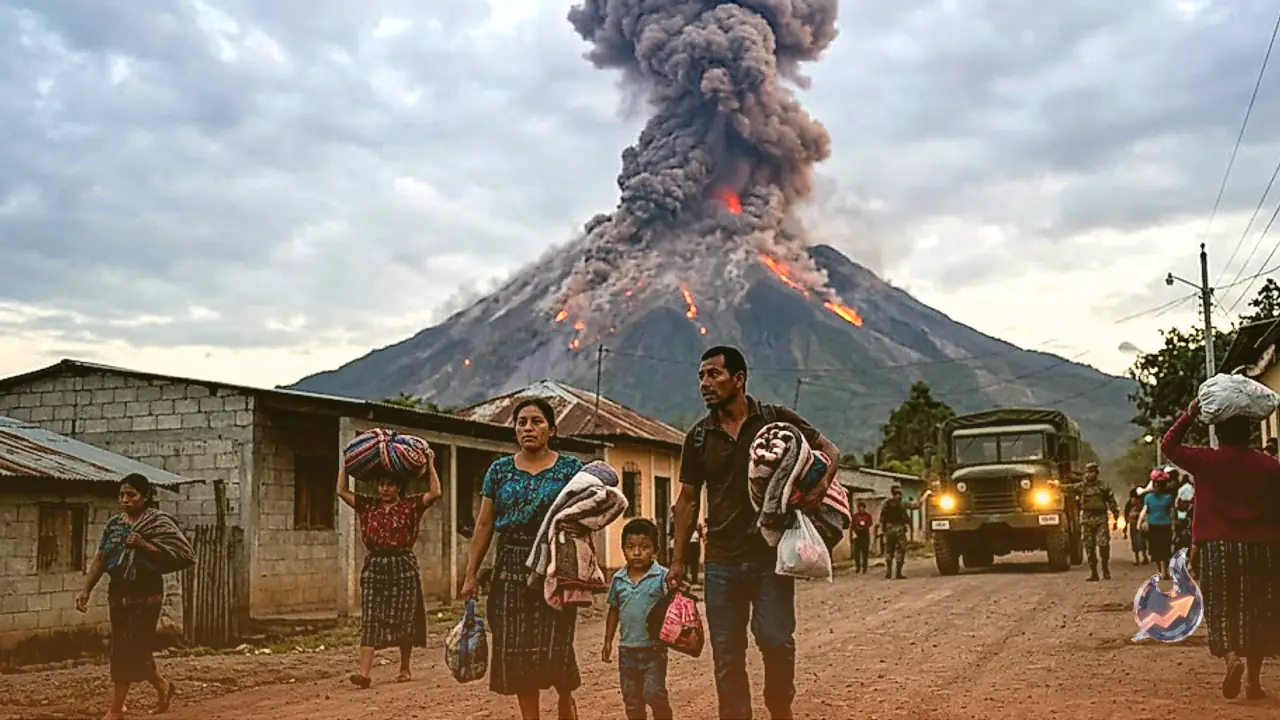

A violent eruption from the Fuego volcano in Guatemala has sent towering plumes of ash and glowing lava shooting into the atmosphere, prompting immediate emergency evacuations. The sudden burst of activity on the mountain has forced residents living along its slopes in at least two villages to pack up and leave for safer locations. Fuego holds a reputation as one of the most vigorously active volcanic structures across the Western Hemisphere, and its latest cycle of unrest began ramping up on Monday.
Pyroclastic Flows Threaten Slopes
Government monitoring agencies reported that fast-moving pyroclastic currents continued cascading down the mountain's south-eastern slope early Tuesday. These dangerous rivers are composed of superheated gas, volcanic ash, and jagged rock fragments capable of destroying everything in their path. In response to the escalating hazard, the national disaster management agency Conred declared a nationwide orange alert, which marks the second-highest level of warning. Officials have strongly advised residents to remain on high alert because ongoing eruptions could generate additional pyroclastic surges and massive billowing clouds of ash.
Precautionary Measures and School Closures
Authorities have urged people living near the hazard zones to keep their windows and doors tightly sealed to prevent toxic ash from entering homes. As a further safety precaution, educational institutions and schools located close to the volcano have been forced to cancel classes until further notice. Fuego is situated just 16km or 10 miles west of Antigua, a picturesque destination that draws countless travelers from around the globe. Visitors frequently flock to the Unesco World Heritage Site to take in its preserved colonial-era architecture and historic charm.
Tourism Restrictions and Past Tragedies
Beyond its proximity to historic urban centers, the active stratovolcano has increasingly gained traction among hiking enthusiasts seeking adventure. Conred has issued strict warnings instructing both tourists and locals to stay away from designated danger zones and to avoid lingering on the volcano's unstable slopes. Emergency personnel are keen to prevent a repeat of past disasters, referencing the devastating 2018 eruption that claimed the lives of more than 200 people. Many victims during that catastrophic event were trapped by rapid pyroclastic flows that surged down the Las Lajas ravine.