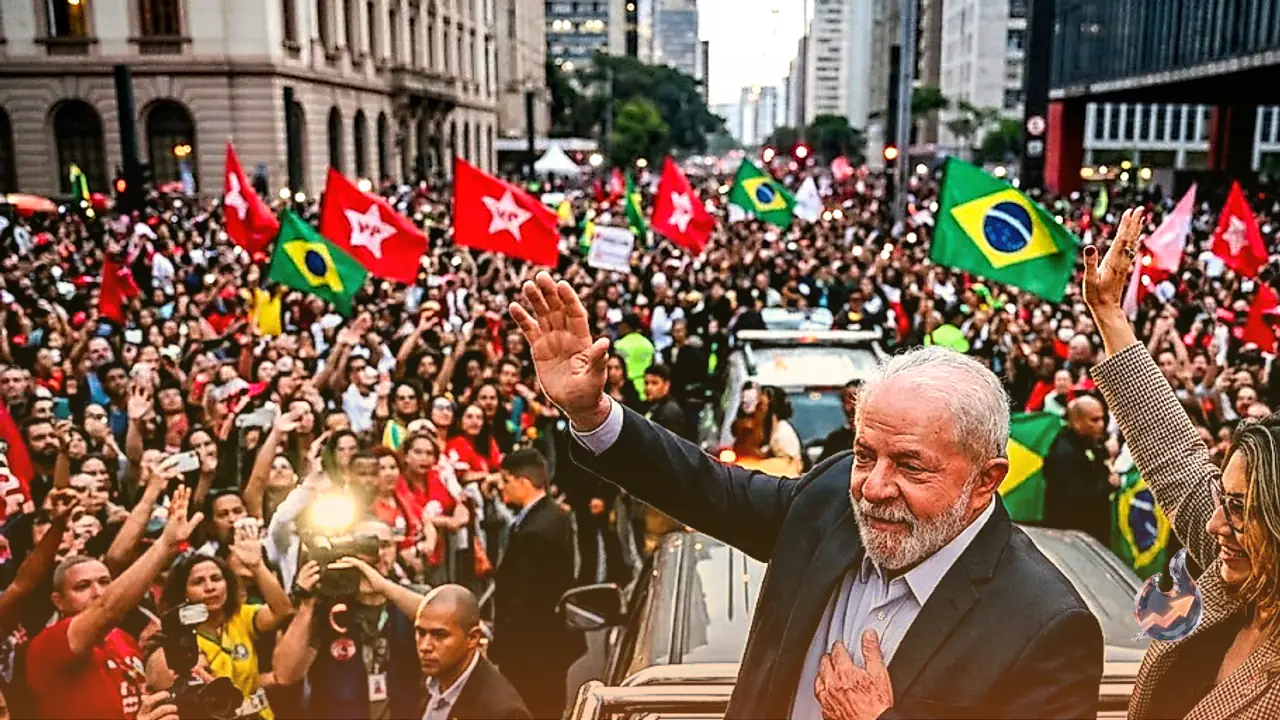

















In an extraordinary electoral comeback that redraws the political map of South America, Luiz Inacio Lula da Silva has secured the presidency of Brazil, reaffirming his deep connection with the country's electorate. Reacting to the development, Indian Member of Parliament and former Minister of State for External Affairs Shashi Tharoor publicly celebrated the outcome, characterizing it as a vivid demonstration of the resilience and democratic willpower of ordinary Brazilian citizens. Tharoor pointed out that Lula's return to the presidency brings renewed momentum to the historical struggle for poverty alleviation, working-class dignity, and broad-based social justice. Beyond the borders of Brazil, the outcome sends ripples across the international diplomatic arena, where it is being interpreted as a noticeable strategic setback for the conservative political circle aligned with United States President Donald Trump.
From the Metalworking Factory Floor to the Presidential Palace
Shashi Tharoor highlighted the remarkable personal and political trajectory that defines Lula's career. Lula's ascent from an impoverished background and a career spent working on the factory floor as a metalworker to the highest constitutional office in Latin America's largest nation remains an enduring symbol of grassroots empowerment. Tharoor remarked that this historic milestone serves as a vital reminder that a nation's authentic strength resides in its everyday populace rather than in elite circles. Lula has maintained a long-standing reputation as an uncompromising defender of labor unions, marginalized families, and disadvantaged communities who bear the brunt of severe economic distress.
According to Tharoor's assessment, Lula's renewed tenure offers genuine hope for revitalizing state-backed social welfare structures. Policies centered on economic inclusion and egalitarian distribution of resources are expected to regain center stage, offering direct relief to millions striving for sustainable livelihoods. The newly elected administration is anticipated to restore momentum to comprehensive anti-poverty initiatives, establishing a governance model that prioritizes human welfare over unbridled market-driven interests.
Ideological Clash: Right-Wing Alliances Versus Progressive Welfare
The presidential contest pitted Lula directly against right-wing politician Flavio Bolsonaro, the son of former president Jair Bolsonaro. This high-stakes electoral duel transcended mere personality clashes, representing fundamentally contrasting visions for Brazil's socioeconomic trajectory and foreign partnerships. Throughout his political campaign, Flavio Bolsonaro advocated for establishing deeply entrenched ties with Washington, assuring voters that his ideological proximity to the Trump administration would yield lucrative bilateral economic deals and strategic patronage.
Conversely, Lula ran on a platform fiercely protective of Brazil's sovereign trade prerogatives. He has consistently voiced sharp criticism of American protectionist measures, specifically targeting burdensome tariffs imposed on Brazilian export commodities. Lula maintained that Brazil must preserve its strategic independence rather than subordinating its commercial interests to external agendas. Tharoor observed that official circles in Washington had explicitly tilted in favor of Lula's conservative challenger. Consequently, Lula's victory is widely viewed by political observers as an undeniable diplomatic frustration for Donald Trump and his regional ideological allies.
Empowering BRICS and Advancing a Multipolar Global Order
From the perspective of systemic international relations, Shashi Tharoor placed considerable emphasis on what Lula's presidency means for the ongoing evolution of global governance. Tharoor expressed conviction that under Lula's stewardship, Brazil will aggressively champion the realization of a multipolar international architecture. Such a diplomatic doctrine seeks to prevent global economic and geopolitical decisions from being monopolized by any single Western superpower or selective bloc, thereby ensuring equitable representation for developing societies.
Tharoor argued that Brazil's resolute dedication to strategic autonomy will significantly elevate the stature of BRICS as a premier platform for the Global South. By fostering deeper south-south economic cooperation, demanding structural reforms within multilateral financial institutions, and diversifying global commerce channels, Lula's administration can help recalibrate the balance of worldwide diplomatic influence. Lula's previous administrations between 2003 and 2010 were similarly marked by an assertive pursuit of international partnerships across Africa, Asia, and Latin America.
Tariffs, Bilateral Diplomacy, and National Sovereignty
The operational dynamics of future diplomatic engagement between Brasilia and Washington are set to enter a complicated phase. Tharoor suggested that ongoing economic friction and strategic divergence will likely define the relationship between the two hemisphere giants. Protracted disagreements over import levies, agricultural subsidies, and international supply chain regulations will serve as primary points of contention. The core tenet of Lula's foreign doctrine remains unyielding adherence to national sovereignty and the defense of indigenous economic capabilities against external coercion.
Lula's cabinet is expected to formulate strategic policies anchored strictly in Brazil's domestic imperatives, refusing to make unilateral concessions in response to international diplomatic leverage. This means that future trade negotiations with the United States must be conducted on terms of mutual equality and respect. The political realignment in Brasilia forces foreign policy architects in Washington to recalibrate their diplomatic calculations across the broader Latin American continent.
Latin American Political Realignment and Domestic Imperatives
Within the broader geographical context of Latin America, Lula's triumph signals a meaningful reinforcement of progressive governance at a critical juncture when right-wing factions had been gaining organizational momentum. Having previously led Brazil through two transformative presidential terms from 2003 to 2010, Lula brings seasoned administrative experience to the presidency. His prior rule witnessed massive reductions in extreme poverty alongside substantial infrastructure modernization.
Tharoor reflected that this decisive electoral result confounded the expectations of several mainstream political forecasters who anticipated a conservative consolidation. As Lula assumes executive authority, the focus of global observers turns to his capability to address acute domestic fiscal hurdles, heal deep internal societal polarization, and balance contentious international relationships with the United States. His victory reinforces the conviction that democratic institutions, when anchored in genuine popular support, remain capable of charting an independent path forward.