















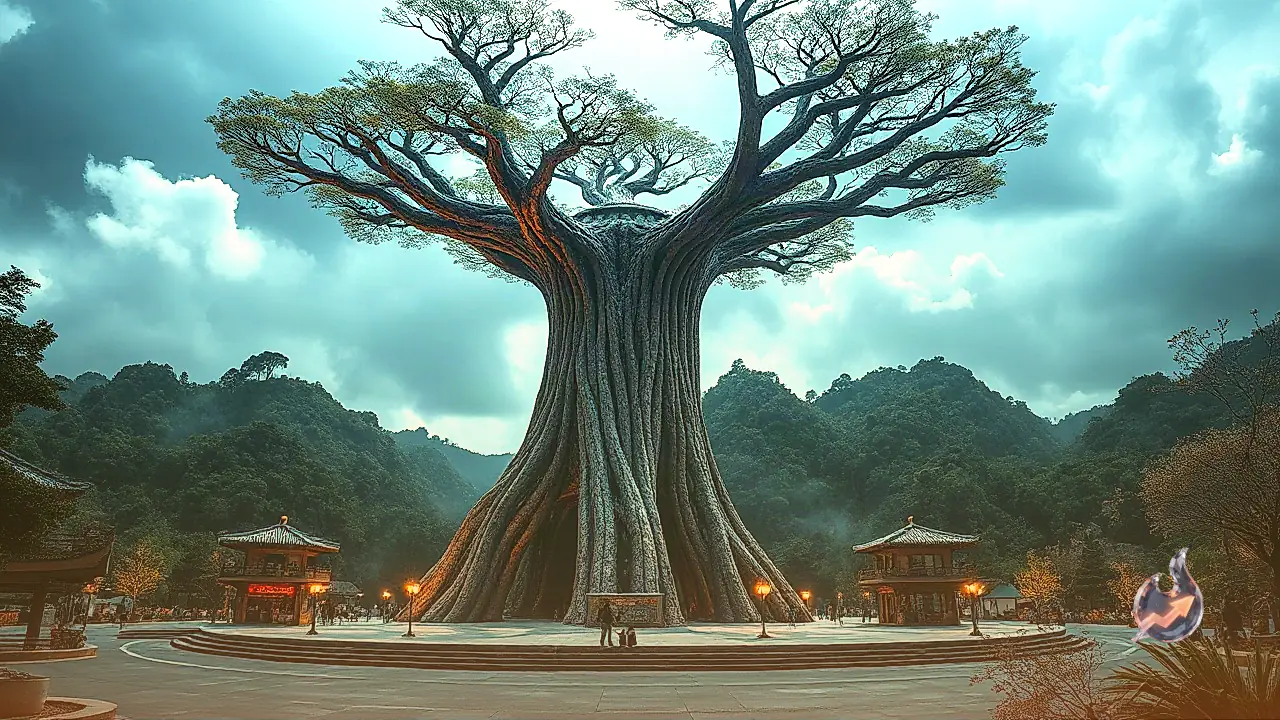

An ambitious municipal landmark in the industrial hub of Changwon, South Korea, has transformed into a high-profile public relations disaster and administrative predicament before ever welcoming its first official visitors. Constructed at a staggering cost of approximately 34.4 billion won, which translates to around 23 crore rupees, the 40-meter-tall installation situated inside Desang Park was originally envisioned as an iconic symbol named Big Tree to elevate the city's modern identity. However, sweeping design modifications and execution lapses have plunged the centerpiece into widespread controversy. The public reaction has turned so hostile that local residents now disparagingly refer to the structure as the "Bald Tree" and the "Tree of Shame," forcing municipal authorities to indefinitely postpone its official grand opening.
Drastic Design Alterations Leave Steel Skeleton Exposed
According to the original architectural blueprints approved for the Big Tree project, the 40-meter structural foundation was meant to be topped with a 20-meter artificial tree complete with dense decorative foliage. From a distance, the combined 60-meter profile was designed to give the illusion of a majestic, sprawling tree blending nature with urban art. This ambitious visual concept was central to justifying the project's substantial budget to the community.
During the construction phase, however, Changwon city administrators unilaterally decided to eliminate the artificial tree canopy from the final execution. Officials defended the structural downgrade by citing public safety concerns, arguing that artificial leaves could detach over time under severe weather conditions and pose a direct hazard to visitors below. In lieu of the synthetic greenery, the city opted to install an electronic lighting rig across the upper frame. When the finished structure was unveiled to the public last year, citizens expressed immediate fury upon discovering that the promised lush landmark had been replaced by a cold, bare steel skeleton.
Survey Highlights Overwhelming Public Rejection
Facing mounting criticism, municipal authorities organized a two-week public trial run in August to evaluate citizen sentiment. During this trial period, a total of 1,868 residents visited the park installation and submitted formal feedback regarding the aesthetic appearance and overall appeal of the tower structure.
The survey results delivered a devastating blow to municipal leaders. Out of the 1,868 respondents, approximately 85 percent explicitly condemned the tower's appearance, labeling it unsightly and poorly designed. A significant portion of disgruntled respondents went even further, demanding the complete demolition of the structure to restore the park's landscape. The overwhelming hostility generated by the survey findings left city officials with little choice but to cancel the grand inauguration ceremony, which had been officially scheduled for October 1.
Nationwide Design Contest and Delayed Timeline
In an effort to resolve the impasse and repurpose the controversial structure, the Changwon municipal government has launched a nationwide ideation competition open to citizens across South Korea. The public contest, which runs through September 2, invites submissions focusing on structural redesign, safety enhancements, visitor amenities, and practical future utility for the site.
City officials announced that winning proposals will be selected and publicly disclosed in September, with the potential to form the blueprint for a comprehensive remodeling effort. However, municipal authorities have yet to estimate or allocate the financial expenditure required for such modifications. A city representative noted that even under an expedited construction schedule, there is virtually no possibility of the Big Tree opening to the public before next year.
Financial Irregularities and Ongoing Police Investigation
The controversy surrounding the Big Tree has also expanded into allegations of financial misconduct. In June, the Changwon city administration requested a formal police investigation targeting two individuals affiliated with the project developer over suspicions of inflated construction costs and potential accounting irregularities.
Despite growing demands for transparency, municipal leadership has refrained from releasing the complete internal audit report. City officials maintained that the document contains sensitive analytical data that could jeopardize the integrity of active police inquiries and subsequent legal proceedings. As matters stand, the 23 crore rupee installation remains closed, leaving Changwon saddled with a costly and embarrassing municipal failure.