























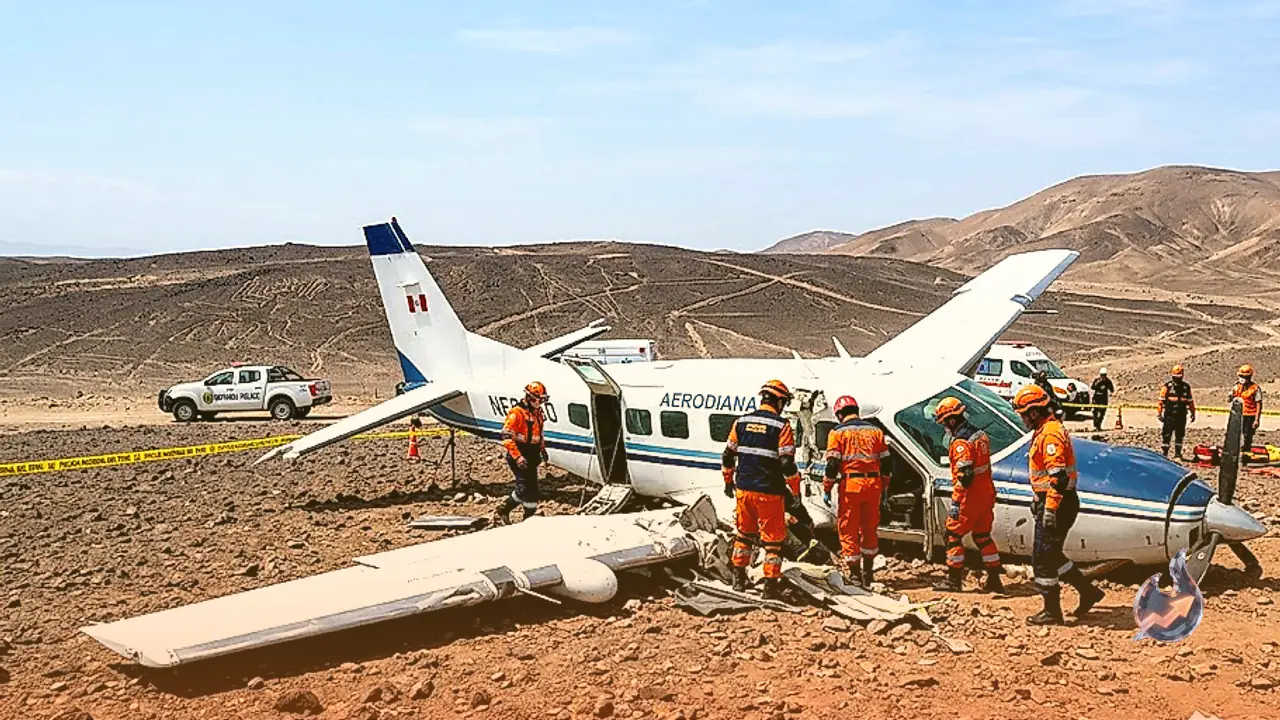

A low-altitude sightseeing flight over Peru's famous Nazca Lines ended in tragedy on Saturday, August 1, 2026, when a Cessna Caravan carrying 13 people lost control and crashed into an agricultural field near Nazca city. Authorities confirmed that all 11 passengers and 2 crew members lost their lives in the fatal impact, leaving no survivors from the horrific wreckage.
Details of the Tragic Flight and Emergency Response
The small aircraft, operated by the regional tourism carrier Aerodiana, had taken off earlier from Pisco Airport to conduct a scheduled aerial tour over the historic geoglyphs. At approximately 1:00 PM local time, as the plane was maneuvering over the desert terrain, it suddenly lost flight stability and descended rapidly into farmland near the archaeological zone.
Local police officer Jorge Andrade reported that the aircraft hit the ground with extreme force, destroying the vessel on impact. Emergency response teams arriving at the crash site initially recovered four bodies while working through the scattered debris to retrieve the remaining victims. Official investigations are currently underway to determine the precise technical or environmental factors behind the accident, while authorities have withheld the identities of the deceased passengers pending notification of their families.
The Mysterious Appeal of the Nazca Lines
The Nazca Lines represent one of the world's most mysterious archaeological treasures, drawing thousands of international travelers every year. Spread across the arid Peruvian desert, these ancient geoglyphs feature huge depictions of birds, monkeys, spiders, and intricate geometric patterns carved into the landscape.
Created hundreds of years ago by indigenous populations who scraped away the dark topsoil to expose the lighter earth beneath, these massive designs can only be fully appreciated from the air. Their immense scale and mysterious origins have inspired various theories over the decades, including popular speculation connecting them to alien visitors. Because of their unique cultural significance, UNESCO designated the site as a World Heritage location, making scenic charter flights a central component of regional tourism.
Growing Concerns Over Aviation Safety
Saturday's tragedy has once again brought the safety record of Nazca sightseeing flights under intense scrutiny. Tourism flights operating over the high-altitude desert terrain have experienced fatal aviation accidents in recent history, sparking ongoing debate over operational safety standards.
In 2022, a similar tourist aircraft crashed in the area, claiming the lives of seven individuals. That incident followed a 2010 disaster in which six people perished during a sightseeing tour over the geoglyphs. With 13 more lives lost in this latest incident, aviation authorities face renewed pressure to evaluate maintenance protocols, pilot training, and operational oversight for small commercial flights operating in the region.