























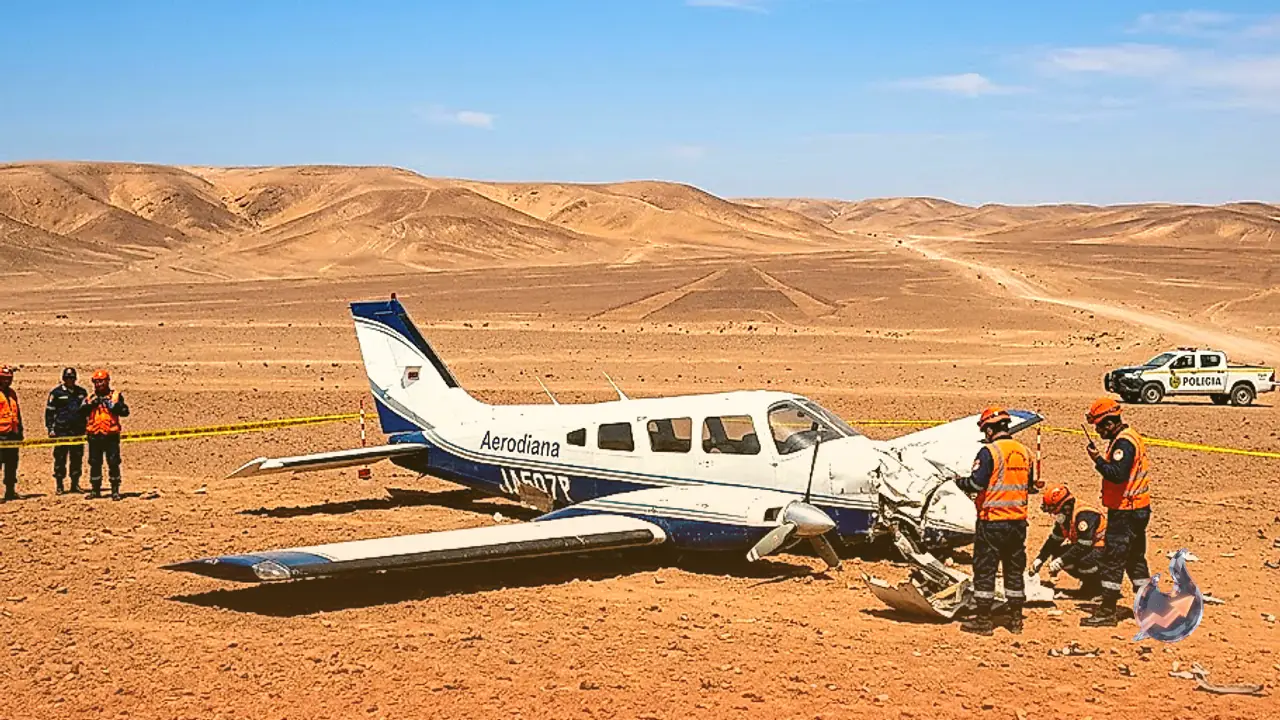

A tragic aviation disaster occurred in Peru on Saturday when a small aircraft carrying tourists crashed, killing all 13 people on board. The flight had taken off from an airport in Pisco, Peru, before going down in the Pueblo Viejo region of southern Peru at approximately 13:00 local time (19:00 BST). Onboard the aircraft were 11 passengers and 2 pilots, none of whom survived the impact. The sudden crash took place while the plane was navigating the airspace over the ancient Nazca Lines archaeological site. Authorities confirmed that neither the definitive cause of the catastrophic crash nor the specific identities of the deceased passengers have been formally established yet as preliminary investigations get underway.
Emergency Operations and Body Recovery
Emergency response units and law enforcement teams were dispatched to the crash scene in the Pueblo Viejo area immediately following the crash. Providing an initial update from the site of the wreckage, Police Major Jorge Andrade emphasized the tragic severity of the impact. Police Major Jorge Andrade stated, "Given the severity of the accident, there are no survivors." He further confirmed that search and rescue personnel have successfully recovered four bodies from the crash site so far, with efforts ongoing to retrieve the remaining victims. The total destruction of the small aircraft left no possibility of survival for anyone on board, and aviation authorities are beginning the process of gathering wreckage evidence to determine what led to the disaster.
Airline Ownership and Official Condolences
Official records confirmed that the aircraft involved in the crash belonged to Aerodiana, a local Peruvian commercial airline that operates sightseeing flights over the regional desert landmarks. Following the crash, the local governing authority, Municipalidad Provincial de Nasca, issued a public statement online in Spanish expressing profound sorrow over the tragic loss of life. In its statement, the municipal administration extended its heartfelt condolences to the families of the deceased passengers and crew members. Regional officials indicated that support mechanisms are being organized for the bereaved relatives while aviation safety inspectors examine the operator's flight logs and maintenance history.
The Nazca Lines Cultural Heritage Site
The location of the crash is widely recognized as one of the world's most unique archaeological and tourism destinations. Situated in the arid desert landscape of southern Peru, the Nazca Lines consist of immense ancient geoglyphs and figures etched directly into the desert floor. Archaeologists estimate that these massive ground drawings were created around 1600 years ago by members of the ancient Nazca culture. Recognized internationally for their exceptional cultural value, the lines have been designated as a UNESCO World Heritage site. Because the intricate animal, plant, and geometric figures span vast areas of the desert, taking low-altitude flights in small propeller aircraft is the primary way tourists view and appreciate the ancient site from above.
History of Sightseeing Plane Crashes in Nazca
Saturday's lethal incident highlights a troubling history of aerial tourism accidents over the Nazca desert across recent decades. Flying conditions over the desert terrain combined with the operational demands on small charter planes have led to previous fatal crashes in the same airspace. In 2022, another small tourist plane crashed during an excursion flight over the Nazca Lines site, resulting in 7 fatalities. Prior to that incident, in 2010, a sightseeing aircraft crashed over the archaeological site, causing the deaths of 6 people on board. These recurring accidents continue to draw attention to flight safety standards and maintenance regulations for tourist aviation operations in southern Peru.