























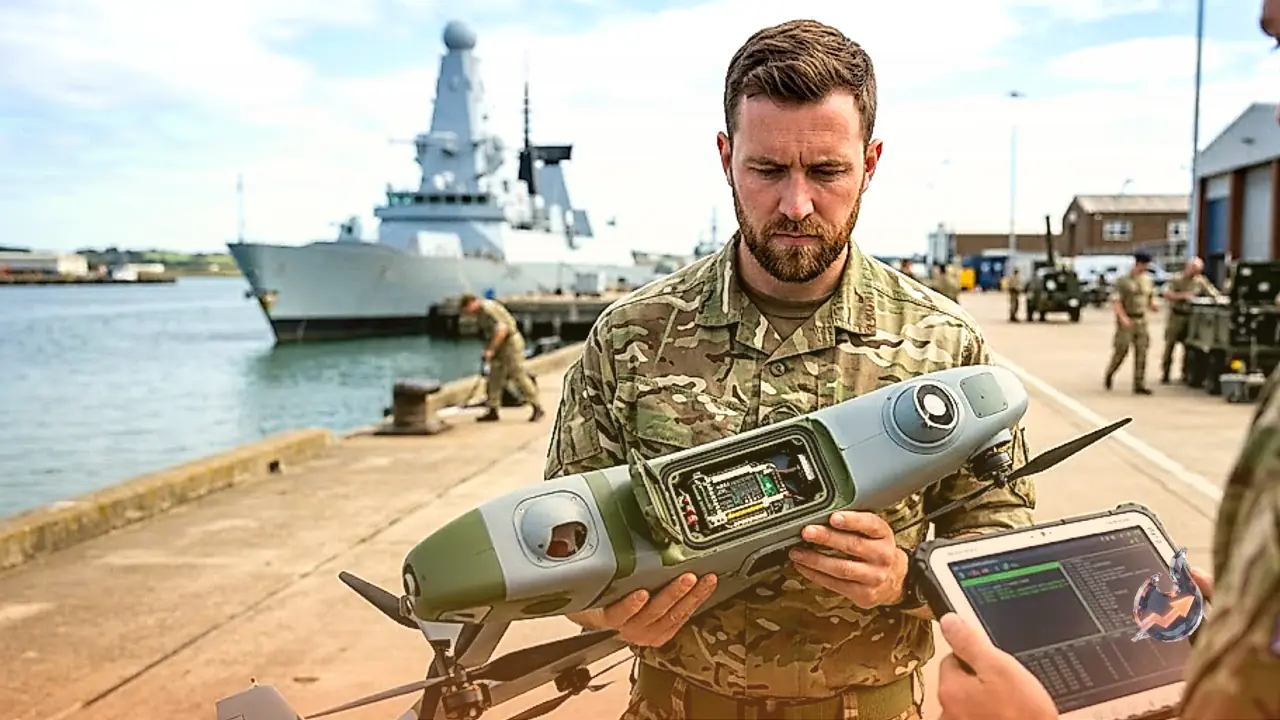

China has once again demonstrated how risky it is to trust Beijing blindly, as a major security breach has emerged from the UK's most sensitive military unit. Surveillance drones utilized for espionage by the British Royal Navy and Special Forces have come under intense scrutiny. Cameras fitted within the K3 स्काउट scout drones were continuously transmitting heartbeat signals to an IP address located in China. These signals are designed to indicate that a system is powered on and operating correctly. However, the primary concern revolves around how and why this connection was established in the first place. The government maintains that no evidence of sensitive data leakage has been discovered yet, but this argument fails to suppress several major questions. This revelation surfaced shortly after a recent report claimed that British intelligence agencies are the best in Europe.
Strategic Vulnerabilities and Multi-Million Pound Costs
This situation highlights a deep strategic weakness rather than a mere technical glitch. Most alarmingly, the very drones deployed by Britain's most secretive units to spy on adversaries are now the ones under suspicion. Developed at a cost of approximately 12 million pounds, the system has been operational since March. Reports have raised concerns that the cameras could potentially remain active even after the drones were powered down, elevating fears that continuous surveillance of sensitive locations may have occurred. These systems were deployed around highly classified locations such as the headquarters of the Special Boat Service, where numerous confidential meetings take place.
Global Security Implications and Middle East Tensions
The disclosure comes at a time when tensions in the Middle East are at their peak. According to reports, these specific drones were scheduled for deployment in the Strait of Hormuz to monitor the safe passage of vessels. The Strait of Hormuz is not a standard maritime route but one of the most critical lifelines for global oil supply. If a system preparing for operations in such a vital region turns out to be compromised, it serves as a warning not just for Britain but for the entire global security architecture. Most concerningly, the close diplomatic ties between China and Iran mean operational details could easily have reached Iranian authorities.
At the root of the controversy lies the military supply chain. The cameras were procured via a third-party supplier who provided security assurances, even claiming the equipment was NDAA-compliant and safe according to US standards. However, it was later discovered that the hardware contained Chinese components. This highlights a fundamental flaw in the Western defense apparatus. If the provenance of parts inside such sensitive systems remains opaque, the reliability of broader security claims is severely undermined.
Wider Risks for NATO Allies
The K3 स्काउट system is not limited to the UK alone. It has also been utilized by the US Special Operations Command and during NATO exercises. This transforms a localized issue into a broader global security risk. Once a breach occurs within the defense supply chain, its repercussions ripple across the entire military alliance.