























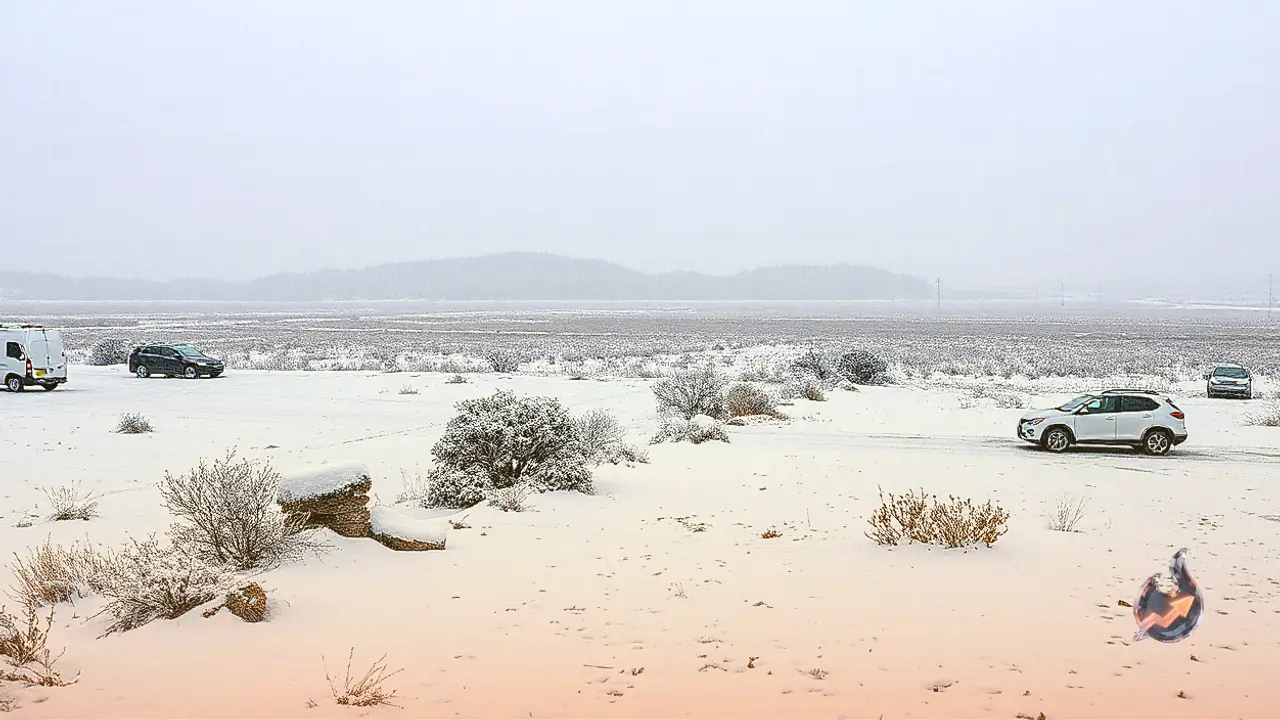

While one half of the globe prepares for the onset of winter, another region finds itself in utter disbelief as snow falls during the spring season. Australia witnessed a strikingly unusual weather phenomenon in the month of November, right before the official arrival of summer. Cold fronts swept across New South Wales, Victoria, and Tasmania, causing temperatures to plummet drastically in multiple areas. Iconic alpine regions such as Perisher, Thredbo, and Mount Hotham recorded fresh snow cover, while kunanyi or Mount Wellington near Hobart, the capital of Tasmania, was blanketed in white. This spectacle is particularly baffling because Australia is located in the Southern Hemisphere, where November marks the spring season. Typically, temperatures begin to rise during this period as the chill recedes and preparations for summer get underway. However, a surge of cold air originating from Antarctica drastically disrupted the typical weather patterns, plunging cities into winter-like cold conditions.
Antarctic Winds Drive the Sudden Temperature Drop
According to meteorological data, the primary catalyst behind this sudden November snowfall was a blast of cold air pushing northwards from the Antarctic region. South-westerly winds further intensified the biting chill, resulting in a stark contrast between actual and apparent temperatures. By Saturday afternoon, the feels-like temperature dropped well below 13 degrees Celsius in major cities including Adelaide, Melbourne, Hobart, Canberra, and Sydney. In Adelaide, while the actual temperature was recorded at 17.5 degrees Celsius, gusty winds made it feel like a mere 12.3 degrees. Similarly, Canberra registered a maximum temperature of 12.9 degrees, but residents experienced a much harsher chill of 5.3 degrees.
Hailstorms in Tasmania and Social Media Buzz
The erratic weather system brought more than just cold winds to Tasmania, unleashing heavy downpours and fierce hailstorms. The Kingston Beach Oval was completely covered in a thick layer of white hail, resembling a wintry landscape. Residents rushed to social media to share videos and photos of the rare snowfall and hailstorms. Madelaine McVeigh, a worker in Thredbo, described the event as a remarkably bizarre sight for Australian spring. Nevertheless, meteorologists point out that this is not entirely unprecedented, as similar unseasonal snowfalls were recorded across these very regions back in November 2022.
Understanding Why Australia Experiences Seasons Differently
To comprehend the November snow in Australia, one must look at the Earth's axial tilt and the mechanics of planetary seasons. The Earth is tilted on its axis at an angle of approximately 23.5 degrees, causing both hemispheres to receive varying amounts and angles of sunlight throughout the year. The northern half is known as the Northern Hemisphere, home to countries like India, the United States, and Europe, while the southern half forms the Southern Hemisphere, encompassing Australia, New Zealand, and South Africa. When the Northern Hemisphere tilts toward the sun, it experiences summer, while the Southern Hemisphere tilts away, resulting in winter. Roughly six months later, this orientation reverses entirely. Consequently, when India swelters through summer and monsoon rains in June and July, Australia endures its winter. Conversely, when December and January bring winter chills to India, Australia enters its peak summer months. Given this timeline, November serves as the transition into Australian summer, making widespread snowfall highly anomalous compared to normal climatic patterns, though localized cold snaps in elevated regions can still occur under the right atmospheric conditions.
Concerns Over Looming Scorching Heat
Amidst the sudden November chill, Australia faces mounting concerns regarding the upcoming summer season. Reports indicate that this could mark one of the final major cold air outbreaks of the year, to be followed by drastically harsher conditions. Weather bureaus and global organizations, including the United Nations, have issued warnings regarding the strengthening effects of El Nino. This phenomenon involves fluctuations in Pacific Ocean temperatures that can severely disrupt global climate patterns. Its impact is expected to trigger heightened heat and dry spells across parts of the Southern Hemisphere. Both Australia and southern Africa are projected to endure hotter and drier conditions than average during the forthcoming summer, elevating the risks of severe droughts and bushfires. However, experts caution that the November snowfall and the anticipated severe summer heat should not be viewed as two sides of the same coin, as distinct meteorological mechanisms drive each phenomenon.