



















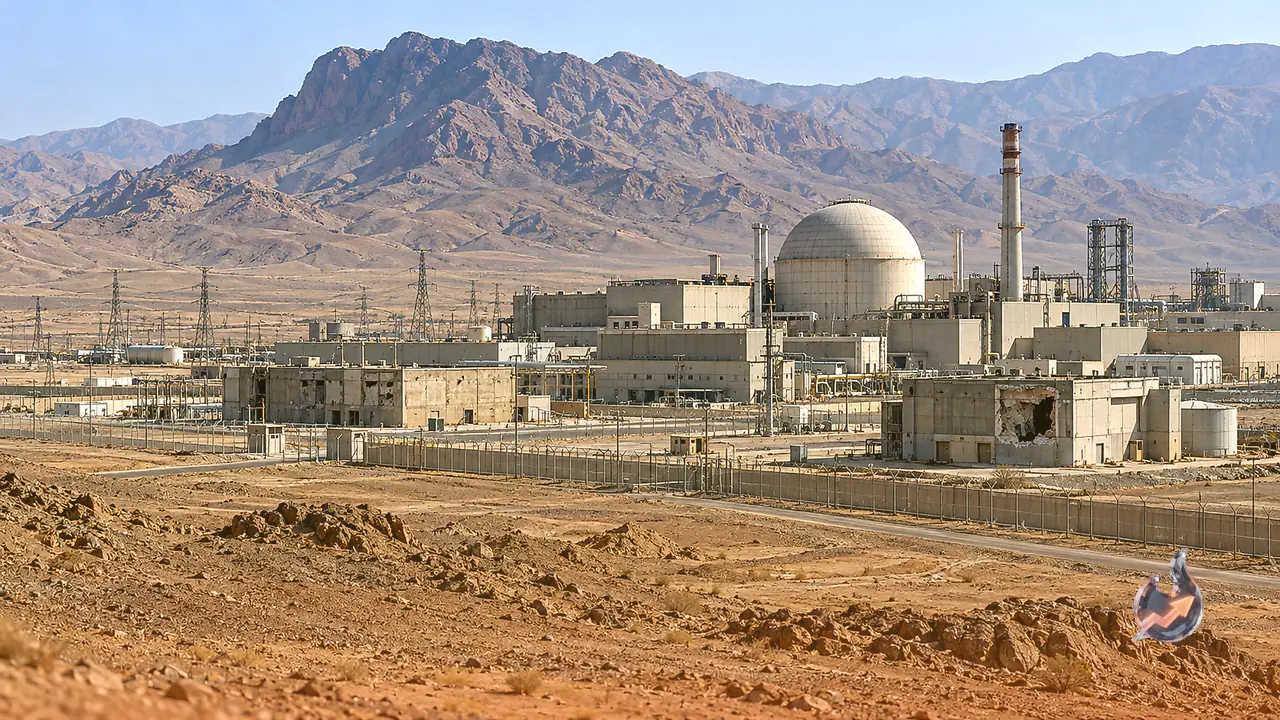

Tensions surrounding Iran's nuclear infrastructure have resurfaced prominently at the United Nations Security Council following military strikes by the United States and Israel. The current state of these damaged nuclear facilities and the status of enriched uranium stockpiles have drawn intense global scrutiny after fresh remarks by the head of the United Nations nuclear watchdog. Rafael Grossi stated that since June 2025, there have been no verifiable indications that Iran has attempted to repair or reconstruct the nuclear centers that suffered heavy damage during the military attacks spanning 2025 and 2026.
IAEA Lacks Clarity on Current Uranium Stockpile Status
The head of the International Atomic Energy Agency urged the United Nations Security Council to grant inspectors full access to inspect all nuclear facilities in Iran, including those impacted by the military operations. According to IAEA records, Iran maintains a stockpile of 440.9 kilograms of uranium enriched up to the 60 percent level. Uranium utilized in the manufacturing of nuclear warheads typically requires enrichment approaching approximately 90 percent. Ever since the American strikes in June of last year, the agency has been unable to independently verify the exact current condition and placement of this sensitive material.
Donald Trump Claims Complete Destruction of Nuclear Program
United States President Donald Trump has repeatedly maintained that targeted strikes were executed against Iranian nuclear sites on February 28. American military actions allegedly devastated the entire Iranian nuclear development framework. Donald Trump outlined preventing Iran from acquiring nuclear weaponry as a primary justification for initiating the conflict on February 28. However, the IAEA chief's assessment leaves the exact extent of physical damage to the facilities and the real-time status of Iran's nuclear program unconfirmed, highlighting that comprehensive on-site inspections and continuous material monitoring remain strictly necessary.
US and Iran Clash Directly at Security Council Session
The IAEA formally referred Iran's case to the Security Council due to persistent non-compliance with nuclear non-proliferation obligations. Subsequently, a formal council session was convened on Tuesday following requests submitted by Bahrain, Denmark, Latvia, France, Britain, and the United States. Iranian allies Russia and China attempted to block the assembly but ultimately failed. Under the terms of the Nuclear Non-Proliferation Treaty, Iran is legally obligated to declare all nuclear substances and operational activities, alongside permitting IAEA inspectors unhindered access to verify that these materials are exclusively allocated for peaceful purposes.
Iran Deputy Permanent Representative Criticizes Security Council Silence
Gholamhossein Darzi, Iran's deputy permanent representative to the United Nations, strongly condemned the Security Council's silence regarding the aftermath of the American and Israeli military strikes. He characterized the incursions as an aggressive war waged against Iran and accused the United States of perpetrating war crimes against the Iranian population. Darzi refrained from addressing demands to permit international inspectors entry into the country. Instead, he remarked that while Israel possesses nuclear arsenals, the international community seems preoccupied solely with the absence of inspectors inside Iran.
Mike Waltz Labels Iran a Brutal Dictatorship
Israel has consistently maintained an official policy of ambiguity, never confirming or denying the possession of nuclear weapons. United States Ambassador to the United Nations Mike Waltz designated Iran a brutal dictatorship, questioning whether the Iranian representative would offer apologies to Bahrain for hostile actions. Waltz noted that while continuous accusations have been directed at the United States, no clear explanation has been provided regarding Iran's persistent failure to fulfill monitoring and verification obligations concerning its nuclear materials. He emphasized that the IAEA has posed specific questions, and Iranian delegates would be well advised to begin answering them directly, asserting that falsehoods will not be entertained.
Trump Threatens Fresh Military Action Amid Rising Regional Friction
The geopolitical climate escalated further as United States President Donald Trump signaled the possibility of launching fresh military action against Iran. He stated that if Tehran remains unwilling to negotiate a viable agreement, Washington could initiate another major operation. Just hours prior to this announcement, an American envoy suggested that extensive new strikes against Iran could materialize as early as the upcoming weekend.