




















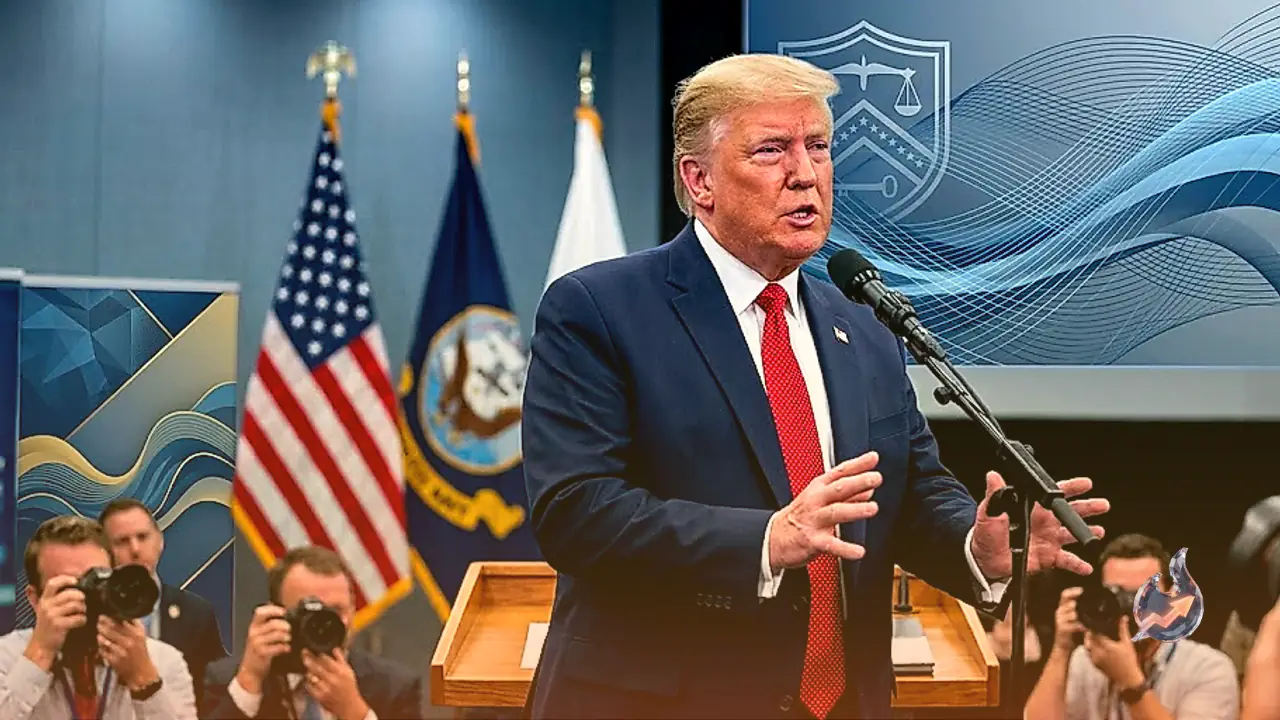

Fresh tensions have flared up regarding diplomatic exchanges between Washington and Tehran as Donald Trump launched a sharp critique against the Iranian leadership. He accused officials in Tehran of projecting a defiant public image while simultaneously seeking private channels of communication, arguing that their current approach suffers from stark contradictions.
Private Dialogue Desires Versus Public Denials
Elaborating on the nature of these interactions, Donald Trump stated that Iranian representatives privately seek out discussions with American counterparts while publicly maintaining that all bilateral communication is non-existent. Expressing frustration over this approach, he noted that negotiations and upcoming meetings often get scheduled, only for the Iranian leadership to turn around and claim they are exclusively talking through Oman rather than directly with the United States.
Strait Of Hormuz Control And Maritime Blockade
The strategic waterway of the Strait of Hormuz emerged as another major flashpoint in the remarks. Dismissing claims made by Tehran regarding control over the vital shipping route, Donald Trump asserted that the maritime passage is entirely dominated by the U.S. Navy, which maintains a strict blockade and operational oversight.
He further warned that until a comprehensive agreement is reached or Tehran capitulates entirely, no cargo will be allowed to move in or out of Iran without explicit American clearance. Re-emphasizing a core national security red line, he made it clear that Iran will never be permitted to develop or acquire a nuclear weapon.
Tehran Stance And Regional Diplomacy
Meanwhile, Iranian Foreign Ministry Spokesman Esmaeil Baghaei addressed the diplomatic impasse by stating that no direct negotiations are currently underway between Tehran and Washington. He mentioned that ongoing discussions involve working alongside Oman to establish a temporary safe passage for vessels navigating through the contested strait.
However, Esmaeil Baghaei cautioned that merely securing an understanding with Oman will not automatically reopen the waterway. According to his assessment, the broader situation will remain deadlocked until the United States halts its hostile actions in the region.
The underlying friction concerning the nuclear program and regional security architecture continues to define relations between the two nations. While both sides have occasionally signaled openness to diplomatic exploration through intermediaries, the persistent gap in mutual trust remains glaringly obvious through their conflicting public rhetoric.