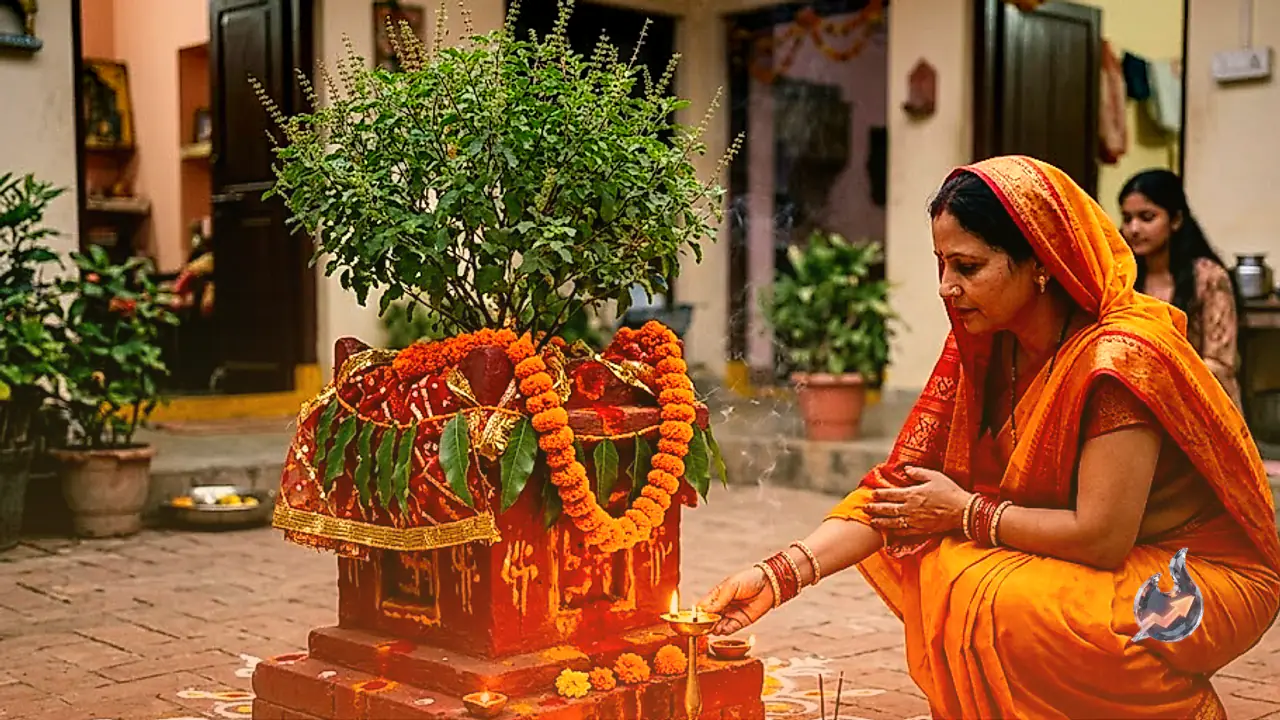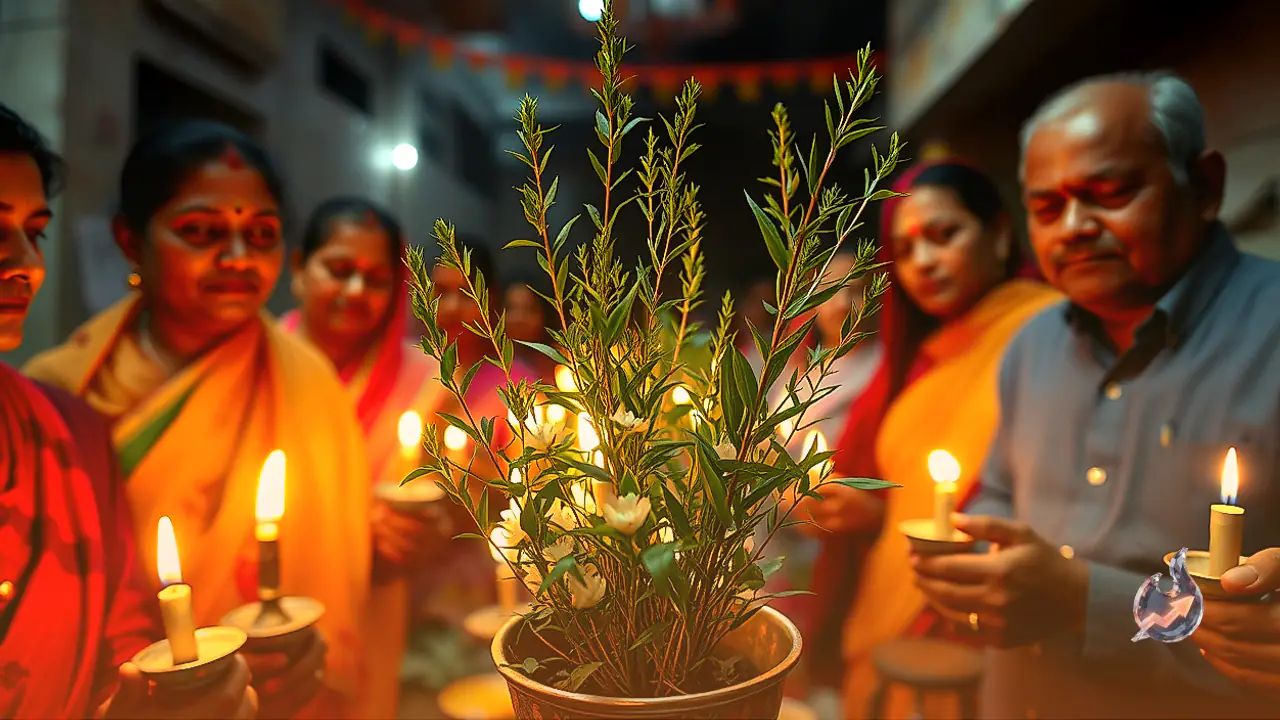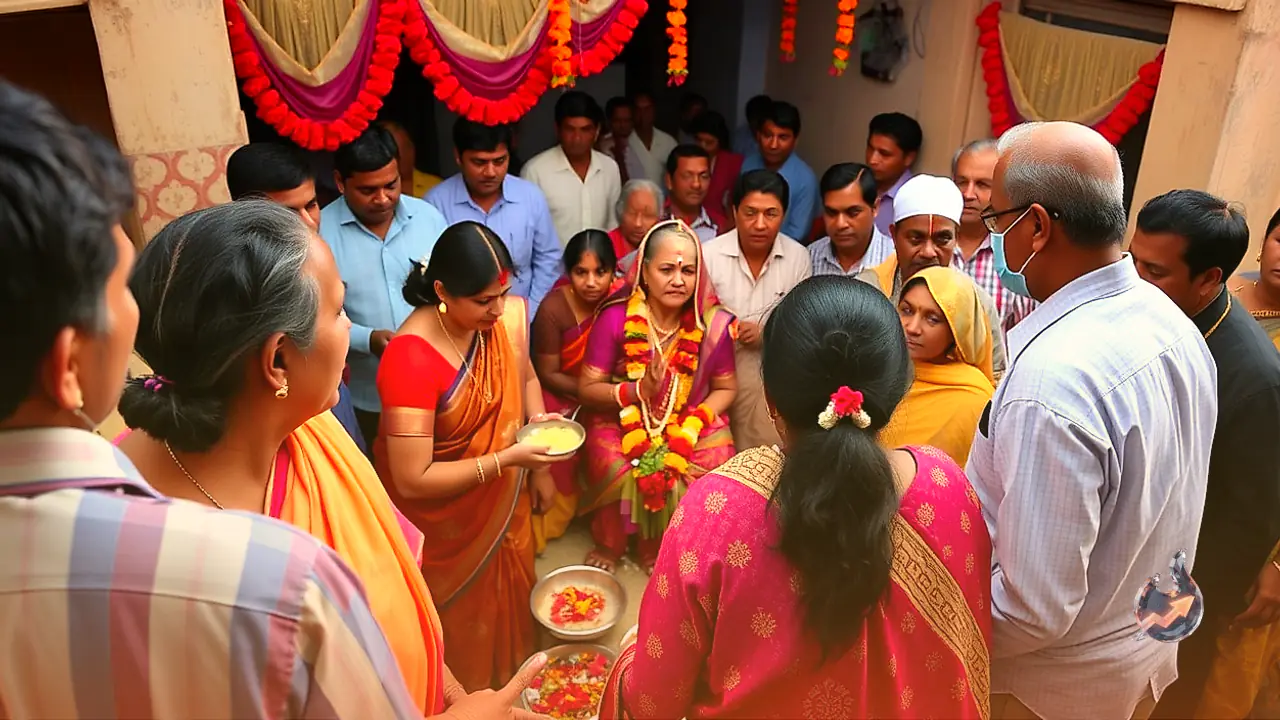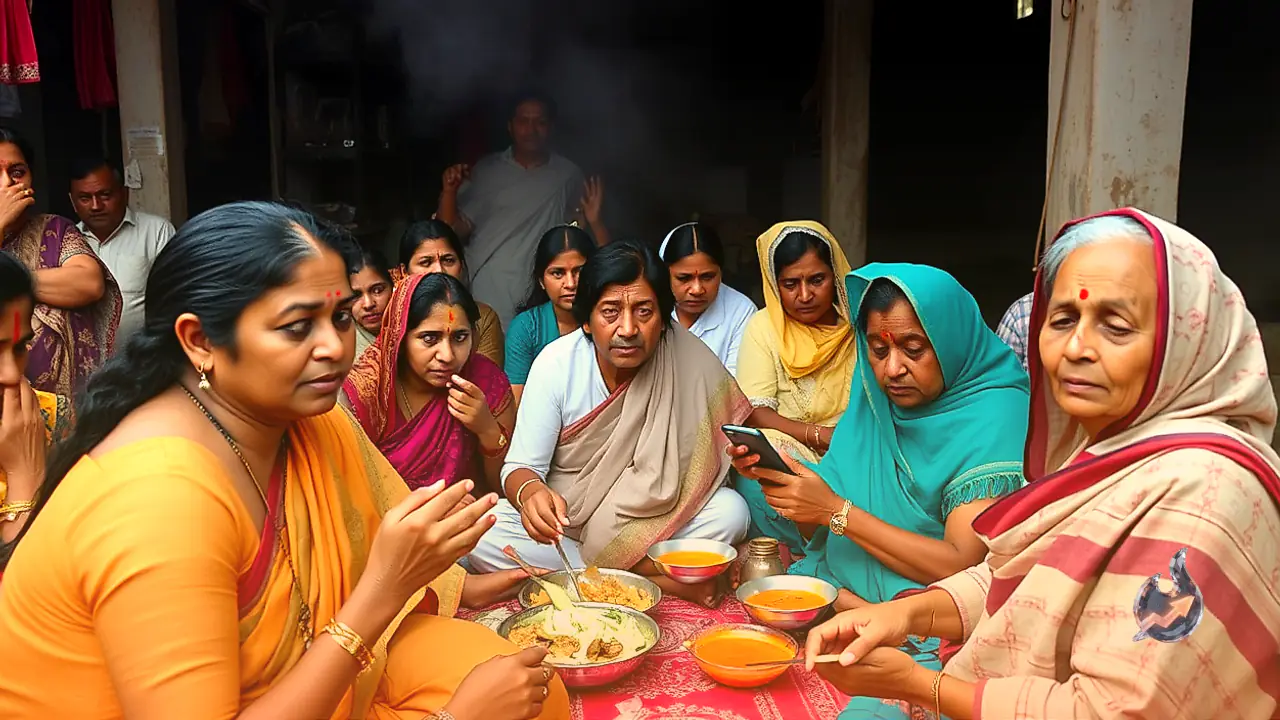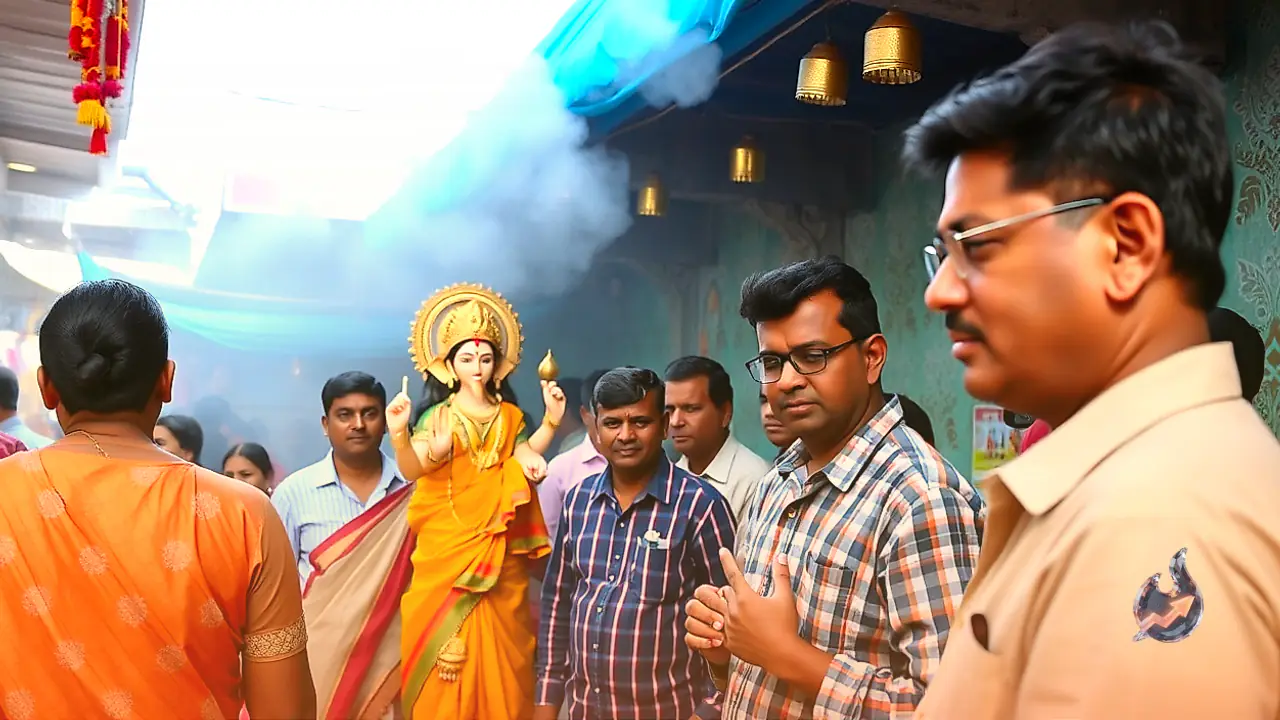
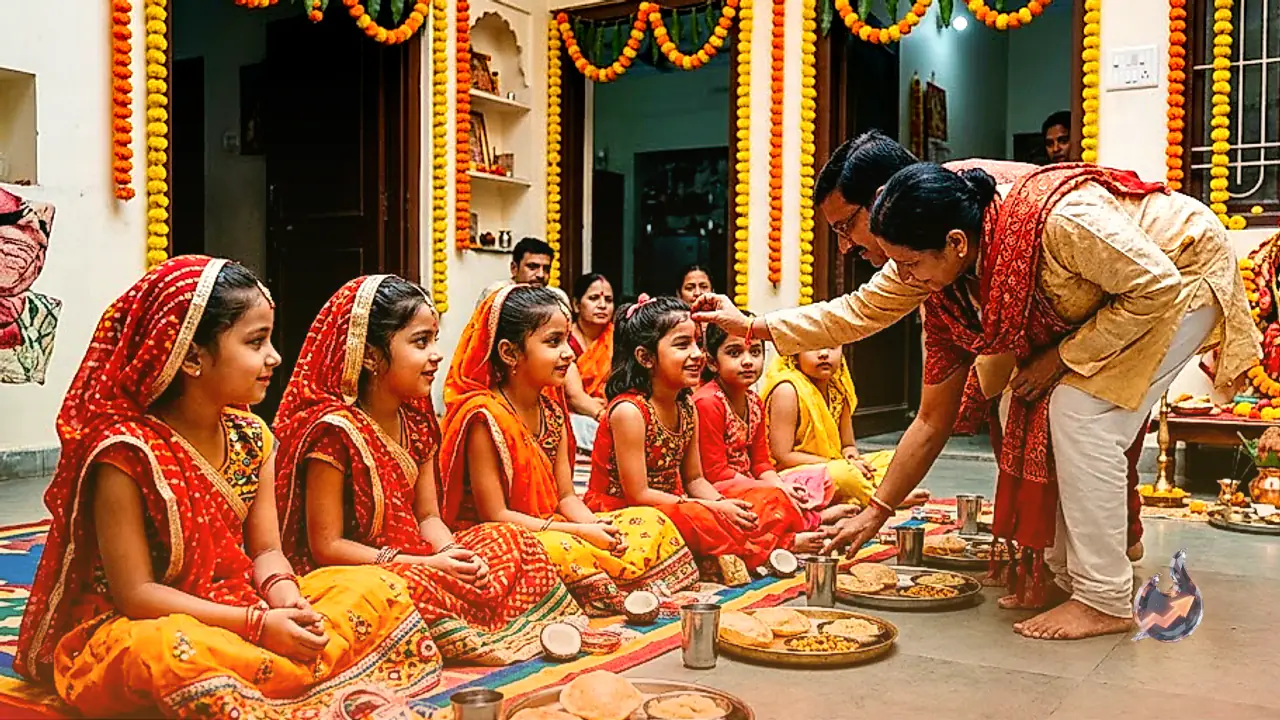



















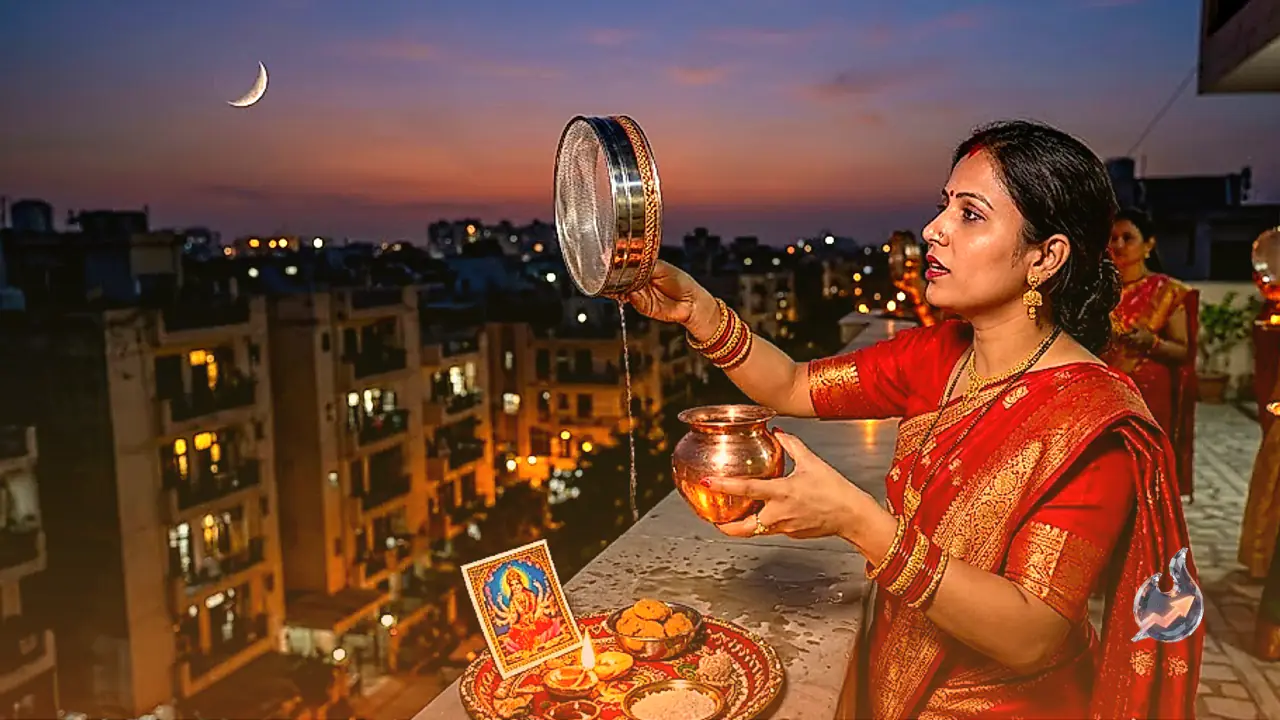

In Indian cultural traditions, the observance of Karwa Chauth represents one of the most sacred and revered occasions for married women. Undertaken for the prosperity, happiness, and long life of their husbands, this fast demands rigorous dedication. Women observe a strict waterless fast from dawn until the emergence of the night sky, abstaining from every form of food and liquid throughout the daytime hours. The completion of this spiritual dedication occurs only after nightfall, when the moon rises and prayers are formally made through the offering of holy water, known as Arghya.
The Sacred Sieve Ritual and Worshipping Chandra Dev
The pinnacle of the day arrives with the sighting of the glowing celestial body in the evening sky. Holding a decorated puja plate, fasting women gaze at the luminous moon through a fine mesh sieve before looking upon their spouses through the same frame. Performing this rite and presenting water to Chandra Dev is regarded as the essential act that validates the entire fast. Spiritual beliefs hold that invoking the blessings of the moon deity bestows longevity upon the husband while filling the household with tranquility and grace.
Essential Moon Mantras and Their Meaning
While allowing water to flow from the vessel toward the moon, women recite specific sacred invocations. A widely practiced and straightforward chant is “Om Somaya Namah” or its variant “Om Chandraya Namah”. The underlying meaning of this devotional chant translates to a reverent prayer: salutations to the divine moon god, seeking blessings of enduring life, happiness, and continuous prosperity for one's husband.
In various regions and household lineages, an extended Sanskrit verse is traditionally uttered during the ritual
“Namah Shashankaya Shantaya Sheetanshu Prabhave Namah Namastestu Jagannatha Suraraja Namostu Te”
The essence of this profound verse honors the soothing and benevolent nature of the celestial deity. It signifies profound reverence to the calm, cool-rayed moon god who presides over universal well-being, requesting an abiding presence of peace, domestic contentment, and divine protection throughout the home.
A Timeless Bond of Mutual Trust and Devotion
As the final drops of the offering touch the ground accompanied by these sacred words, prayers for marital affection and marital longevity are sealed. The husband then presents water to his wife, formally bringing the demanding waterless fast to a close. Beyond external rituals, this customary observance serves as a vital testament to loyalty, partnership, and deep mutual respect within marriage. Celebrated across hundreds of years, the practice continues to reflect the enduring emotional depth and spiritual elegance of Indian heritage.