






















Silicon Valley is facing a growing wave of public skepticism toward artificial intelligence, but top executives and investors appear unable to grasp the true roots of society's discontent. As major technology companies push aggressive rollout plans, recent commentary from corporate leaders reveals a fundamental misunderstanding of why ordinary citizens are increasingly hostile to automated tools and expanding digital infrastructure.
Expanding Anxieties Across Demographic Groups
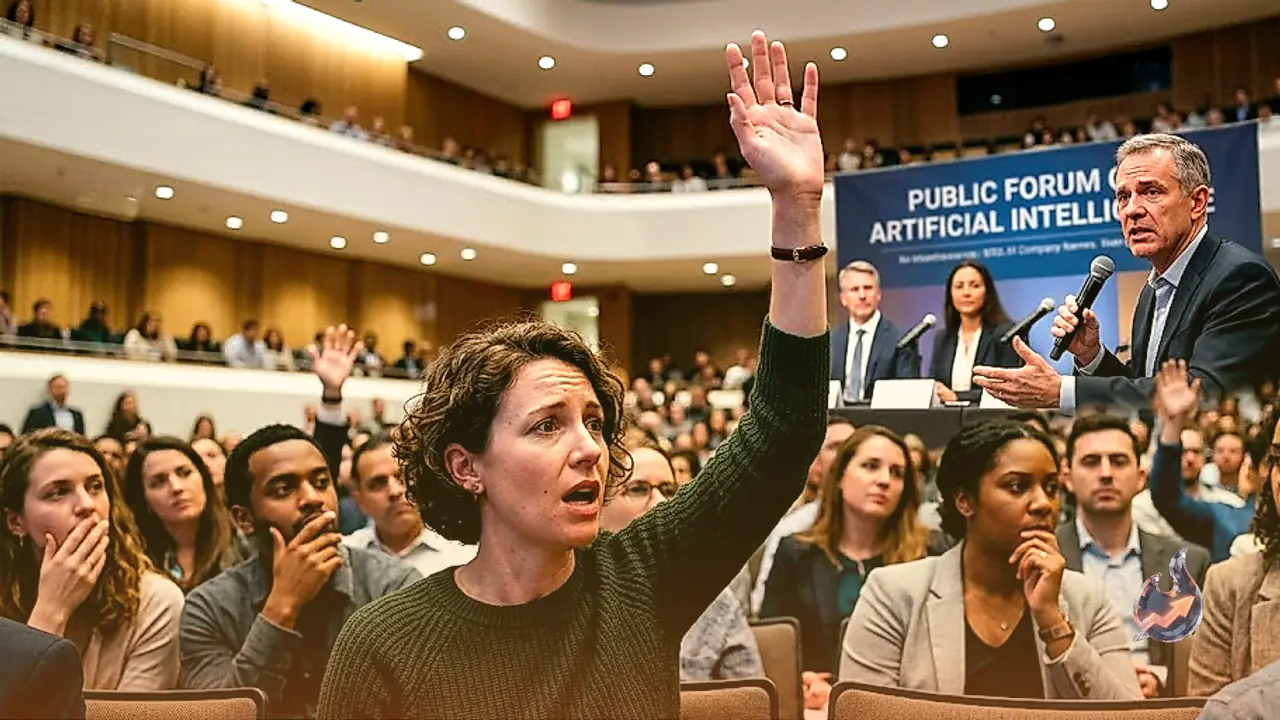
A comprehensive study published by the Pew Research Center demonstrates that hostility toward synthetic intelligence is rapidly intensifying. Over 50 percent of Americans under the age of 30 now report feeling significantly more concerned than excited about automated systems, marking a 24 percent surge in anxiety over the past five years. Across all age brackets, more than 70 percent of survey respondents expressed strong convictions that automation will displace workforce opportunities and permanently reduce total available jobs.
However, public opposition extends well past immediate employment disruptions. Survey findings indicate deep concerns regarding the social development of younger generations, with many respondents fearing that synthetic interactions will weaken human relationship skills. Additionally, there is widespread consensus that technology firms must compensate creative professionals whose original works were absorbed into model training pipelines without authorization. Educational integrity represents another major friction point, as citizens worry that automated homework tools will erode critical thinking capabilities among students.
Consumer Protest and Physical Data Center Friction
Anti-technology sentiment has grown strong enough to enter mainstream commercial marketing. Beverage brands Liquid Death and Garage Beer launched a joint promotional campaign featuring former Philadelphia Eagles football player Jason Kelce, who is also the brother-in-law of Taylor Swift. The campaign humorously urged consumers to mail bottles filled with urine to physical computing facilities. In an interview with Marketing Dive, the creative lead at Liquid Death stated that public anger over data processing facilities was "literally the one thing that unites all Americans right now."
Physical data facilities have increasingly turned into visible symbols of corporate expansion and resource extraction. Despite industry assurances highlighting responsible water usage, renewable energy procurement, and municipal investments, rural and suburban communities frequently view these sprawling facilities as intrusive manifestations of tech power that yield few local benefits.
Executive In-Fighting and Conflicting Visions
Attempting to reshape the public narrative, Meta CEO Mark Zuckerberg authored a 6,500-word essay outlining a optimistic future driven by personal digital assistants. He described an ecosystem where every individual relies on a customized virtual assistant that draws from historical personal application data to coordinate professional schedules, personal hobbies, and child-rearing tasks. Zuckerberg argued that granting the public unrestricted access to advanced automated tools remains the single best path forward.
Yet deploying such intimate systems requires an extraordinary degree of public trust, an asset that current polling shows tech manufacturers lack. In his essay, Zuckerberg took a direct swipe at Anthropic CEO Dario Amodei, remarking that "discourse from many developing AI is so filled with doom."
Echoing these sentiments on social media and the All-In podcast, technology investor Gavin Baker claimed that "Dario’s messaging has been massively helpful to efforts to ban data centers here in America." White House adviser and podcast co-host David Sacks similarly asserted that Anthropic's "narratives have done more than anything to shape public fear."
The Underlying Crisis of Institutional Trust
The criticisms prompted a detailed response from Dario Amodei, who rejected the notion that executive commentary caused public pushback. In a lengthy public post, Amodei argued that the friction is fundamentally a crisis of trust, noting that ordinary citizens harbor deep suspicions toward corporations and governmental bodies after decades of broken promises. He acknowledged that tech firms have so far failed to deliver on major public claims, such as utilizing advanced computation to discover universal cures for complex diseases like cancer.
Implications for Commercial Product Adoption
Data from the Searchlight Institute confirms that public apprehension cannot be fixed through refined branding, as varying promotional messages produce negligible changes in public opinion regarding societal harm. While rank-and-file engineers frequently report hearing intense concerns from friends and family members, C-suite leadership continues to misdiagnose systemic distrust as a simple communication failure. Unless technology companies directly address real-world community impacts, growing public resistance will pose a major bottleneck to consumer product adoption.