



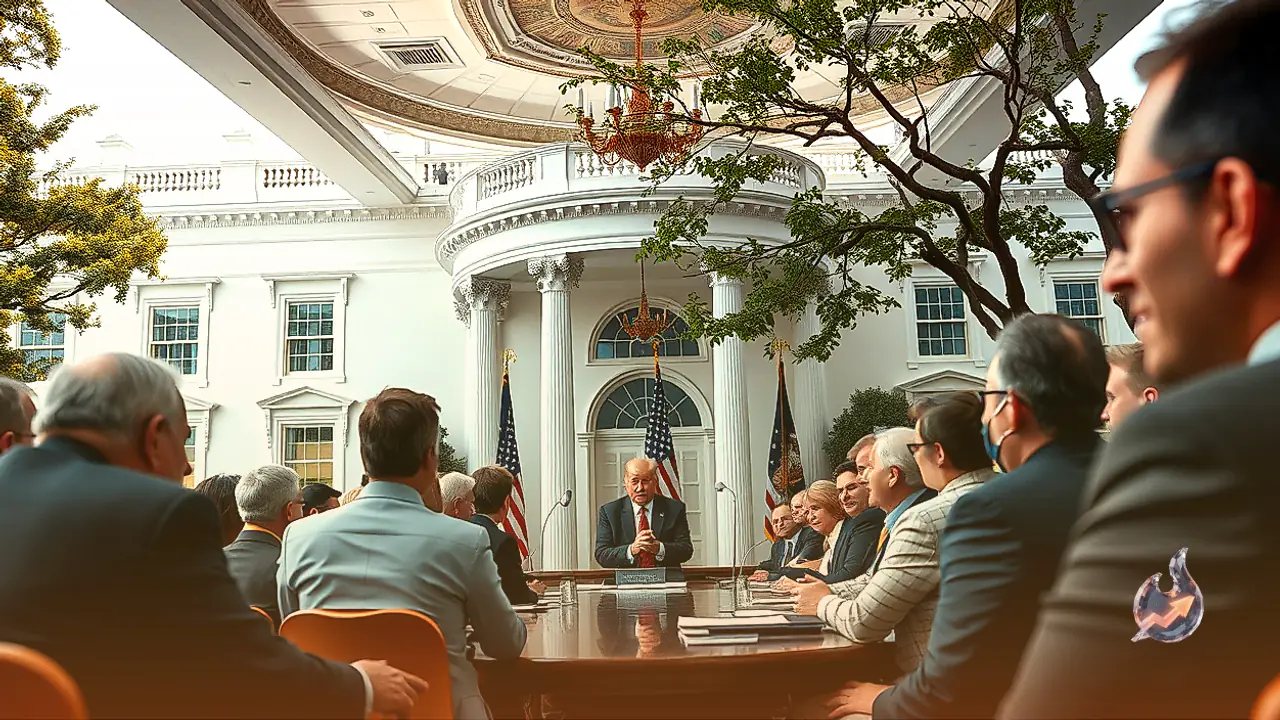



















In an unexpected reframing of American technological policy, President Donald Trump convened the most prominent figures in cutting-edge computing for a high-profile summit at the White House. The most striking outcome of the gathering was an official decree regarding terminology. Under a newly signed executive order, the United States government will no longer utilize the term artificial intelligence in its official capacities, mandating instead that all designated representatives refer to the technology strictly as super intelligence.
Alongside this terminological decree, the attending technology executives endorsed a collaborative safety document titled the Joint Commitment on Frontier Responsibilities. However, the substance of this pact and the rapid shift in governmental rhetoric have prompted intense debate among technology analysts and policy experts regarding the actual efficacy of voluntary standards and public-relations shifts.
The Scope of the Terminology Mandate
The presidential executive order establishes a rigid linguistic protocol across the federal apparatus. United States representatives participating in domestic administration, diplomatic initiatives, and policy formulations are now formally instructed to excise the traditional designation of artificial intelligence from their standard lexicon in favor of super intelligence.
Observers suggest that this calculated pivot functions primarily as a strategic rebranding initiative aimed at reshaping public perception. In an environment where popular sentiment has grown increasingly wary of automation, workforce displacement, and existential hazards, the transition to fresh nomenclature attempts to establish a psychological barrier between previous anxieties and current federal initiatives. Reinforcing this posture, the administration paired the linguistic transition with the unveiling of a newly proposed institutional body designated as the Super Intelligence Force.
A Swift Reversal on Technology Oversight
The swift realization of this pact marks a stark departure from the administration's aggressive anti-regulatory rhetoric voiced only weeks prior. Initial positions maintained that the domestic development of advanced computation should operate entirely unfettered to secure American strategic supremacy, dismissing cautionary voices and regulatory advocates as politically motivated adversaries aligned with hostile interests.
Despite that vehement opposition to formal constraints, the White House rapidly orchestrated this joint gathering of corporate leaders. The accelerated timeline behind the initiative was underscored by notable oversights in official documentation, including an embarrassing typographical error in the spelling of the United States on the finalized commitment sheet distributed for executive signatures.
Corporate Power Brokers on the National Stage
The luncheon and subsequent public presentation assembled an extraordinary concentration of private tech leadership. High-profile attendees included Meta Chief Executive Mark Zuckerberg, Amazon founder Jeff Bezos, and Tesla leader Elon Musk. Anthropic Chief Executive Dario Amodei also participated in the proceedings, marking a significant personal appearance given recent frictions.
The joint press conference conducted in the wake of the signing quickly circulated across digital networks, drawing widespread commentary regarding the unusual public dynamics among fierce market rivals standing shoulder-to-shoulder behind federal podiums. The awkward interpersonal exchanges and stiff posturing became an immediate focal point of public scrutiny and online satire.
Institutional Rifts Over Corporate Relationships
The inclusion of Dario Amodei follows a period of notable tension between Anthropic and federal agencies. The chief executive's attendance was facilitated by a private late-night dinner with the president scheduled at 10 p.m. only days before the summit, an encounter whose planning and internal visibility appeared disjointed within executive scheduling.
Beneath the outward display of unity, persistent rifts remain visible across different branches of the federal government. The Department of Defense has maintained an openly adversarial stance toward Anthropic, with defense officials frequently voicing sharp criticism across X. The core friction stems from national security considerations and the restrictive guardrails the private lab attempts to impose on the governmental deployment of its models. Conversely, the Department of the Treasury has demonstrated far greater enthusiasm for integrating the company's technical capabilities, illustrating a fractured administrative consensus regarding external partnerships.
Voluntary Measures and the Moral Obligation Argument
From an operational standpoint, the newly minted Joint Commitment on Frontier Responsibilities contains negligible regulatory force. The document does not establish enforceable legal thresholds, mandatory compliance audits, or statutory penalties for non-adherence. Analysts widely characterize the arrangement as deeply non-binding in every legal respect.
Addressing the total absence of regulatory teeth, the president framed the accord as morally binding. This designation represents an unprecedented rhetorical abstraction in federal oversight, as voluntary moral commitments offer no structured mechanism to compel corporate transparency or enforce compliance. The framework leaves participating enterprises free to advance commercial roadmaps without structural accountability.
Public Rebranding Versus Substantive Safety
Ultimately, the summit is seen primarily as an exercise in industrial and political messaging. Rather than crafting rigid legislative guardrails to address structural disruption, algorithmic bias, or critical security vulnerabilities, the proceedings centered on recasting the public narrative.
By drawing a rhetorical line between the threatening connotations historically linked to artificial intelligence and the triumphant framing of super intelligence, policymakers and tech titans sought to alleviate broader societal unease. Nonetheless, independent industry observers caution that cosmetic nomenclature adjustments and toothless voluntary pledges leave fundamental ethical and systemic questions entirely unresolved.