























American President Donald Trump’s aggressive negotiation tactics and abrasive public statements appear to be backfiring on the international stage. Following persistent pressure and contentious remarks regarding Canada, bilateral ties have plummeted to a new low. The collapse of a major trade deal between the two neighbors served as an initial blow, but the geopolitical landscape shifted further when Ottawa decided to re-engage with Beijing after an eight-year freeze in military and strategic dialogues. This sudden shift in policy has alarmed policymakers in Washington and raised serious questions about the long-term effectiveness of current American foreign policy.
Resumption of Military Dialogue After Eight Years
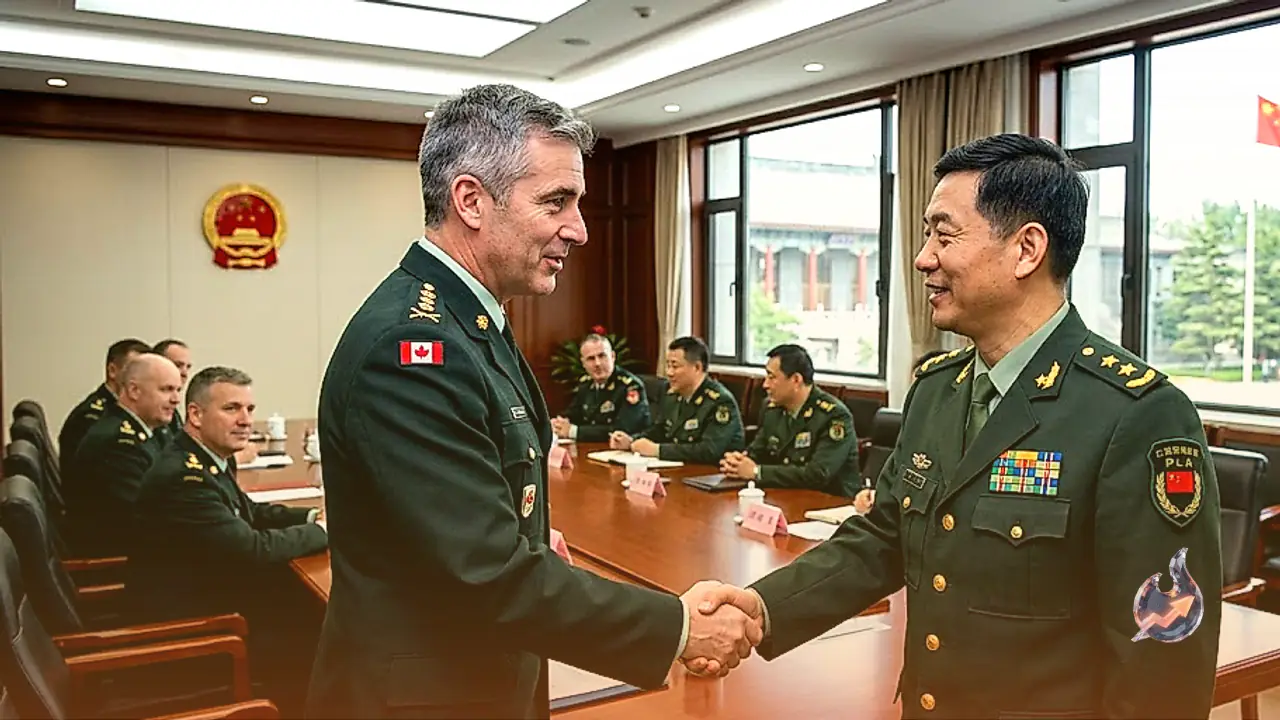
Breaking a nearly decade-long diplomatic chill, Canada and China recently convened their fifth defense co-ordination dialogue to discuss regional and global security matters. The Chinese defense ministry confirmed the high-level talks, describing the exchange as candid and in-depth, with both nations agreeing to explore practical cooperation and foster mutual trust at the military level. The Canadian defense ministry acknowledged the meeting, though the development immediately sparked domestic political friction, with the Conservative Party strongly objecting to any form of military engagement with Beijing. Analysts note that while the Canadian navy's maneuvers through the Taiwan Strait had previously angered China, shifting geopolitical necessities have compelled both nations to restore communication channels.
Domestic Criticism Mounts Over Trump Administration Policies
The warming of ties between Ottawa and Beijing has triggered severe criticism of the White House from within the United States. David L. Cohen, who served as the US ambassador to Canada during the Biden administration, launched a public critique of the current administration, attributing the diplomatic fallout directly to aggressive trade policies and disparaging rhetoric directed at Canada. Cohen argued that by persistently bullying a vital neighbor, the administration inadvertently drove Canadian leadership to seek alternative partnerships with global rivals. Observers point out that this outcome directly contradicts the broader strategic goal of containing China's rising global influence.
Collapse of Trade Talks and Escalating Rhetoric
Tensions between Washington and Ottawa extend well beyond diplomacy, crippled severely by the total breakdown of trade discussions. Last month, a high-profile bilateral trade agreement collapsed abruptly, prompting a sharp response from Canadian Prime Minister Mark Carney. Carney stated that the neighboring superpower was not interested in an equitable economic partnership, but rather sought total subordination. Conversely, US Vice President JD Vance criticized Canada during a recent political rally, alleging that Ottawa was granting unfair advantages to Chinese goods over American products, a situation he maintained was entirely unacceptable.
Behind the Scenes of the Failed Mega Trade Deal
The intricate sequence of events that led to the collapse of the trade agreement highlights deep-seated political friction. In August, when negotiators were on the brink of finalizing the accord, discussions unraveled completely. According to former ambassador Cohen, while trade representative Jamison Greer operated with professional diplomacy, commerce secretary Howard Lutnick played a disruptive role that derailed the consensus. Lutnick accused Canadian officials of introducing arbitrary conditions at the last minute for domestic political leverage. Meanwhile, political analysts observed that when Carney presented the draft agreement to provincial premiers, he faced fierce domestic pushback driven by widespread anti-Trump sentiment in Canada, rendering the terms politically toxic.
Shifting Diplomatic Dynamics and Global Implications
Amidst the escalating tensions between the North American allies, broader geopolitical ironies are coming to light. While the administration remains locked in disputes with its most reliable northern neighbor, preparations are reportedly underway for Chinese President Xi Jinping to visit the White House, a high-level engagement that did not occur throughout the preceding administration. This evolving diplomatic chess match highlights a growing paradox where aggressive rhetoric fails to isolate adversaries, instead alienating traditional allies and forcing a realignment of global partnerships.