




















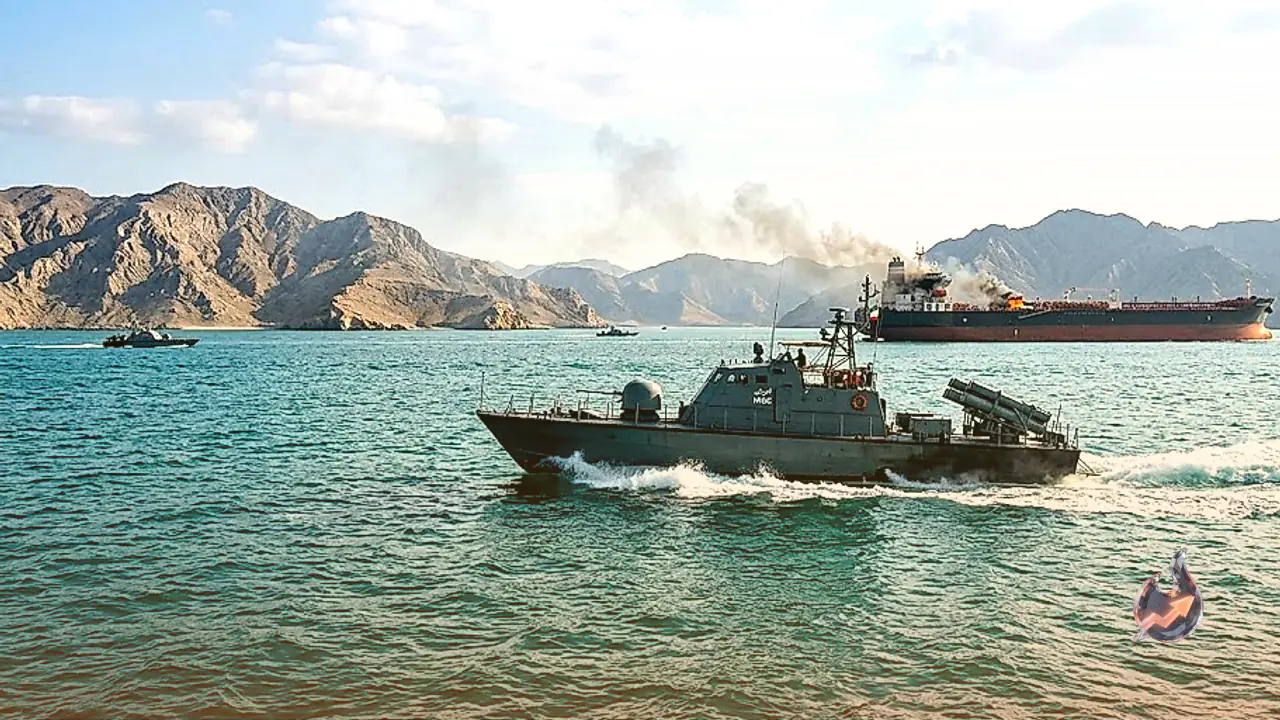

Military friction in the Persian Gulf has surged sharply following US President Donald Trump's blunt dismissal of a diplomatic arrangement proposed by Tehran. Iran had previously presented terms aimed at de-escalating confrontation and facilitating safe maritime transit through the Strait of Hormuz, but Washington dismissed the proposal while issuing stern warnings. Tehran responded with an assertive show of force within the narrow waterway, directing aggressive strikes against commercial vessels navigating under US naval protection.
Missile and Drone Assaults on Maritime Vessels
Tehran initiated an extensive deployment of cruise missiles, armed drones, and naval assets throughout the waterway. Commercial and protected traffic faced at least 4 coordinated strikes in rapid succession. Multiple detonations echoed across the Persian Gulf, heard clearly by maritime crews on board nearby ships and residents along the Sirik coastline. A dedicated Iranian cruise missile struck a designated maritime target within the passage, accompanied by an unmanned aerial drone strike on a vessel shortly beforehand. At least one vessel sustained direct damage during the assault.
Naval Patrols Around Larak Island
Fast-attack craft belonging to Iran's Islamic Revolutionary Guard Corps were observed operating extensively in the waters surrounding Larak Island. These agile vessels routinely conduct surveillance and execute rapid interception maneuvers across narrow maritime channels. While independent verification of the full tactical damage remains pending, the intense naval concentration and repeated strikes have escalated operational hazards for all international freight operators navigating the route.
Global Energy Supplies Caught in the Crosshairs
The Strait of Hormuz serves as the world's most critical maritime corridor for crude shipments, effectively functioning as the jugular vein of the international energy market. Squeezing this single chokepoint threatens severe ripple effects across refining hubs and power grids extending from Asia to mainland Europe. Sustained hostilities or prolonged transit blockages in the Gulf risk pushing crude prices sharply higher, placing economies worldwide on the brink of acute energy disruptions.