
















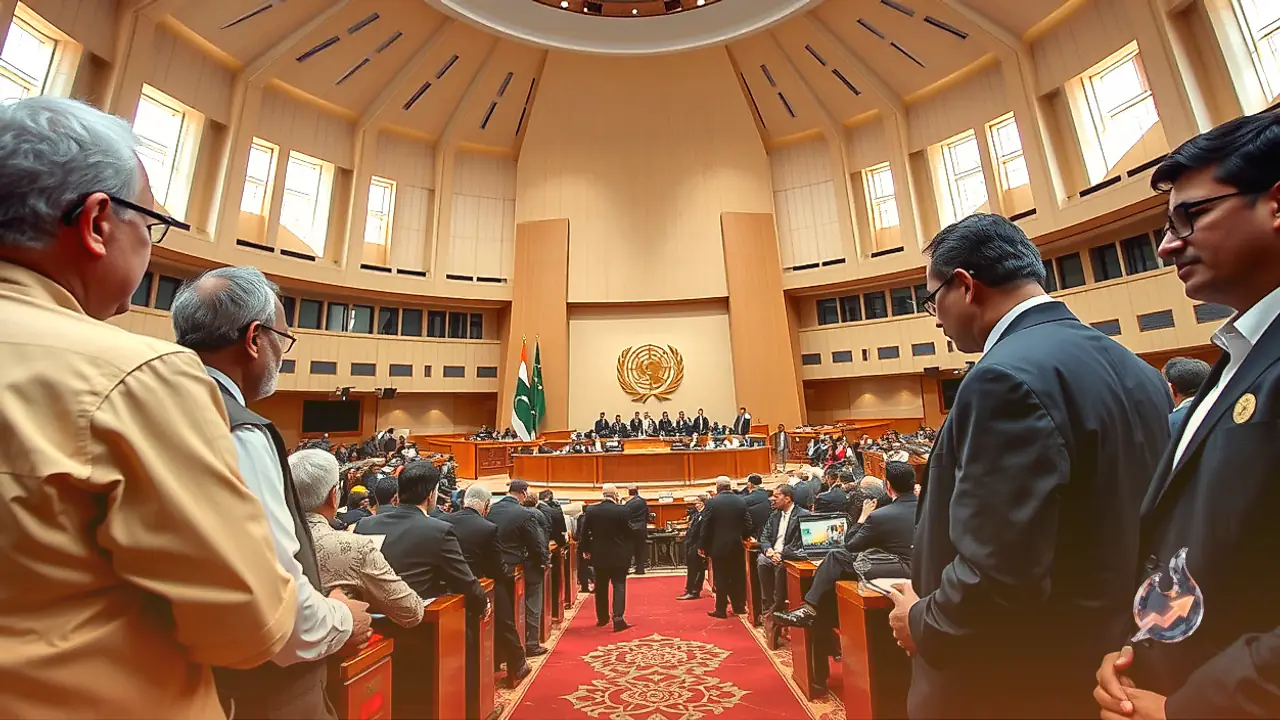

During high-level committee meetings at the United Nations headquarters in New York, India delivered a robust articulation of its sovereign territorial integrity while championing governance reforms within global peacekeeping and humanitarian frameworks. Parliamentary delegates representing India systematically dismantled disinformation regarding the status of Jammu and Kashmir and addressed pressing systemic challenges surrounding the legal accountability of international civil servants. The comprehensive interventions highlighted both regional security concerns and the imperative for institutional transparency across international bodies.
Rebutting Baseless Narrative on Jammu and Kashmir
Participating in the Fourth Committee debate on Decolonization at the United Nations General Assembly, Member of Parliament Mahima Kumari Mewar firmly repudiated statements made by the Pakistani delegation. She emphasized that exploiting multilateral forums to propagate falsehoods concerning Jammu and Kashmir undermines constructive international diplomacy. Reasserting India's longstanding and definitive position, the delegation declared that the territory of Jammu and Kashmir remains an integral and inseparable part of the Indian Union. Mewar pointed out that a state marked by recurrent military regimes, manipulated electoral outcomes, the imprisonment of popular political leaders, and the institutional patronage of cross-border extremism lacks any standing to lecture the global community on political rights or democratic governance.
Spotlighting Human Rights Abuses in Occupied Areas
The Indian delegation brought critical attention to the deteriorating human rights landscape across areas currently under unlawful Pakistani occupation. Mahima Kumari Mewar underscored that the local population in these regions has been staging widespread public resistance against systemic oppression, unlawful resource extraction, and military high-handedness. Over recent months, dozens of unarmed civilians peacefully demanding fundamental democratic freedoms, civil amenities, and basic economic rights have been killed by security apparatuses and affiliated elements. India called upon the international community to take cognizance of these grave abuses and urged an immediate halt to ongoing violence against peaceful dissenters.
Demanding Accountability for UN Mission Personnel
Addressing the Sixth (Legal) Committee during the 81st Session of the General Assembly, Member of Parliament Priya Saroj articulated India's national position on reinforcing accountability for crimes committed by United Nations officials and experts on mission. Reaffirming a strict zero-tolerance policy regarding criminal misconduct, Saroj stressed that the moral authority and credibility of international organizations depend on their capacity to hold transgressors accountable. Welcoming the UN Secretary-General's initiatives pursuant to General Assembly resolution 80/160, including reports A/81/207 and A/81/284, India underlined the necessity of seamless cooperation between international organs and member jurisdictions.
Expedited National Legal Action on Transferred Cases
Highlighting administrative data, Priya Saroj noted that between July 1, 2025, and June 30, 2026, the United Nations Office of Legal Affairs referred 93 cases involving 93 officials and mission experts to their respective home states for thorough investigation and potential prosecution. India urged all recipient nations to act expeditiously on these referrals by instituting timely judicial proceedings wherever warranted. Furthermore, maintaining regular updates to the United Nations regarding domestic investigative outcomes is essential to ensuring transparency. Alongside swift prosecution, the Indian statement prioritized rigorous witness and victim protection mechanisms, adherence to due legal process, and preventative institutional training.
Domestic Legal Safeguards and Victim Support
Saroj elaborated on India's comprehensive statutory mechanisms designed to handle extraterritorial offences. The Bharatiya Nyaya Sanhita (BNS), 2023 provides robust statutory provisions for the domestic prosecution of certain offences committed by Indian nationals outside the country's territorial boundaries. Similarly, the Extradition Act, 1962 establishes a structured legal framework enabling judicial cooperation and the lawful handover of individuals under applicable treaty obligations. Reaffirming sustained support for international humanitarian safeguards, India emphasized its continued commitment to contributing to the Secretary-General's Trust Fund in Support of Victims of Sexual Exploitation and Abuse.