

















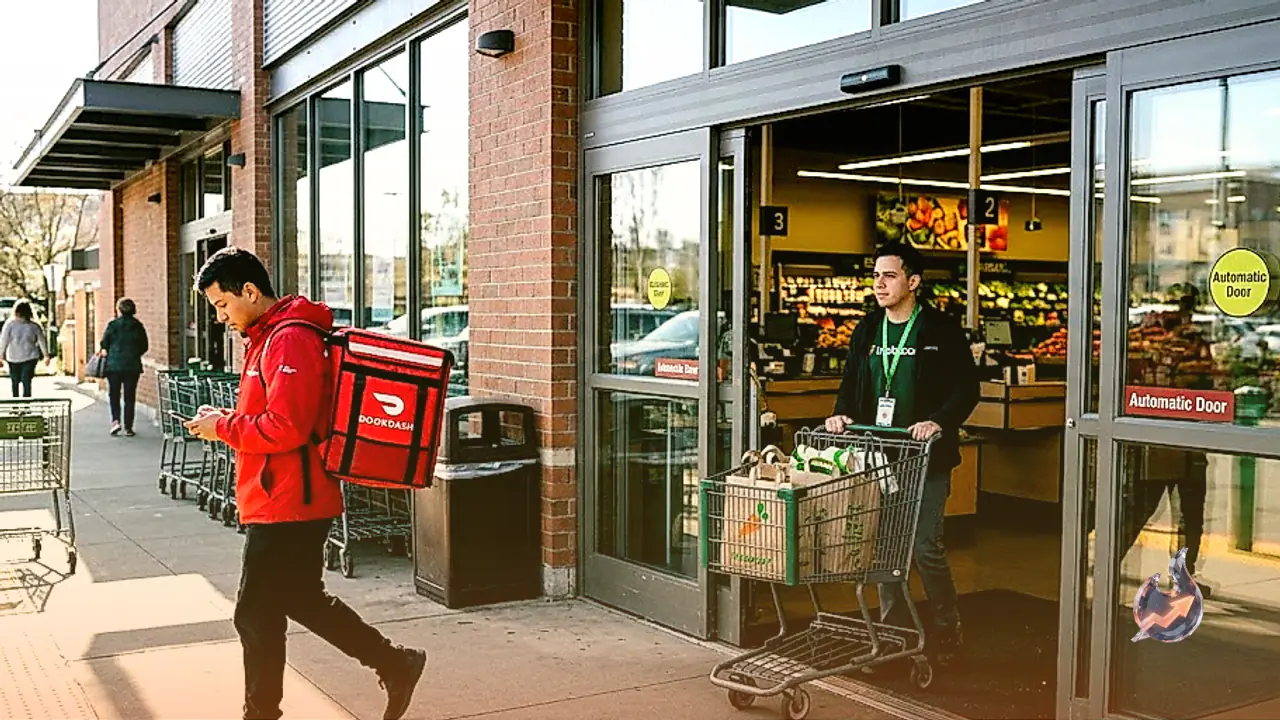

A massive consolidation is taking place in the on-demand logistics landscape as DoorDash announced on Thursday that it has agreed to acquire grocery delivery rival Instacart in a transaction valued at $17 billion. The deal unites two dominant operators within the delivery economy, marrying DoorDash’s extensive restaurant takeout ecosystem with Instacart’s widespread presence in supermarket and grocery retail. The boards of directors at both corporations have formally cleared the transaction.
Transaction Value and Financial Positioning
Under the agreed financial framework, DoorDash will acquire Instacart at a per-share valuation of $65 for each share of Instacart stock. At present, Instacart carries a market capitalization exceeding $13 billion, supported by a 25% share price increase recorded year to date. The decision to accept an acquisition appears timely for Instacart, allowing the firm to secure an advantageous price ahead of escalating competition across the online supermarket segment. Instacart was previously engaged in discussions concerning a potential transaction with Uber before ultimately walking away from those negotiations.
Operational Structure and Brand Preservation
DoorDash has stated that it intends to preserve the Instacart consumer brand, its core mobile application, and its specialized suite of enterprise technology products. Until the acquisition satisfies customary conditions and formally closes, both businesses will maintain their separate corporate structures and run their operations independently. The definitive completion of the takeover is projected to occur either late in 2027 or during the first half of 2028.
Instacart CEO Chris Rogers highlighted the strategic rationale in a press release, stating, “Over the last 14 years, Instacart has transformed online grocery by helping retailers of all sizes compete and grow, and joining forces with DoorDash allows us to do even more.” Rogers emphasized that pairing Instacart’s purpose-built grocery software and established retail partnerships with DoorDash’s international consumer footprint and delivery infrastructure will unlock fresh growth channels for merchants, enhance consumer fulfillment, and create meaningful value for investors.
Merchant Infrastructure and Fresh Food Logistics
The merged entity seeks to empower independent grocers and regional supermarket chains. By utilizing Instacart’s technological stack, retailers will be able to construct their own bespoke digital storefronts and media advertising programs. Concurrently, merchants will gain direct access to DoorDash’s dedicated fulfillment network, enabling stores to manage larger volumes of digital grocery orders while driving down shipping expenses for consumers.
Detailing the logistical difficulties unique to the grocery vertical, DoorDash CEO Tony Xu noted, “Grocery is one of the hardest things to get right online.” Xu pointed out the delicate handling required to pick suitable fresh produce, select accurate replacements, and deliver temperature-sensitive products such as ice cream before they spoil. While Instacart spent more than a decade mastering those retail nuances, DoorDash developed high-volume delivery networks that local merchants depend upon daily. The combined resources are designed to equip physical stores of all scales with the operational tools required to unlock sustainable digital delivery.