























China is actively expanding residential settlements along the Line of Actual Control (LAC) opposite Arunachal Pradesh, a drive that allows Beijing to entrench its footprint across the disputed frontier and steadily alter the region's demographic and strategic balance. A detailed assessment authored by Lieutenant General (Retd.) Abhay Krishna, former commander of the Indian Army's South Western, Eastern, and Central commands, points out that this frontier development initiative serves objectives far beyond routine civilian housing or local economic growth.
Scale of Frontier Resettlement and Administrative Footprint
Official figures show that 241,835 individuals have been brought under the border-village scheme in the Tibet Autonomous Region (TAR). Alongside these existing numbers, plans are underway to relocate tens of thousands of residents across 628 villages dotted right along the frontier. Positioning populated outposts in direct proximity to the LAC allows China to solidify administrative authority, enhance regional connectivity, and establish dedicated nodes to assist military operations. An additional long-term concern is that Beijing could attempt to exert cultural and perceptive influence over younger generations residing in Arunachal Pradesh.
Strategic Placement of Xiaokang Border Villages
The core challenge for India is not merely an immediate cross-border movement of civilians, but the systematic establishment of physical infrastructure and human population clusters that continuously anchor China's frontier posture. Approximately 72 percent of China's "Xiaokang" border villages are positioned near the LAC in India's northeastern sector. Notably, 90 percent of these specific outposts sit directly facing Arunachal Pradesh. Beyond everyday civilian use, these villages are strategically structured to act as forward surveillance stations, communication relay hubs, and critical logistics bases for armed units.
Dual-Use Transport Networks and Tactical Mobility
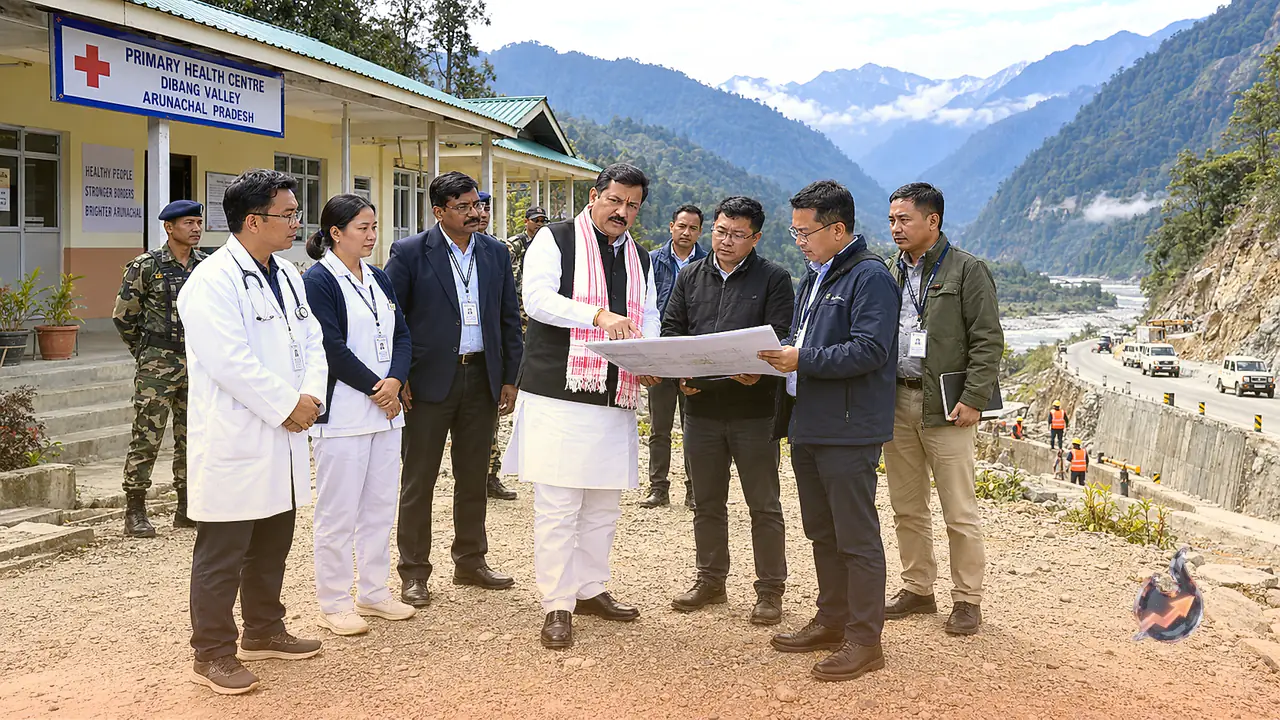
Roads, bridges, and municipal assets constructed under the guise of rural upliftment provide immediate operational utility, granting Chinese forces superior all-weather access and robust resupply routes into sensitive boundary zones. While India has made significant strides since 2014 in engineering border highways, tunnels, bridges, and advanced landing strips along its northern perimeter, the strategic assessment highlights an urgent imperative to focus more sharply on populating, developing, and sustaining civilian villages directly on the Indian side of the frontier.
Recommended Roadmap for India's Frontier Strategy
To establish an effective counterweight, the central government should coordinate closely with the regional administrations of Arunachal Pradesh, Sikkim, Uttarakhand, Himachal Pradesh, and Ladakh to identify suitable zones for civilian habitation closer to the LAC. This initiative requires a time-bound, phased blueprint backed by dedicated financial outlays, dependable road networks, uninterrupted electricity, and a reliable supply of essential provisions. Bolstering vibrant civilian settlements alongside frontier infrastructure remains vital for India to safeguard its presence across high-priority border sectors.