


















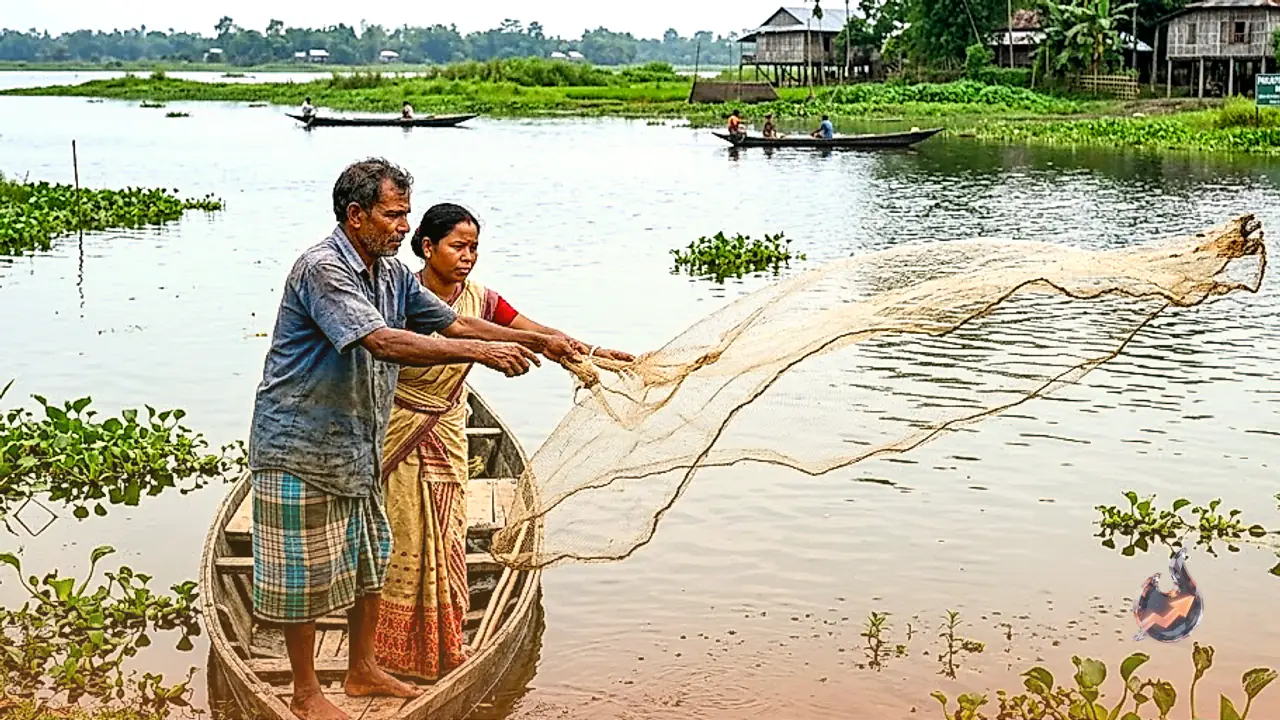

The Assam state government has launched a comprehensive environmental and economic initiative titled Project S.W.I.F.T. with a total investment of Rs 796.88 crore. Designed to rejuvenate traditional wetland ecosystems known as beels, the effort merges ecological conservation with structured fisheries development across rural regions. Chief Minister Himanta Biswa Sarma presented the initiative details, emphasizing that the state's natural water bodies serve as an essential cornerstone of both Assam's ecological balance and the everyday social and economic lives of its citizens.
Extensive Wetland Restoration Across 23 Districts
Supported financially and technically by the Asian Development Bank (ADB), Project S.W.I.F.T. covers nearly 4,000 hectares of natural water bodies located within 23 districts of Assam. Over the years, many traditional wetlands have experienced siltation and degradation. The restoration plan targets long-term ecological rehabilitation, restoring natural aquatic health and ensuring that these wetlands remain productive natural assets for coming generations through sustainable aquatic management practices.
Ambitious Targets for Fish Yields and Fry Seedling Output
Enhancing fish production forms a core operational pillar of the initiative. Through the rejuvenation of these 71 beels, the government aims to achieve a targeted fish production output of 6,000 metric tonnes. To guarantee continuous stocking and sustainable harvest cycles, the project also incorporates a specialized breeding target to produce approximately 570 million fish fry each year, reinforcing local aquatic food security and commercial supply chains.
Direct Economic Grants and Equipment Distribution for Communities
Recognizing the deep connection between wetlands and local livelihoods, Project S.W.I.F.T. provides tangible capital assistance to traditional fishing communities and young entrepreneurs. Under the scheme, authorities will distribute 302 boats and fishing nets to targeted beneficiaries. Additionally, to foster self-employment and entrepreneurial initiatives in the aquatic sector, the government is providing individual monetary grants of Rs 50,000 each to 1,000 local youth.
Infrastructure Development for Self-Help Groups
To bolster the post-harvest sector and value addition, the project introduces dedicated processing facilities for community organizations. Self-Help Groups (SHGs) across the participating districts will receive operational control over 30 newly established fish feed units and 100 fish processing units. This complete chain approach ensures that local communities capture higher value from fish harvesting, processing, and distribution while revitalizing Assam's vital wetland habitats.