















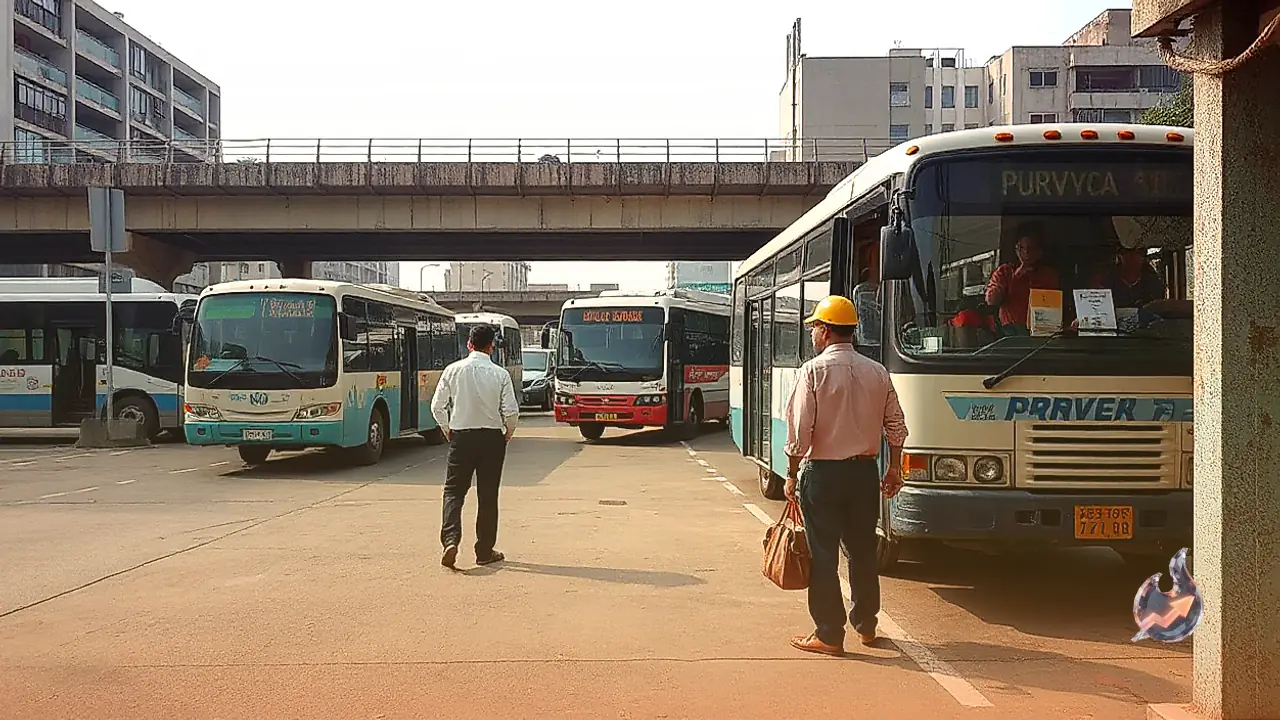

Urban transit specialists, regional administrators, and civic advocates assembled in Assam's largest city to evaluate pressing mobility bottlenecks and formulate solutions for creating an accessible, dependable, and environmentally sound transit framework. Hosted by the non-profit Purvca Foundation at Kanaklal Barua Auditorium, the deliberations at Purvca Samvad 2026 centered on the operational realities of street transit, vehicular pollution, severe traffic congestion, and ecological challenges. A major development during the assembly was the unveiling of a detailed research study that closely documents the mechanics of the bus-based public transportation network across the metropolitan area, drawing attention to the frictions endured by daily commuters and fleet operators alike.
Diagnostic Study Highlights Deficits Across the Bus System
The research volume assesses both mechanical operations and the day-to-day conditions encountered by bus passengers, drivers, conductors, and fleet owners. Field investigators gathered evidence directly from daily riders, individuals who deliberately avoid public transit, and operational crews, coupling these findings with institutional records to chart systematic gaps. According to the inquiry, while urban buses offer a cost-effective mode of travel, systemic irregularities continue to suppress rider numbers. Commuters regularly contend with unpredictable timetables, sub-standard bus shelters, missing first-and-last-mile connections, personal safety apprehensions, and discomfort inside crowded vehicles.
The study equally highlights the severe economic constraints bearing down on bus owners and operating staff. Financial distress often restricts fleet maintenance and compels private operators to alter schedules, compromising the dependability of the network. To move beyond mere identification of flaws, the document proposes structured short-term, intermediate, and long-range measures. These interventions focus on rationalizing travel routes, curtailing unsanctioned roadside stops through rigorous enforcement, modernizing passenger infrastructure at stops, strengthening inter-agency coordination, and engineering an inclusive service capable of meeting diverse commuter demands.
Policy Thinkers Examine Integrated Mobility Solutions
The opening panel, titled Think Buses: Building an Inclusive and Resilient Urban Mobility System, was steered by Dr. Abhinandan Saikia, Associate Professor at TISS Guwahati. The panel featured Tamsin Aftab, Assistant Commissioner in the Assam Transport Department, alongside Subhasish Borah, Assistant Director at the Directorate of Town and Country Planning under the Government of Assam. The panel also included Ashpreet Sethi from ICCT India in Delhi, Rana Amani representing GIZ India from Delhi, and Nipjyoti Bharadwaj from IIT Guwahati.
Panelists explored the transit ecosystem through questions of passenger protection, economic affordability, accessibility, gender sensitivity, and environmental viability. A common consensus among contributors was that municipal planning and transit operations cannot function in silos. Speakers underscored the necessity of building robust pedestrian pathways, lowering reliance on personal vehicles, and fostering active collaboration across municipal departments. Furthermore, panellists highlighted that route restructuring, firm administrative enforcement, operational consistency, and technological tracking are vital to eliminate common headaches like bus bunching and unauthorized street halts. The forum reminded attendees that mass transit represents a collective community asset demanding shared responsibility from civic institutions and residents.
Real-World Vehicle Emissions and Flooding Pressures
Technical analyses continued in the afternoon with two spotlight sessions addressing public health and environmental risks. Dipankar Kakati of ICCT India presented on-road emissions data, demonstrating that real-world tailpipe pollution diverges substantially from controlled laboratory benchmarks. He explained that these excess emissions directly degrade local public health, emphasizing that state regulators must mandate rigorous real-world monitoring while accelerating the transition toward zero-emission vehicle fleets.
In a subsequent presentation, Prof. Akhilesh Kumar Maurya from IIT Guwahati addressed the compounding pressures of gridlock, monsoon inundation, and sluggish mass transit. He observed that urban flooding disrupts transit corridors, requiring authorities to deploy integrated, data-guided municipal strategies rather than isolated emergency responses. Adding to the dialogue, Dr. Rahul Mahanta of Cotton University evaluated the intersections among climate-resilient development and inclusive transit, while Dr. Abhijit Sarma of IIBM Guwahati discussed how land-use policies directly govern transportation outcomes.
Lived Commuter Realities and Theatrical Engagement
The culminating panel, Voices from the City: Experiences from the Ground, was guided by Dr. Simanta Kalita. This discussion gathered senior citizens, bus owners, LGBTQI+ advocates, university students, and caregivers to voice their immediate commuter experiences. The session stepped away from high-level technical policy to reflect the everyday barriers faced on city streets, emphasizing persistent shortcomings in physical accessibility, safety measures, fare structures, and specialized mobility requirements across diverse social groups.
Bringing artistic expression to urban transit issues, the mime troupe Nirbaak, established by mime practitioner Minangka Deka, staged a performance capturing the humorous yet frustrating realities of boarding and traveling on Guwahati buses. The Purvca Samvad 2026 conference was supported by Numaligarh Refinery Limited, Shakti Sustainable Energy Foundation, GIZ India, and ACCMS, with the International Council on Clean Transportation India serving as Knowledge Partner. The deliberations closed with a unified call for structured collaboration between civic authorities, transit professionals, bus owners, and local residents to construct a dependable and climate-ready transit system for the region.