


















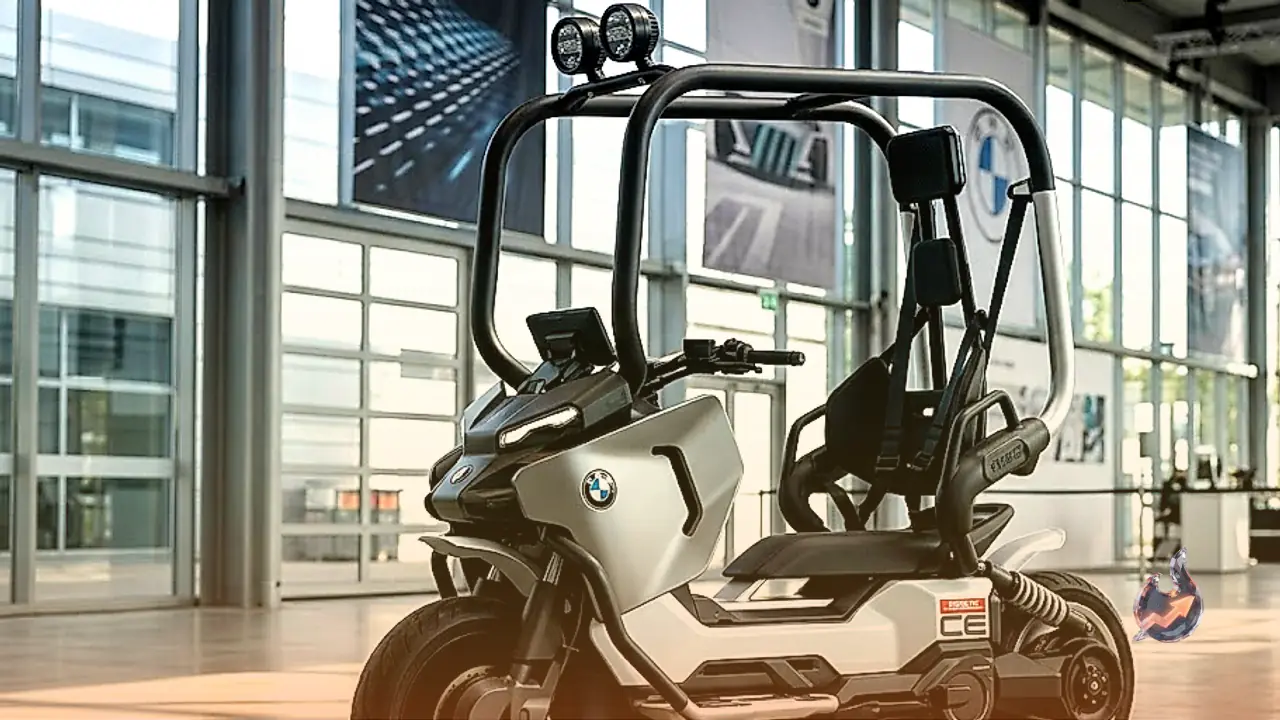

BMW Motorrad has successfully patented the design of its futuristic electric scooter concept, the BMW Vision CE, in India. The standout feature of this two-wheeler is its advanced self-balancing technology, which ensures that the vehicle remains entirely upright even when brought to a complete halt, eliminating any need for a kickstand. Consequently, riders do not have to put their feet down on the ground when stopping in traffic. For enhanced safety, the scooter is equipped with a robust metal cage and integrated seat belts, removing the traditional necessity of wearing a helmet or other protective riding gear.
By making urban commuting remarkably comfortable and secure, this design aims to replicate the overall experience of driving a car. Although the official launch timeline for the concept, which was first showcased at IAA Mobility 2025, has not yet been announced, securing a patent in India clearly highlights the manufacturer's growing interest in the local market. Let us take a detailed look at all the key facts and specifications that have emerged regarding this innovative machine so far.
Advanced Self-Balancing Technology
The core highlight of the BMW Vision CE is its sophisticated self-balancing system. Powered by an intricate network of onboard sensors and electric actuators, the vehicle maintains its equilibrium effortlessly whenever it stops. This completely does away with the tedious routine of deploying a stand or putting feet down at traffic signals and intersections. By delivering a seamless experience reminiscent of operating an automobile, this innovation could make urban two-wheeler riding significantly more approachable for beginners.
Safety Features and Design Inspiration
The chassis incorporates a protective roll cage constructed from lightweight metal tubes, offering comprehensive safety all around the rider. It features a high-backed seat coupled with a four-point seat belt system. Because of these built-in safety measures, the operator is absolved from needing a helmet, riding gloves, or specialized protective apparel. The aesthetic borrows inspiration from the older BMW C1 scooter but reinterprets it in a modern, open layout. An extended wheelbase and forward-positioned footrests further contribute to a relaxed riding posture.
Powertrain and Expected Specifications
Industry expectations suggest that the vehicle could be built on the existing CE 04 platform. The CE 04 features an 8.5 kWh battery pack capable of delivering a riding range of roughly 130 kilometers. Its permanent magnet liquid-cooled synchronous motor churns out 42 hp of power alongside 62 Nm of torque, with the top speed restricted to 120 kilometers per hour. While the added structure of the Vision CE might slightly influence its overall range and speed capabilities, it is anticipated to easily meet daily urban commuting demands.
Patent Status and Future Market Outlook
The filing and registration of this design patent in India has sparked widespread discussions regarding potential local manufacturing or future commercial introduction plans by the company. However, no official release date or production schedule has been communicated by the manufacturer thus far. While securing a patent does not automatically guarantee an immediate market rollout, it marks a significant strategic step within the rapidly expanding Indian electric two-wheeler sector. The BMW Vision CE provides a glimpse into the future of secure, comfortable, and zero-emission urban mobility trends.