






















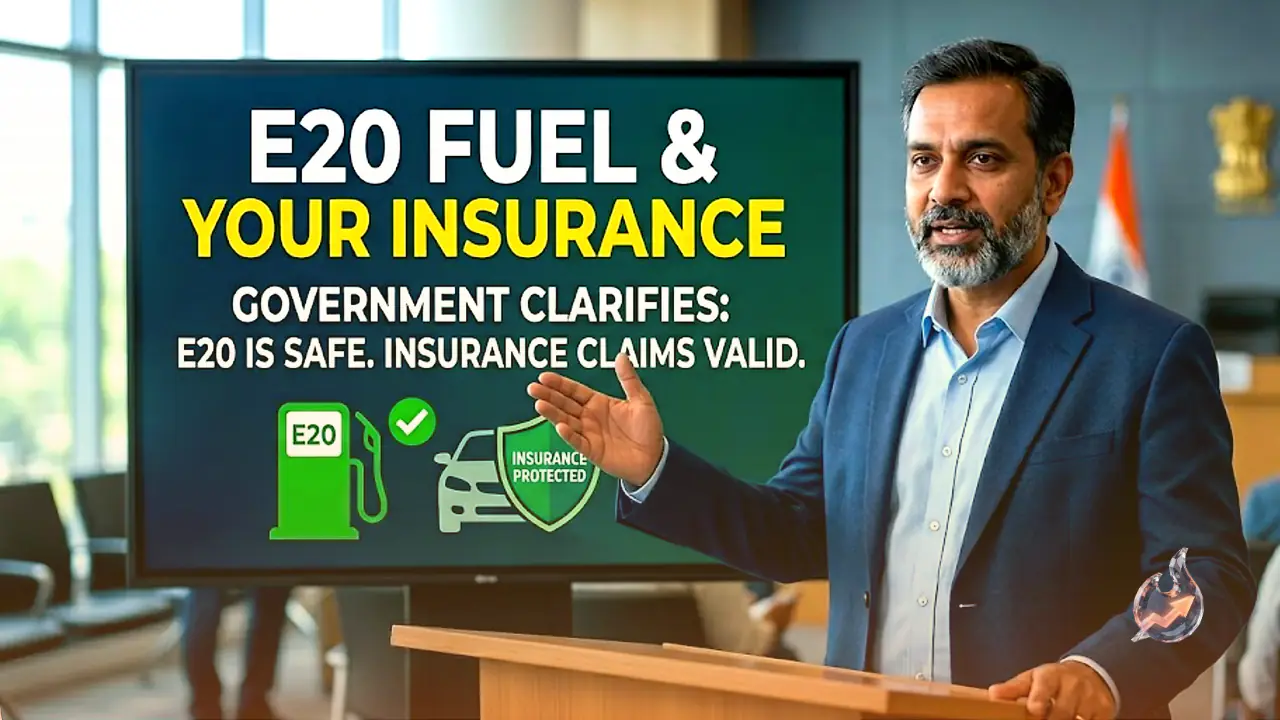

For a while now, a nagging worry had been spreading among vehicle owners across the country over ethanol-blended fuel. Social media chatter and everyday conversations had pushed the idea that if you fill your car with E20 petrol, an insurance company could refuse to pay out a claim in case of damage. The central government has now addressed the matter head on, making it clear that E20 fuel is completely safe and has nothing to do with the validity of your vehicle insurance.
In its statement, the Ministry of Petroleum and Natural Gas said claims that filling E20 petrol would get your insurance claim rejected are entirely baseless. According to the ministry, all the relevant bodies and experts were consulted on the issue, and the examination showed that talk of claims being cancelled or policies being voided is nothing more than rumour, with no truth to it whatsoever. The government also pointed out that mixing ethanol into petrol has been common practice in many countries for years, and nations such as the United States, Brazil and Japan have been using it successfully.
Other Countries Already Blend Even More
Citing an example, the ministry noted that Brazil has long been running E27, that is petrol blended with 27 percent ethanol, as an ordinary everyday fuel in its vehicles. Against that backdrop, there is no reason to panic about E20, which carries just a 20 percent blend, in India. The government argues that adding ethanol reduces our dependence on petrol, and that directly benefits the environment too.
How Much The Country Has Gained
According to government figures, the ethanol blending programme has helped India save more than 1.4 lakh crore rupees in foreign exchange so far. With crude oil imports falling, the country's import bill has come down and energy security has been strengthened. On top of that, demand for sugarcane, maize and other farm produce used to make ethanol has risen, putting more income directly into the hands of farmers.
A Win For Both The Environment And Farmers
The government says ethanol blending helps cut carbon emissions and is proving to be an important step towards cleaner transport. It is giving strength to the rural economy on one hand, while supporting the goal of raising farmers' incomes on the other. The overall message is simple: there is no need to fear E20, only a need to understand the benefits it brings.