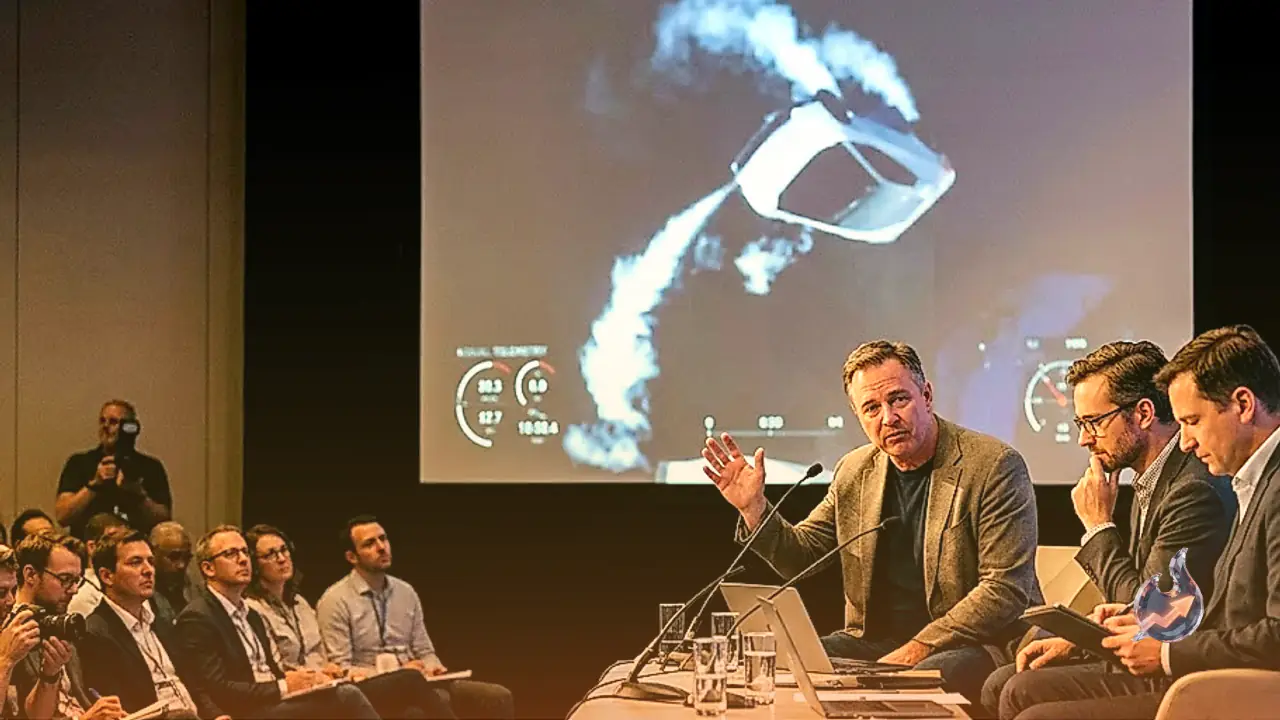

Tesla has sparked widespread debate across the automotive sector after unveiling a demonstration video of its upcoming Roadster executing high-altitude maneuvers. The footage depicts the electric vehicle speeding up a curved incline, rotating entirely while airborne, and subsequently touching down onto the pavement without visible disturbance. While the presentation positions the vehicle as a breakthrough approaching flying car capabilities, automotive engineering specialists have strongly challenged the technical viability of the demonstration. Industry experts emphasize that while controlled stunt work or digital sequences look striking on screen, engineering such acrobatics into a standard assembly-line production vehicle remains fundamentally unfeasible.
Rocket Propulsion Claims and Rapid Acceleration Targets
Elon Musk has maintained that the high-end Roadster incorporates specialized cold-gas thrusters derived from aerospace rocketry concepts. These mechanisms function by discharging gas under intense pressure to generate instantaneous directional propulsion. Tesla asserts that this configuration permits the sports car to reach approximately 97 kilometers per hour in under one second. According to company projections, commercial production for the vehicle is scheduled to commence in 2028. Nonetheless, independent observers remain deeply skeptical regarding the practical safety, aerodynamic stability, and structural tolerance required for an automobile to leap into the air, perform mid-flight rotations, and land safely on standard roadways.
Automotive Expert Dismisses Visuals as Marketing Entertainment
Automotive specialist Tutu Dhawan publicly scrutinized the presentation, characterizing the promotional video as engaging entertainment designed primarily for brand visibility rather than genuine engineering progress. He noted that broadcasting an automobile soaring through the sky provides zero proof that such mechanics could operate reliably in daily transport settings. Modern passenger cars are strictly designed around road-contact dynamics rather than airborne trajectories.
Vehicles are built for road travel rather than circus acrobatics, making mid-air flips completely unfeasible for everyday functional transport.
Dhawan highlighted that the depiction of cars clearing a commercial haulage truck mid-air and landing perfectly upright contradicts the practical realities of vehicular weight distribution and physical impact absorption. In his view, the sequence was manufactured strictly to serve promotional ambitions, cautioning consumers against treating dramatic visual marketing as demonstrable technological capability.
Parallel Scrutiny Surrounding Musk's Starlink Network
The skepticism directed toward Tesla comes alongside ongoing international debate regarding another prominent venture overseen by Elon Musk, the satellite internet constellation Starlink. During the conflict in Ukraine, the operational deployment of Starlink services drew intense scrutiny from geopolitical monitors. Critics pointed out that fluctuations in connection speeds or regional network access held direct operational consequences for defense forces reliant on satellite communications. Addressing these allegations, Musk stated that active oversight of the relevant service deployment remained with the Pentagon rather than under his individual discretion.
Regulatory and Operational Concerns for Indian Markets
These international controversies have prompted heightened caution regarding the entry and expansion of Musk-led commercial entities into India. Analysts underline that regardless of how advanced an imported technological infrastructure might appear, widespread domestic reliance on centralized foreign systems carries substantial implications for national security. Observers emphasize that prior to clearing broad operational footprints across transport and telecom verticals, Indian authorities must enforce strict parameters around local governance, executive accountability, and independent domestic control over strategic communications and mobility assets.