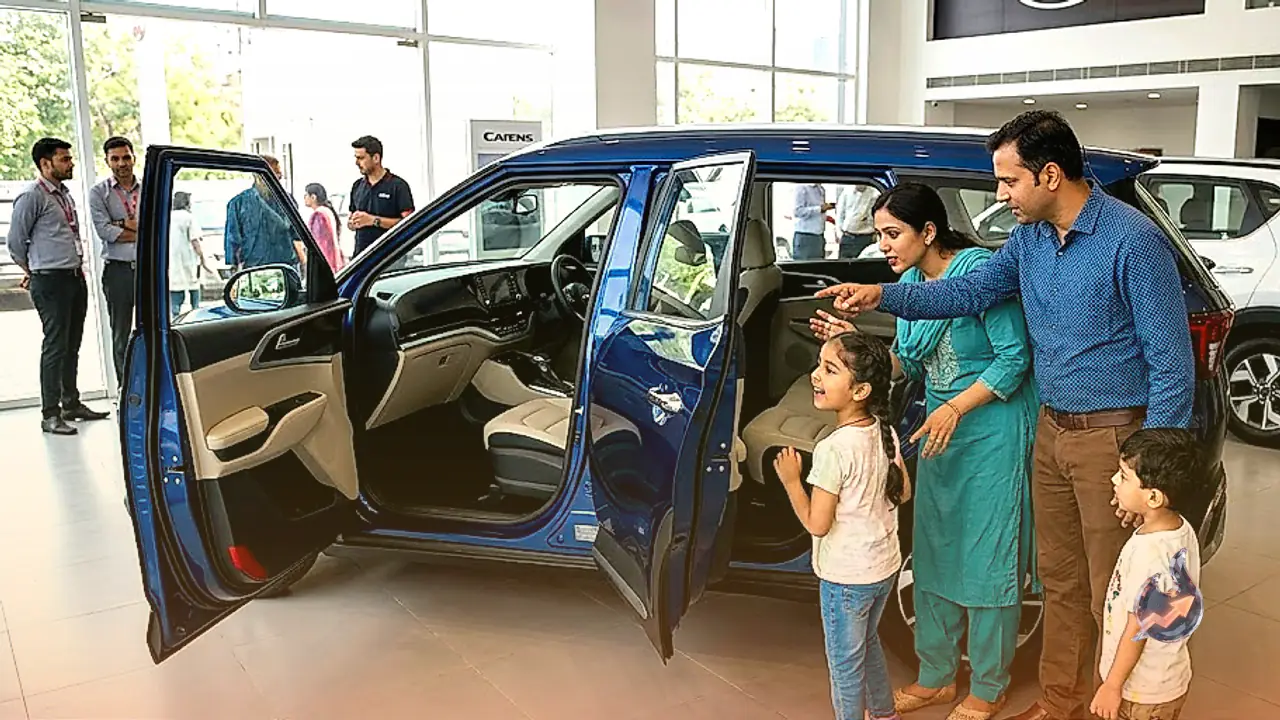
























When shopping for a brand-new daily driver, buyers frequently find themselves caught in a dilemma between the showroom sticker price, fuel efficiency, and powertrain performance. Traditional petrol cars generally boast the lowest upfront acquisition cost, but persistently climbing fuel prices place an ongoing financial drag on the household budget. Conversely, compressed natural gas models deliver significantly cheaper running expenses, though they bring trade-offs such as compromised luggage space and long queues at filling stations. Meanwhile, zero-emission electric vehicles offer unmatched operating economy per kilometre, despite demanding the steepest purchase premium at the showroom.
Judging a car solely by its initial showroom price tag is often misleading. The prudent approach is to evaluate the complete cost of ownership spanning a realistic 5-year horizon. This comprehensive math must factor in the drive-away on-road acquisition price, the recurring fuel or energy expenditure, and routine maintenance commitments over the entire tenure. Using the Tata Nexon as a representative benchmark, which retails in petrol, turbocharged i-CNG, and pure electric variants, reveals how these economics play out under identical real-world demands.
Baseline Driving Parameters and Cost Assumptions
To establish a consistent framework for evaluation, consider a typical office commute amounting to roughly 40 kilometres of daily driving. Over a 12-month calendar, this accumulates to approximately 15,000 kilometres, yielding a cumulative 5-year distance of 75,000 kilometres. The financial modeling incorporates representative market rates: petrol pegged at ₹95 per litre, CNG priced at ₹80 per kilogram, and residential electricity billed at ₹8 per unit.
1.2-Litre Turbo Petrol: Upfront Affordability vs Fuel Drain
The 1.2-litre turbo petrol variant of the Tata Nexon carries an estimated on-road price of ₹11,50,000. Under everyday mixed driving conditions, it delivers a realistic fuel efficiency of 13 to 14 kilometres per litre, averaging out to about 13.5 kilometres per litre. Covering the target distance of 75,000 kilometres across five years consequently demands roughly 5,555 litres of petrol.
With fuel costing ₹95 per litre, the total fuel bill over five years totals ₹5,27,700. Internal combustion engines also require consistent mechanical upkeep; periodic replacement of engine oil, air and fuel filters, spark plugs, and standard service checks adds an estimated maintenance tab of ₹45,000. Combining the purchase price, fuel expense, and scheduled servicing pushes the total 5-year financial outlay to around ₹17,22,700.
Turbocharged i-CNG Variant: The Practical Middle Path
Choosing the Tata Nexon i-CNG model entails an estimated on-road cost of ₹12,60,000, representing an upfront premium of around ₹1.1 lakh over the petrol counterpart. On the road, the vehicle returns an estimated real-world mileage of 20 kilometres per kilogram. Clocking 75,000 kilometres over a 5-year period requires consuming approximately 3,750 kilograms of CNG.
At the rate of ₹80 per kilogram, the 5-year gas expense comes to ₹3,00,000, offering substantial savings compared to petrol. Maintenance obligations, including mandatory CNG kit pressure testing, spark plug renewals, and standard engine servicing, total approximately ₹50,000 across five years. Adding the on-road price, fuel costs, and servicing produces an overall 5-year expenditure of roughly ₹16,10,000, making it the most economical total package among the three at this mileage.
40.5 kWh Long Range EV: High Entry Cost with Pennies-per-KM Running
At the upper end of the acquisition spectrum, the Nexon.ev equipped with a 40.5 kWh Long Range battery pack demands an estimated on-road investment of ₹16,50,000, which is approximately ₹5 lakh higher than the base petrol alternative. In practical driving conditions, the battery pack delivers an effective real-world operating range of 280 to 300 kilometres on a full charge, translating to an energy draw of roughly 14 units of electricity per 100 kilometres travelled.
Over the full 75,000-kilometre timeline, total energy consumption works out to approximately 10,500 units of power. At a standard domestic tariff of ₹8 per unit, the entire 5-year charging cost amounts to just ₹84,000. Furthermore, because battery electric vehicles do away with complex multi-gear transmissions, motor oil, and combustion spark components, routine servicing costs are exceptionally low at roughly ₹25,000 over five years. Summing the purchase cost, home charging, and maintenance yields a 5-year total of about ₹17,59,000.
Selecting the Ideal Car for Your Commute Profile
Each powertrain addresses distinct commuter priorities, making the optimal choice dependent on personal driving habits and infrastructure access
- Petrol Car: Ideal if your monthly driving remains under 500 to 700 kilometres. It suits motorists looking to restrict their initial capital outlay who primarily use the vehicle for occasional weekend excursions and highway trips.
- CNG Car: Best suited for commuters clocking moderate to high monthly travel between 1,000 and 1,500 kilometres, provided there is a reliable local CNG dispensing network. It delivers the most budget-friendly overall ownership cost over 5 years without introducing range anxiety.
- Electric Car: Highly recommended if daily commutes regularly exceed 50 to 60 kilometres and home overnight charging is readily accessible. The EV rewards owners with an effortless automatic drive, a silent cabin, and zero exhaust emissions. If your total 5-year usage climbs past 1,00,000 kilometres, the cumulative savings easily overtake both petrol and CNG alternatives.
Please bear in mind that these calculations serve as an estimated comparative guide. Actual drive-away costs, insurance premiums, fuel charges, and local power tariffs naturally fluctuate based on your geographical location, individual driving style, and ambient traffic conditions. Prospective car buyers should always consult nearby authorized vehicle dealerships to verify exact regional pricing before making an investment.