



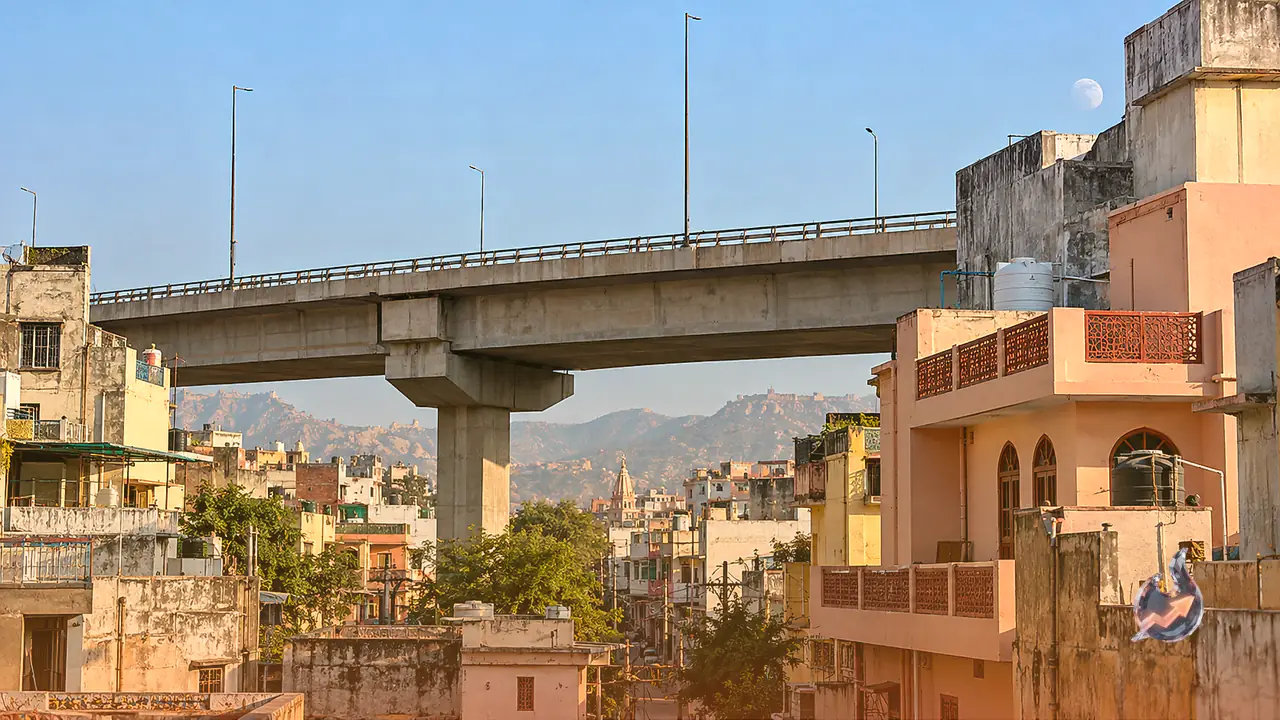















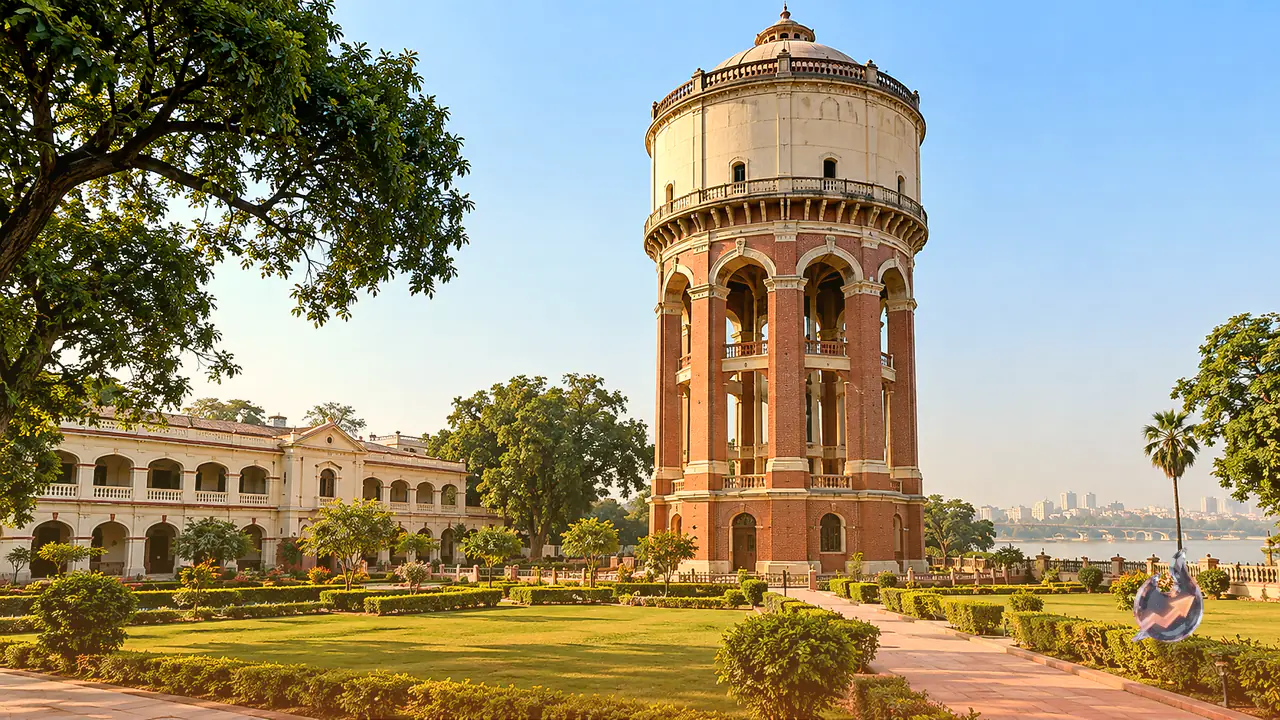

Patna holds numerous structures within its borders whose walls conceal fascinating tales of the city's bygone eras. As time progressed and the city expanded rapidly, modern civic amenities replaced older systems, yet these quiet witnesses of history continue to stand tall. One such remarkable heritage structure is the nearly 108-year-old water tower situated near Miller High School in Patna. While this tower no longer distributes water to households today, it once served as a vital component of the municipal water supply network that quenched the thirst of a large portion of the city. Now, the Government of Bihar is preparing to develop this historical landmark into a vibrant tourist destination so that future generations can closely understand this chapter of Patna's rich history.
When the New Capital Was Taking Shape
Elaborating on the history of this water tower, Ravishankar Upadhyay, a prominent litterateur and researcher of Patna's history and heritage, notes that the origins of this structure are closely tied to the period when Patna was being developed as a modern provincial capital. In the year 1912, Bihar and Orissa were carved out of Bengal to form a brand new province. Following this administrative change, massive construction work commenced to establish Patna as a fully functional capital. The British authorities placed considerable emphasis on organizing basic civic infrastructure alongside the construction of the secretariat, grand government buildings, and official residences.
Construction Completed Between 1915 and 1918
As part of this very sequence of urban development, the water tower was commissioned to strengthen the local water supply arrangement. According to available records, construction on the tower took place between 1915 and 1918, and it became fully operational by 1918. Standing at an impressive height of roughly 130 feet, the tower showcases the distinct architectural style and engineering prowess of that era. Its unique brickwork sets it apart from other contemporary buildings. At that time, Patna was not a sprawling metropolis like it is today, making a robust water supply system an essential prerequisite for the capital's growth. The tower emerged as a direct symbol of that pressing need and the urban planning vision of the period.
Water Reached the Tank via Steam Engines, Not Electric Motors
While utilizing electric motors to pump water into overhead tanks on residential and commercial rooftops is commonplace today, the technology a century ago was starkly different. Ravishankar Upadhyay explains that a steam engine was deployed to pump water up into Patna's historic water tower. The storage capacity of the tower's tank was approximately one hundred thousand gallons. Powered by the steam engine, water was successfully lifted into the reservoir and subsequently distributed across a major section of the city. This mechanism was crucial in meeting the daily demands of the emerging capital during those early decades.
The narrative of this tower extends far beyond its sheer height or unique architectural design, as its operational methodology forms an equally fascinating chapter of history. Once the massive tank filled up completely, a red warning light was illuminated to send a clear signal. Upon receiving this visual cue, operators would shut down the steam engine. To supply water to this specific tower, a dedicated boring well was constructed near AN College, from where groundwater was pumped directly up into the elevated reservoir.
Shifting Urban Needs Leave the Tower Behind
With the passage of time, Patna underwent substantial physical expansion alongside a surge in population, prompting inevitable changes in municipal water supply methods. As modern technology and new piped networks were introduced and developed, the practical utility of this old water tower gradually diminished. Today, the facility no longer pumps water, leaving only its sturdy structure to serve as a reminder of an older technological era.
A Rs 4 Crore Initiative to Preserve History
Plans are now underway to give this historic water structure a complete makeover. Under a project backed by the Government of Bihar with an estimated budget of about four crore rupees, the site is slated for transformation into a modern tourist hub. Following the official laying of the project's foundation stone by the Chief Minister, concrete steps have been initiated toward the beautification of the surrounding area. The comprehensive plan envisions developing the tower grounds and constructing a modern cafeteria nearby. Beautification work has been proposed across an area spanning roughly 1,440 square feet, with the core objective of making the heritage site appealing to visitors and offering them a glimpse into Patna's past.
Global Examples of Preserving Old Structures
Upadhyay further noted that similar efforts to beautify old water towers and convert them into thriving tourist attractions have been successfully undertaken in several countries around the world. An old water tower located in the Netherlands serves as a prime example of this trend. He explained how that historic structure was repurposed by integrating a cafe, restaurant, library, and film screening facilities, breathing new life into the asset. By preserving the original architecture while transforming the space into a public gathering spot, the location successfully serves contemporary social needs. Patna's historic water tower is now poised to move forward in this very direction.