


















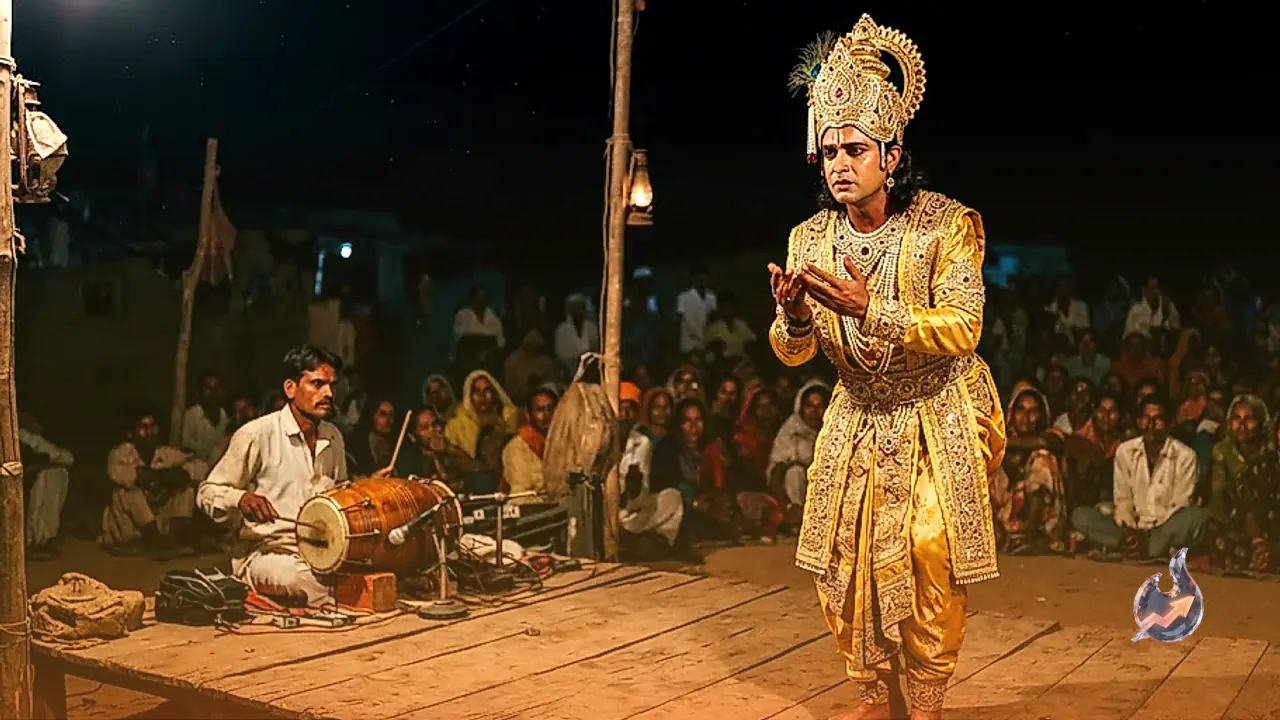

The Ramleela staged in the town of Bissau holds a distinct identity across the country for its unique presentation style. While the stages of Ramleela elsewhere typically echo with the booming voice of Ravana and chants dedicated to Lord Rama, the atmosphere in Bissau remains entirely devoid of Ravana's roar, Rama's dialogues, or hymns. In this unique silent Ramleela, characters perform their roles completely without speaking, yet their compelling acting brings the entire epic vividly to life before the audience.
The History Of Silent Ramleela Spans Around 180 Years
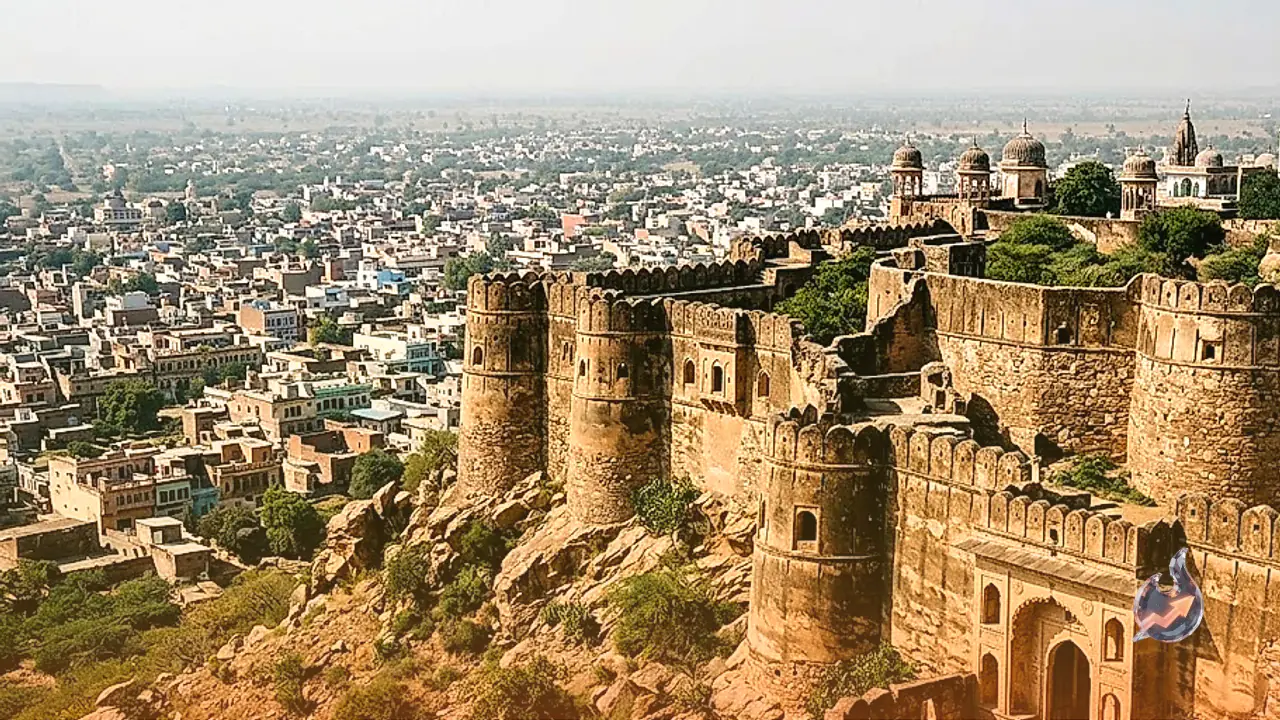
Various views exist regarding the origins of this remarkable tradition. While some locals estimate it to be over two hundred years old, historian Trilokchand Sharma notes that it was initiated about 180 years ago by Sadhvi Jamna. She gathered a few village children at Ramana Johad in Bissau and began staging Ramleela scenes. Initially, handmade masks were crafted to match the children's roles, but wearing the masks made it difficult for them to deliver dialogues. Consequently, they were instructed to play their parts entirely without speaking. Gradually, this method transformed into an established tradition, and Bissau's silent Ramleela carved out a unique identity. Starting from Ramana Johad, the tradition moved over time to Gugoji ka Teela and then Station Road. Since 1949, it has been staged on the main market road near the fort, continuing to this day. Through nearly two centuries of evolution, many changes have occurred, but the silent format of the Ramleela remains intact.
Ravana Is Slain On Chaturdashi Instead Of Dussehra
The most fascinating tradition of Bissau's silent Ramleela lies in its schedule and the killing of Ravana. In conventional Ramleela events, Ravana is slain and his effigy is burned on Vijayadashami, but Bissau follows a different path. Here, the Ramleela is performed for about 15 days from Ashwin Shukla Pratipada to Purnima, and Ravana is vanquished on Chaturdashi rather than Dussehra. When most of the country has already witnessed Ravana effigy burnings on Dussehra, Bissau's events continue according to its own enduring tradition. In the final days, the effigies of Kumbhakarna, Meghnada, and Ravana are burned. Following this, on the occasion of Bharat Milap, a grand procession of the Shri Rama court is taken out across the entire town.
Characters Wear Masks And Perform To The Beat Of Drums
All characters in this Ramleela make extensive use of masks. The identity of the performers is determined not by their spoken words, but by their expressions, costumes, and acting. The attire for Rama, Lakshmana, Bharata, and Shatrughna features yellow dhotis, angrakhas, long hair, and crowns, with their masks decorated using sequins. Characters such as Hanuman, Bali, Sugriva, Nala, Neela, Jatayu, and Jambavan also appear with distinct costumes and unique masks. Meanwhile, Ravana's army wears black clothing and carries swords, staying ready for battle. Throughout the performance, the beating of drums plays a pivotal role, guiding the movements of the characters and the progression of battle scenes. Notably, loud-speakers are completely absent, allowing the Ramayan episodes to be communicated effectively without any sound amplification equipment.
Open Fields Transform Into Ayodhya, Panchavati, and Golden Lanka
Instead of a modern stage, Bissau's silent Ramleela utilizes an open ground as its arena. The northern section of the field is set up with a wooden structure representing Ayodhya, while a golden-hued Lanka is constructed in the southern section. Panchavati is established right between them. Sand is spread across the ground and sprinkled with water to create a suitable environment for the performances. In earlier times, all principal characters would arrive at the venue riding horses from the Ramleela Haveli, a practice now replaced by vehicles while still striving to preserve the core traditional essence of the event.
An Exemplar Of Communal Harmony And Folk Tradition
Bissau's silent Ramleela is not merely a religious observance, but a symbol of the region's cultural heritage and social harmony. Passed down through generations for roughly 180 years, this tradition connects people deeply to their roots. The art of performing without speaking, the traditional costumes, the open-air staging, and the rhythm of the drums set it apart from all other Ramleela productions. To witness this unique tradition, local residents, Non-Resident Indians, and outside tourists gather in large numbers. For them, it is much more than a theatrical staging of the Ramayan; it is a rare opportunity to observe closely a folk art where deep emotions and powerful messages are conveyed without uttering a single word.