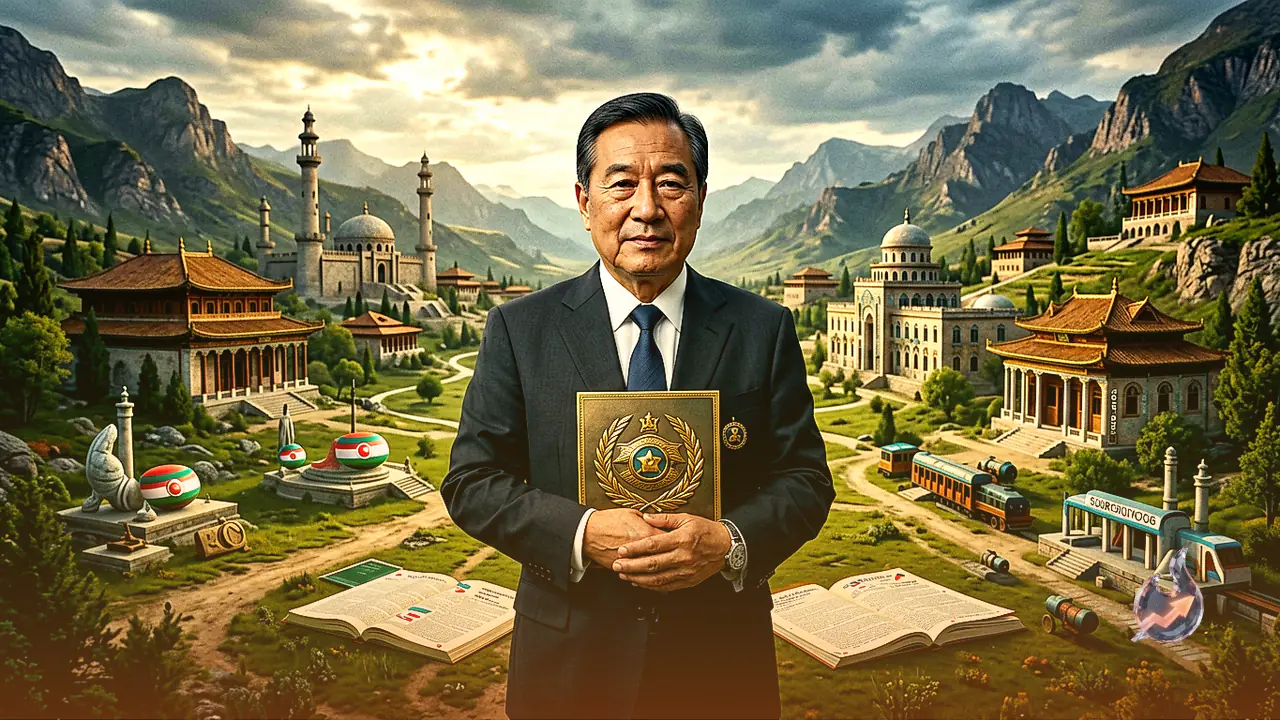


















The 1947 partition of India was never just a line drawn on a map. It was also a story of families torn apart, innocent lives lost to communal violence, and leaders forced to make hard calls on several fronts at once. One lesser known but consequential episode from that period involves Kalat, the largest and most influential princely state in Balochistan. Just months after independence, in 1948, the ruler of Kalat, Mir Ahmad Yar Khan, is said to have sent a secret proposal to the Indian government expressing a wish to merge his state with India. The government led by then Prime Minister Jawaharlal Nehru eventually turned down the offer, and that decision is still debated by historians today, with some arguing it was a missed strategic opportunity and others calling it the only realistic choice available at the time.
Why Kalat's Status Was Different
At the time of partition, Kalat's position was unlike that of other princely states. Under British rule, Kalat held an autonomous relationship with the British Crown rather than being directly subordinate the way most other states were. In practice, this meant Kalat had considerable freedom to run its own internal affairs and was not treated on the same footing as ordinary states that answered directly to the paramount power. The Khan of Kalat consistently argued that his state was a sovereign entity in the same league as Nepal and Afghanistan, not just another princely state within British India. A separate agreement signed on August 11, 1947 is also said to have recognised Kalat's independent standing, giving the Khan further grounds to resist being folded into Pakistan without conditions. In an effort to preserve that autonomy, Mir Ahmad Yar Khan reached out to New Delhi, reportedly sending the merger proposal through secret emissaries rather than through any official channel.
Distance and Security Became the Biggest Hurdle
The Indian government did not dismiss the offer outright, it weighed the military and diplomatic angles carefully before responding. But geography turned out to be the biggest obstacle. Kalat shared no direct land border with India, with a vast stretch of Pakistani territory lying in between the two. According to experts, running an administration, deploying troops or supplying logistics to such a remote territory was almost impossible for India at the time, since any crisis response would have required moving soldiers and supplies across Pakistani land itself, something no government could realistically guarantee. Complicating matters further, by March 1948 India was already fighting its first war with Pakistan over Jammu and Kashmir, while simultaneously working to integrate states like Hyderabad and Junagadh into the union. Taking on responsibility for yet another distant territory amid so many fronts would have placed an enormous burden on the newly independent government. Nehru is also said to have feared that accepting Kalat would be viewed by Pakistan as an outright provocation, risking a prolonged conflict on multiple fronts between the two nations. At the same time, India needed the support of Western nations on the international stage, so the new government was keen to avoid getting drawn into a major diplomatic confrontation that could isolate it further at a moment when it could least afford one.
VP Menon's Disclosure and Pakistan's Swift Response
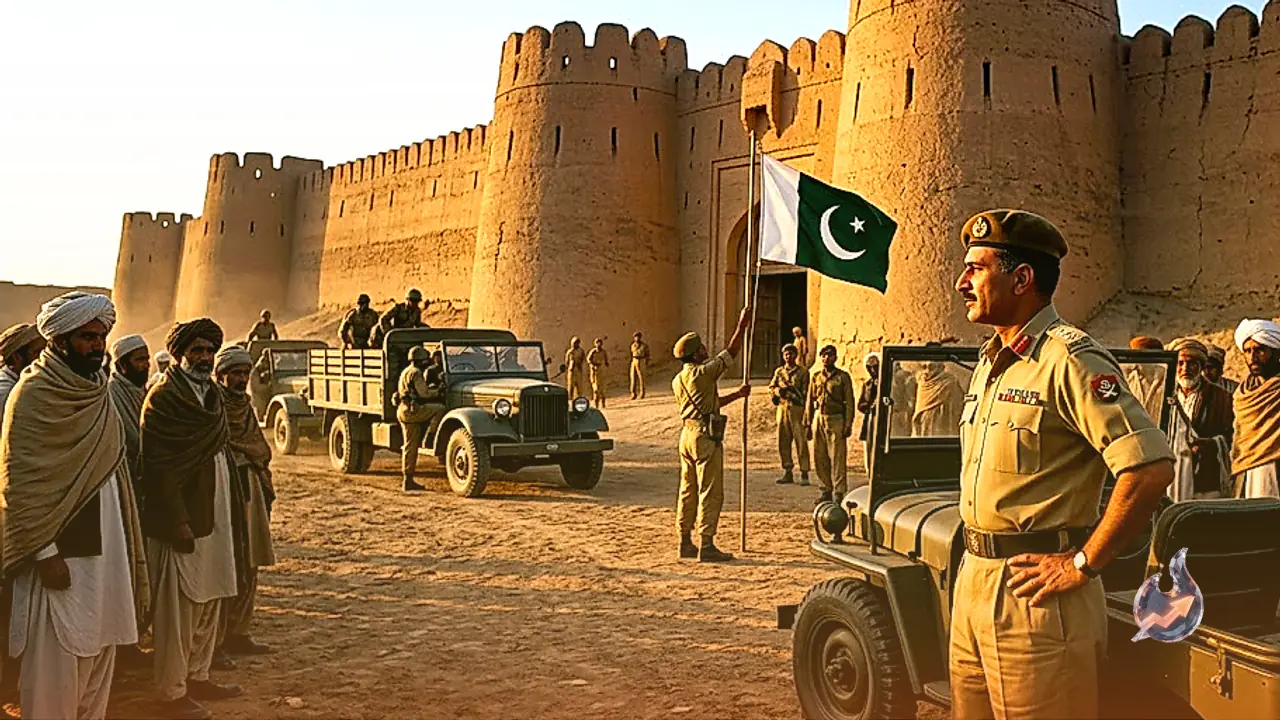
On March 27, 1948, VP Menon, who was then Secretary of the Ministry of States, revealed at a press conference that the Khan of Kalat had sought to merge with India, but that India had rejected the request on geographical grounds. The same information was later broadcast on All India Radio, making the episode public knowledge almost overnight. The fallout was immediate. The very next day, March 28, 1948, Pakistani troops marched swiftly towards Kalat. Under heavy military pressure, Mir Ahmad Yar Khan was forced to sign documents merging his state with Pakistan. Kalat formally became part of Pakistan, and the window of opportunity for India closed for good.
What Could Have Changed Had the Decision Gone the Other Way
Historians and analysts remain split on this episode even now. One camp believes that had India accepted the offer, the country would have gained direct strategic access to the Arabian Sea and a foothold close to Central Asia, reshaping the balance of power across the wider region. Notably, the Gwadar port of today fell under the princely state of Kalat back then, and Gwadar is now central to the China Pakistan Economic Corridor, or CPEC, which gives China a direct route to the Arabian Sea. The other camp disagrees, arguing that India at the time had neither the military strength nor the geographic footing to effectively secure and administer such a distant region, no matter how valuable it might have looked on paper. That is why Nehru's decision is also viewed by many as a practical, almost forced call shaped by the realities of that period rather than a lack of ambition or foresight.
India's Older Ties to Balochistan
Balochistan holds significance for India beyond strategic calculations too. The Sri Hinglaj Mata temple located there is regarded as a major centre of faith for millions of Hindus across the world. The temple stands as a reminder that, beyond the political lines drawn at partition, the region's cultural and religious links with India run deep and old, predating the modern borders that now separate the two countries. More than seven decades on, the Kalat episode still stands as an example of how decisions taken in that fragile early period of independence continue to shape the geopolitics of the region to this day, and why the debate over what might have been still refuses to fade.