




















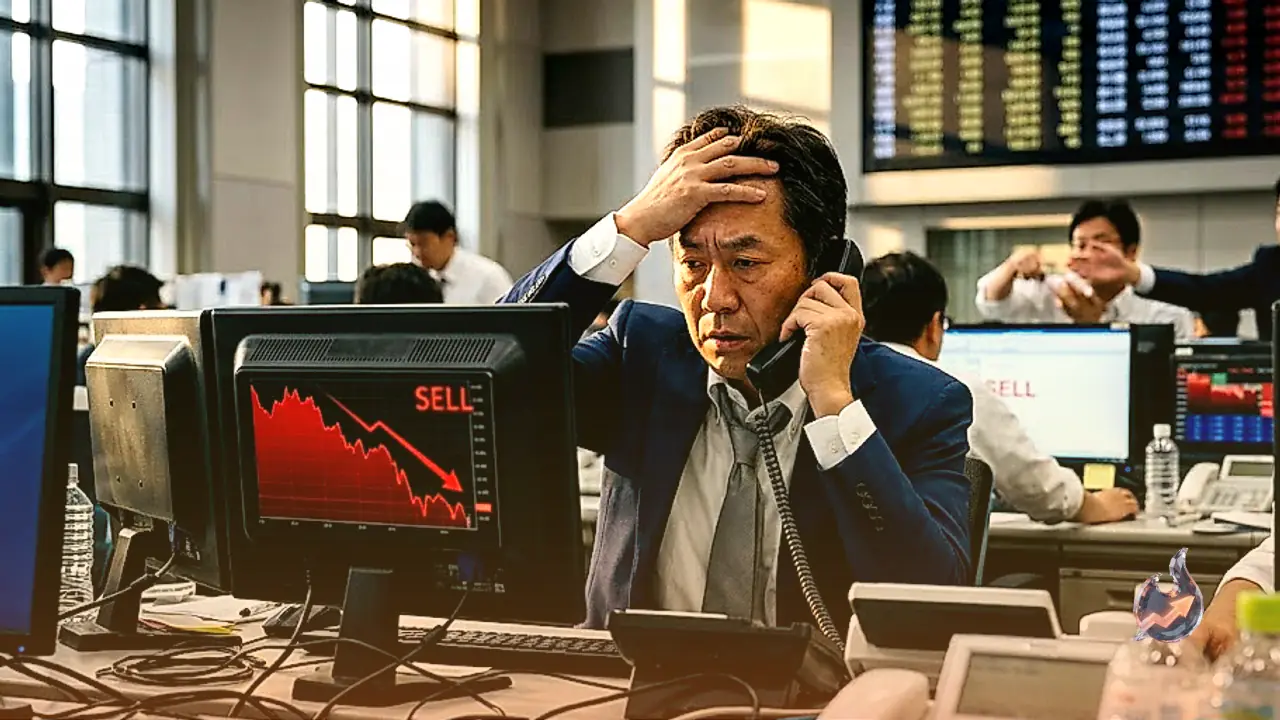

A powerful wave of selling swept across global stock markets, with investors once again asking whether the enormous bets placed on artificial intelligence can keep paying off. Analysts at Deutsche Bank, in their widely followed morning market note, described a broad and deepening slump in equities, led by a pronounced pullback in technology shares.
The numbers tell the story. The benchmark S&P 500 slipped 0.51%, and futures pointed to further pain, falling another 0.78% before the next session had even opened. The declines were sharper still in Asia. A closely watched semiconductor index is now edging toward bear-market territory, meaning a fall of roughly 20% from its peak, while the largest technology companies face renewed selling pressure.
"Global equities are continuing to slump, as fresh doubts about the AI trade have driven a pronounced selloff in tech stocks."
Alphabet leads the megacap slide
The retreat was not confined to chipmakers. The cluster of megacap technology names often called the Magnificent Seven fell 1.27% as a group. The steepest drop came from Alphabet, whose shares tumbled 4.44% following news of a months-long delay to its new Gemini 3.5 Pro AI model. That single decline weighed heavily on the wider market. Remarkably, the S&P 500 still closed lower even though nearly three-quarters of its member companies actually rose on the day, a striking sign of just how much the giant tech names dominate the index.
No single trigger, but plenty of bad news
There was no one event behind the rout, but a string of corporate updates piled on the pressure. TSMC, the world's largest contract chipmaker, reported earnings, and its stock fell 5.26% after the company said its capital spending would come in higher than it had previously forecast. At a moment when confidence in the AI build-out is already shaky, investors viewed the heavier spending plans with caution.
Netflix deepened the gloom. The streaming company's results, released after the closing bell, disappointed the market, and its shares sank almost 9% in after-hours trading.
Asia takes the hardest hit
By the time Asian markets opened, there was no relief in sight. Japan's Nikkei plunged 4.81%, China's CSI 300 lost 2.45%, Hong Kong's Hang Seng dropped 1.98% and the Shanghai Composite fell 1.64%. South Korea's KOSPI was shut for a public holiday. The scale of the fall put the Nikkei on course for its worst single day since March. It also pushed the index toward technical correction territory, having now surrendered more than 12% from a peak it reached less than a month earlier.
Crypto caught in the risk-off mood
The caution spilled well beyond stocks. Bitcoin has fallen more than 34% in the first half of the year, unable to take advantage of an otherwise favorable stretch for risk assets even amid the fallout from the Iran war. With risk-hungry investors increasingly crowding into AI-linked stocks and few obvious catalysts on the horizon, the largest cryptocurrency heads into the second half of the year facing a stark question: can it rebuild demand, or will the correction run deeper?
A cooler inflation backdrop
The market turmoil comes against a backdrop of easing price pressures. June's consumer price index fell 0.4% on the month, the biggest one-month decline since April 2020. That dragged the annual inflation rate down to 3.5% from 4.2% in May, snapping a three-month streak of acceleration. Core prices, which strip out volatile items, were flat on the month and eased to 2.6% year on year, with both readings coming in below what economists had expected.
For now, the mood in markets is firmly defensive. The broad message from the latest session is that any renewed wobble in the AI story can quickly ripple across chipmakers, megacap tech, Asian indices and even cryptocurrencies, leaving investors to weigh whether this is a passing shakeout or the start of a deeper reset.