





















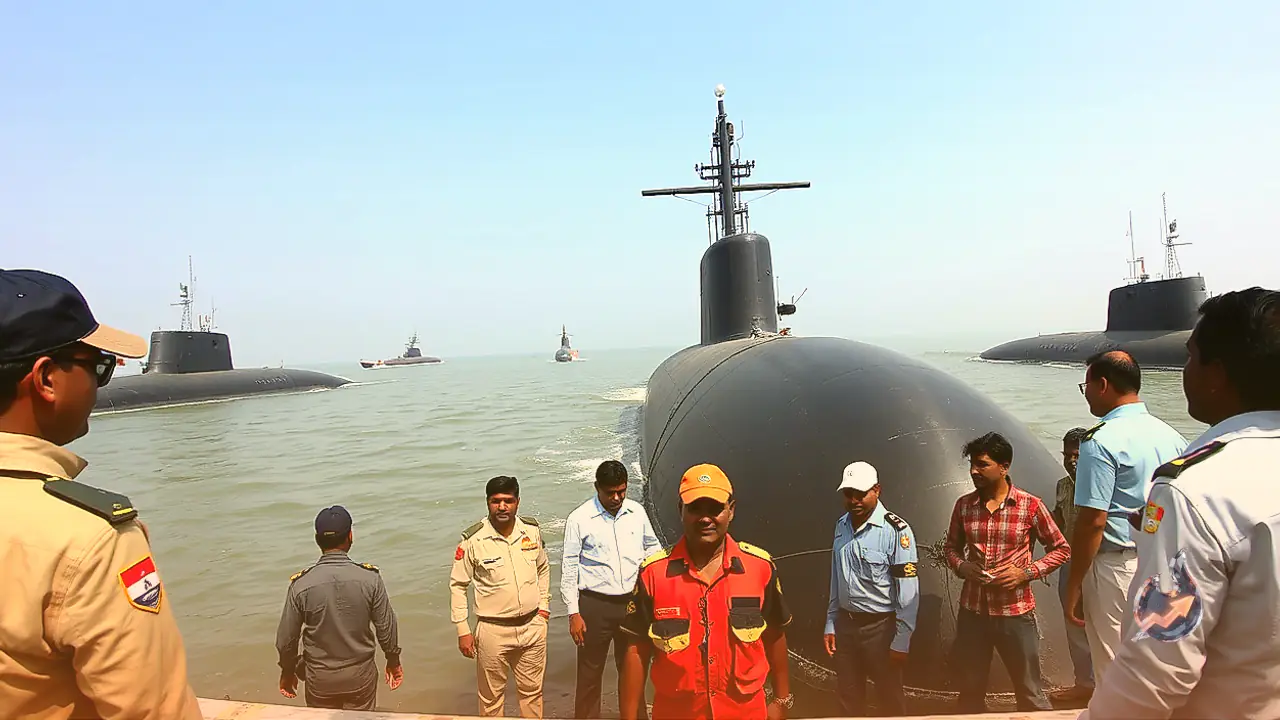

A formidable new warship designed to neutralize underwater threats, INS Mangrol, has been officially inducted into the Indian Navy during an induction ceremony in Mumbai. Engineered to locate and eliminate hostile submarines in shallow coastal waters, this platform delivers a major boost to maritime boundary defense. The warship is equipped with cutting-edge sensors, strike armaments, and self-defense capabilities designed to secure coastal sea lanes. Built in Kochi by Cochin Shipyard Limited, the commissioning ceremony was attended by Vice Admiral Sanjay Vatsayan, Flag Officer Commanding-in-Chief of the Western Naval Command, who served as the chief guest.
Tactical Prowess and Waterjet Propulsion in Shallow Seas
INS Mangrol represents the third vessel delivered under the Anti-Submarine Warfare Shallow Water Craft (ASW-SWC) program. In littoral belts and shallow zones near the coastline, large frontline warships frequently encounter operational constraints due to draft and maneuverability limitations. INS Mangrol addresses this gap directly, operating with exceptional agility in restricted depths. It is propelled by a setup of three diesel engines paired with an advanced waterjet propulsion system, allowing quick changes of direction and high operational maneuverability in shallow waters. The vessel is designed to integrate seamlessly into coordinated operations alongside long-range maritime patrol aircraft, naval helicopters, and other surface warships. Beyond hunting hostile underwater targets, it can carry out subsurface surveillance, low-intensity maritime missions, and mine-clearing or minelaying support operations across vital coastal approaches.
Advanced Sonar Suite, Rocket Launchers, and Decoy Systems
To detect and neutralize silent subsurface targets, INS Mangrol carries an array of sophisticated domestic and advanced technologies. Its primary acoustic detection system is the Abhay hull-mounted sonar, configured to track submerged threats through shallow waters. Offensively, the platform packs lightweight torpedoes alongside an indigenous anti-submarine rocket launcher capable of swift strikes against identified targets. Survivability is further fortified by the integration of the Maareech advanced torpedo decoy system, which defends the warship by confusing and misleading incoming enemy torpedoes. In an evolving maritime landscape marked by increased subsurface posturing, these integrated systems provide a robust defense against underwater threats.
Gujarat Coastal Heritage and Indigenous Defense Manufacturing
The newly inducted vessel borrows its name from Mangrol, a well-known coastal town and significant fishing harbor situated in the Junagadh district of Gujarat. In doing so, it preserves the lineage of the earlier INS Mangrol (M85), an ocean minesweeper that concluded its active service with the Indian Navy in April 2004. Reusing names of historic vessels is a long-standing naval tradition designed to preserve institutional memory. Beyond its historical homage, the warship stands as a premier example of domestic engineering, boasting more than 80 percent indigenous content. From hull construction and naval architecture to the integration of complex sensor suites and firepower, INS Mangrol highlights the expanding self-reliance of Indian shipyards in producing modern combat vessels.