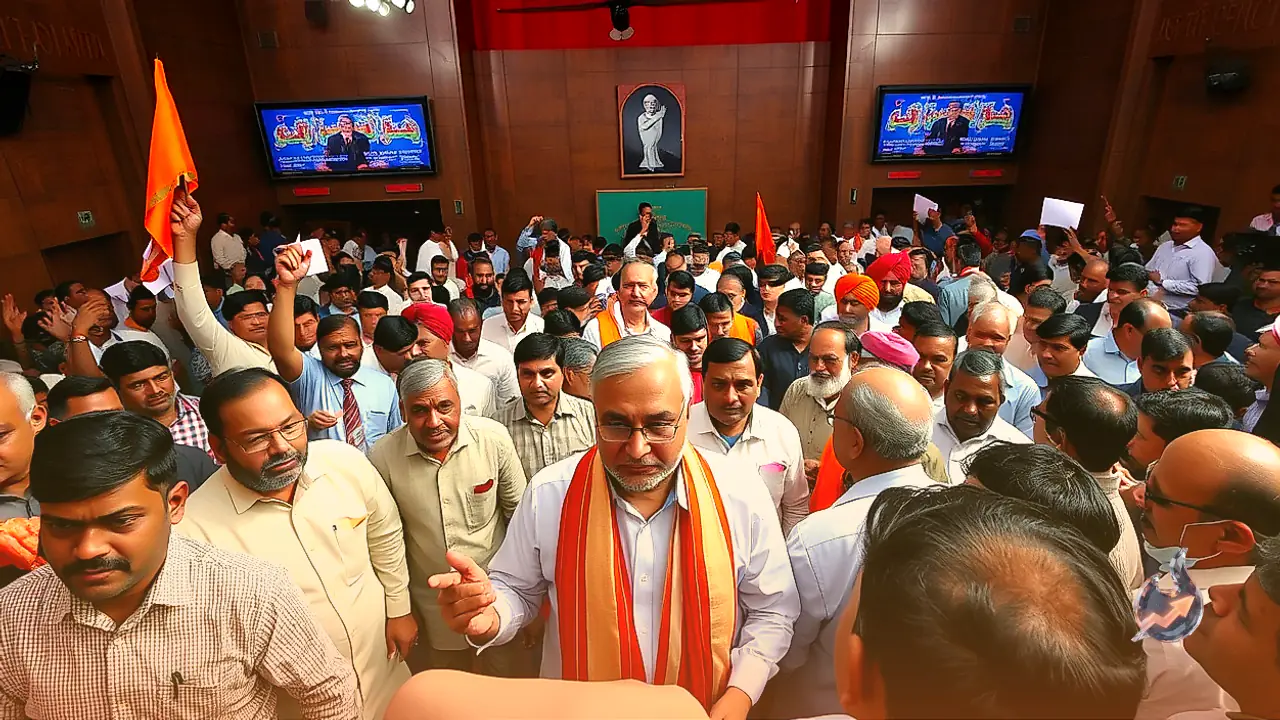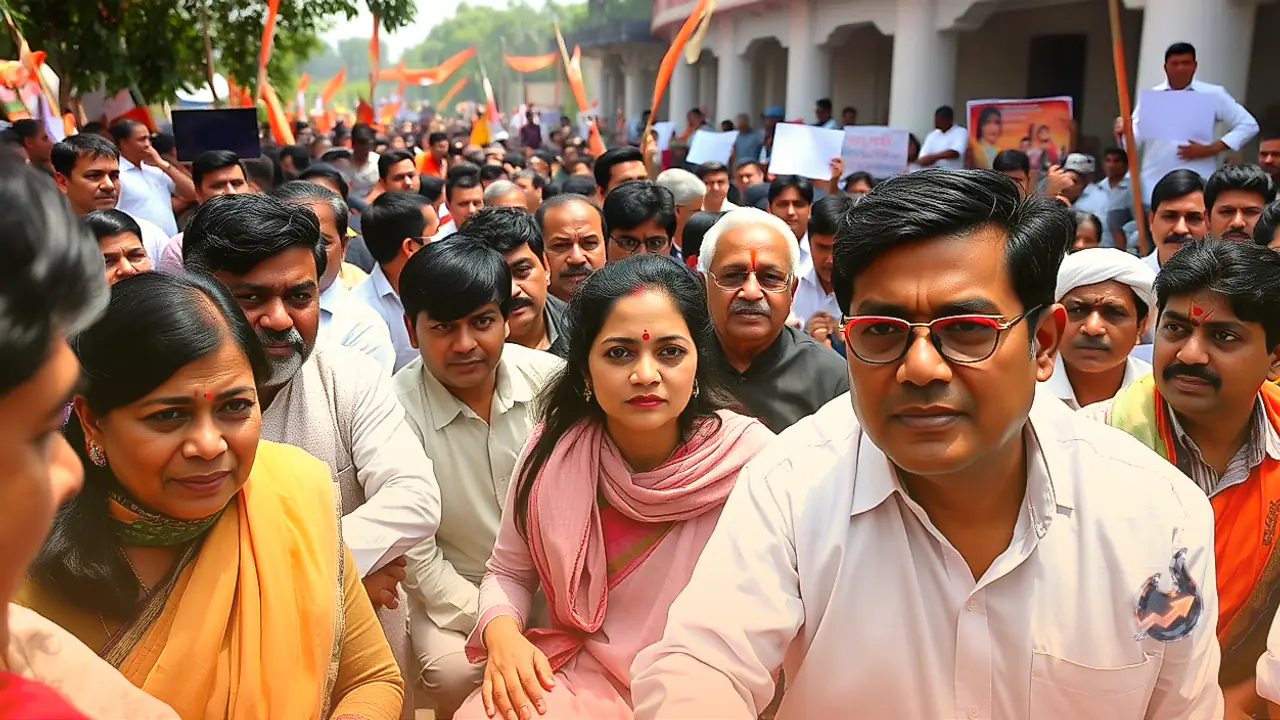

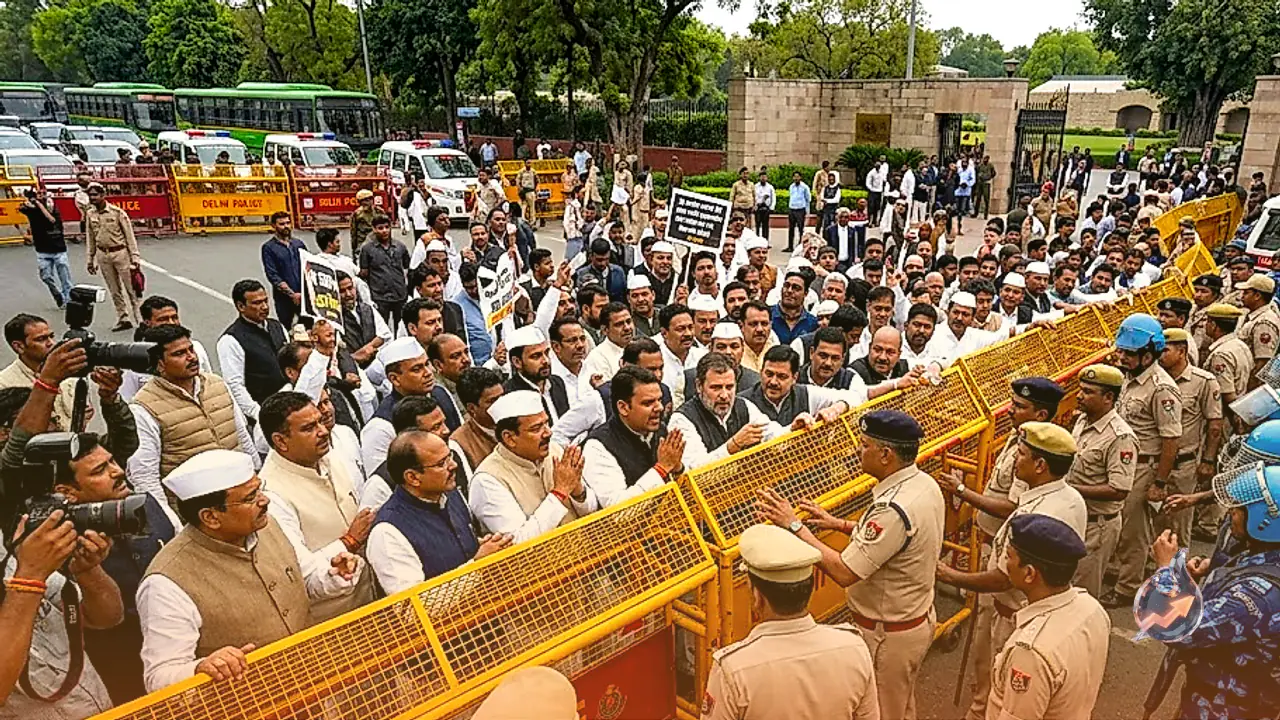














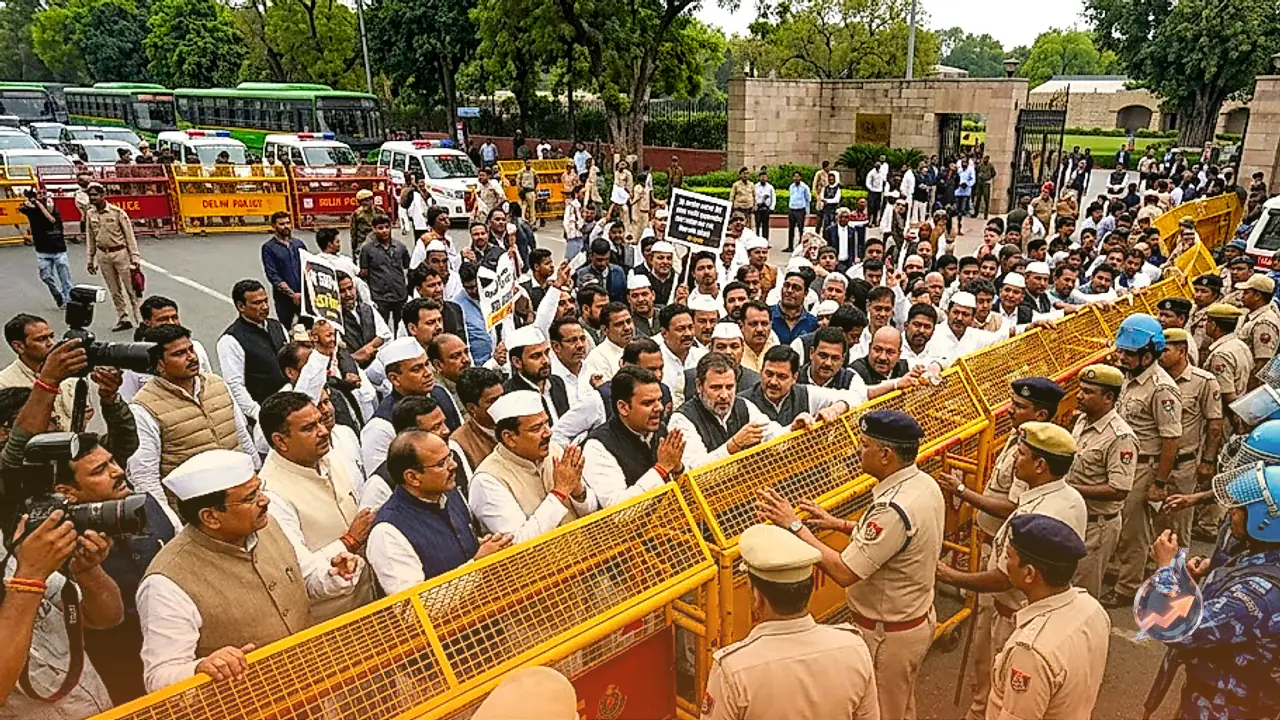

Tensions between the ruling establishment and the joint opposition escalated in the national capital as lawmakers from the INDIA bloc took their agitation over electoral integrity directly toward the memorial of Mahatma Gandhi. Following a joint midday strategy session hosted by Congress chief Mallikarjun Kharge, opposition parliamentarians boarded three passenger buses bound for Rajghat. Leader of the Opposition in the Lok Sabha Rahul Gandhi joined fellow lawmakers aboard the vehicles. However, heavy police barricading outside the venue brought the procession to an abrupt halt, forcing the leaders to wait inside their vehicles for nearly thirty minutes before authorities clarified that only senior figures would be permitted past the gates while party workers had to remain outside.
A Gathering for Reflection and Peaceful Prayer
Outlining the rationale behind heading to the national memorial, Mallikarjun Kharge emphasized that the opposition sought to conduct a peaceful assembly to pray for better sense to prevail among the nation's political leadership. Speaking before leaving for Rajghat, Kharge remarked that their objective was to seek divine wisdom for those heading the central government. He pointed out that everyday citizens were grappling with the crippling burdens of surging inflation and widespread youth unemployment, challenges that ought to command the administration's primary attention rather than weakening institutional checks.
The Congress president maintained that this confrontation transcended the partisan fortunes of any single political entity, striking at the very core of voting rights and democratic liberties. He asserted that constitutional safeguards secured through the historic struggles of leaders like Mahatma Gandhi, Jawaharlal Nehru, and Sardar Vallabhbhai Patel were being steadily eroded. According to Kharge, weakening the sanctity of the franchise imperils the fundamental pillars upon which the republic was founded, making public vigilance indispensable.
Lawmakers Allege Suppression of Lawful Protests
Seated alongside fellow parliamentarians in the bus, Rahul Gandhi sharply criticized the continuous administrative curbs placed on elected representatives. Rahul Gandhi argued that approximately 300 parliamentarians intended to conduct an entirely non-violent demonstration, yet law enforcement repeatedly barred them from exercising that basic right. He noted that their prior attempt to assemble peacefully at Jantar Mantar was thwarted by police barricades along the route.
The Congress leader reaffirmed that their public movement was strictly peaceful, aimed purely at bringing critical questions regarding electoral procedures to the forefront of national discourse. Addressing administrative personnel executing the blockade, he cautioned that those enforcing unlawful measures might ultimately face legal accountability in the future. He expressed firm confidence that while legal avenues might take time to deliver results, accountability would definitely be established through due process.
Formal Request for an Audience with President Droupadi Murmu
Alongside their street demonstrations, the opposition bloc has initiated formal efforts to take its concerns to the highest constitutional authority in the country. AICC general secretary (organization) KC Venugopal stated that the coalition has formally requested an appointment with President Droupadi Murmu. The initial representation was submitted on October 2, following which the President's Secretariat requested a detailed list of delegation members. The Congress leadership submitted the names on October 5, proposing meeting slots across October 7, 8, or 9.
Venugopal reiterated that the delegation wishes to submit a comprehensive presentation before the President detailing deep-seated anomalies in the voter registration apparatus and the broader threat to constitutional norms. He accused Prime Minister Narendra Modi, Union Home Minister Amit Shah, and Chief Election Commissioner Gyanesh Kumar of fostering administrative disarray within the democratic framework, asserting that the opposition is committed to safeguarding the constitution. Recent reports indicate that consultations regarding the scheduling of this delegation meeting have moved forward.
A Third Consecutive Day of High-Voltage Confrontation
Thursday's standoff at Rajghat represents the third successive day of high-stakes friction between opposition representatives and law enforcement agencies across New Delhi. On Wednesday, opposition parliamentarians attempted to march toward Jantar Mantar, only to be stopped in transit by Delhi Police personnel. During that intervention, Rahul Gandhi and Priyanka Gandhi Vadra were taken into custody alongside several key opposition colleagues, marking the Congress leader's second detention within a forty-eight-hour span.
Similarly on Tuesday, opposition members orchestrated a collective march toward the Election Commission of India headquarters, which was promptly halted by security forces. Refusing to disperse, Rahul Gandhi, Priyanka Gandhi Vadra, and several other leaders staged an impromptu sit-in outside the Akashvani Bhavan building that lasted for several hours. The opposition has repeatedly argued that since Jantar Mantar is designated as a lawful protesting venue, blocking lawmakers from assembling there infringes upon basic civic freedoms. In contrast, police authorities maintained that prohibitory orders in force throughout the New Delhi district mandate prior administrative clearance for any procession or gathering.
The Core Grievance: Special Intensive Revision and Voter Rolls
At the center of this burgeoning political standoff lies the controversial Special Intensive Revision (SIR) of voter lists initiated by the election authority. The INDIA coalition alleges that this intensive verification exercise risks the arbitrary deletion of vast numbers of genuine citizens from electoral rolls. Apprehensive that vulnerable demographics could be systematically disenfranchised, the joint opposition has directed its agitation squarely against Chief Election Commissioner Gyanesh Kumar and the functioning of the poll machinery, vowing to sustain their campaign until procedural transparency is restored.