























The land registration process in Bihar's Purnia district has undergone a major transformation, with property deeds now being processed through a completely paperless system. Introduced as part of a modern governance initiative by the Bihar government, this new arrangement aims to make property registration significantly smoother, more transparent, and highly secure. Buyers and sellers no longer need to carry heavy files, voluminous paper records, or decades-old traditional sale deeds (kebala) when visiting the sub-registrar office. All essential property data is now securely stored in digital format and can be accessed with a single click. Beyond saving time and effort for citizens, this digital transition acts as a robust shield against land fraud and illegal property transactions across the region.
Aadhaar Verification and QR-Coded Digital Deeds
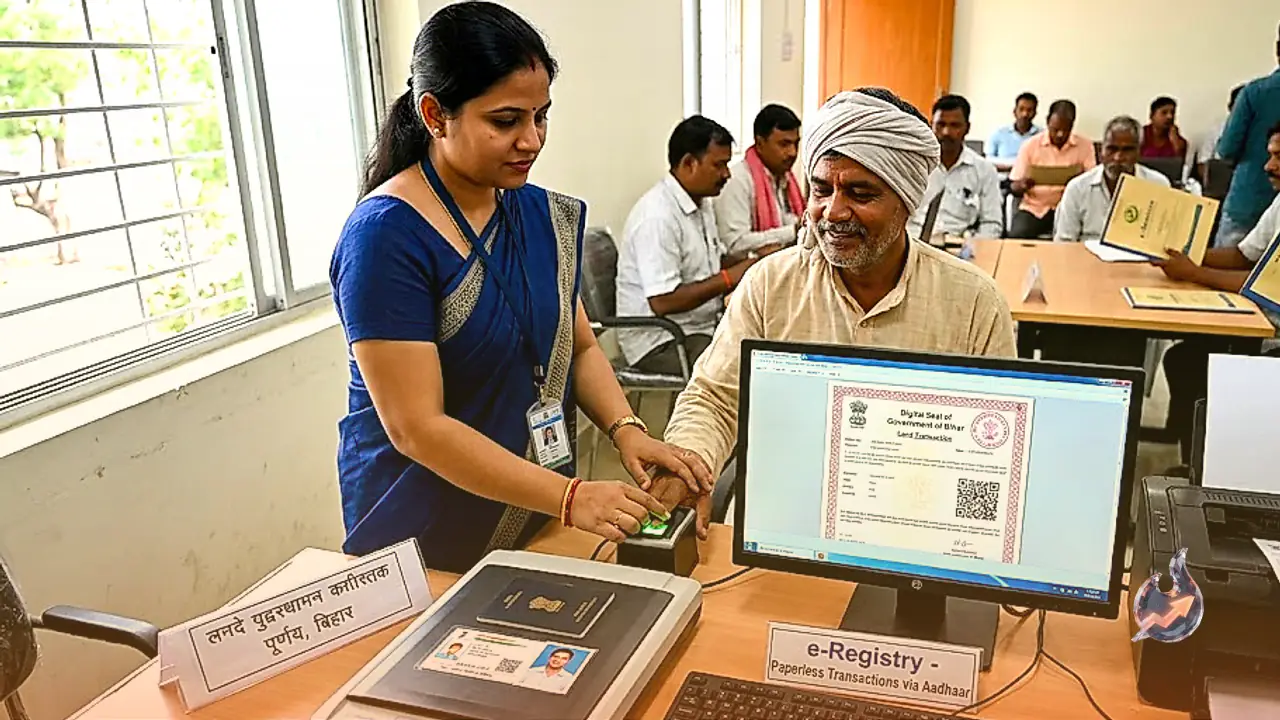
The updated registration mechanism incorporates strict multi-layer identity validation. During property registration, both the buyer and the seller undergo mandatory Aadhaar-based authentication. Following their identity check, the accompanying witnesses are also verified using their Aadhaar credentials. This verification step prevents impersonation, fraudulent signatures, and the use of dummy individuals during property sales. Once the official formalities are completed, the registry office generates an official digital copy of the deed.
This electronic deed is provided to the buyer in PDF format, integrated with a unique QR code. The QR code serves as an instant verification tool, allowing anyone to confirm the authenticity and legal validity of the property document at any point in the future. By scanning the code, authorities and buyers can immediately verify details, preventing the proliferation of forged physical documents.
Eliminating Land Fraud and Duplicate Property Sales
Explaining the functional advantages of the system, Purnia District Sub-Registrar Uma Shankar Mishra stated that the core objective of paperless registry is to simplify administrative procedures while fortifying the system against fraud. Under the old paper-heavy registry system, complaints frequently surfaced regarding fraudsters selling the same parcel of land to multiple unsuspecting buyers using counterfeit documents. Such malpractices often dragged buyers into prolonged legal disputes and financial distress.
With central digital databases and real-time online verification now active, executing duplicate sales of the same land plot has become virtually impossible. The moment a deed is initiated, the online system cross-references previous ownership records, making unauthorized re-sales impossible to finalize. This digital trail cuts down on fraudulent property claims and deters land syndicates.
Overcoming Initial Hesitation to Build Public Trust
District Sub-Registrar Uma Shankar Mishra noted that when the paperless system was first rolled out, citizens harbored several apprehensions and doubts. Many property buyers worried that the absence of traditional physical paperwork might compromise their legal ownership or lead to complications during future property disputes.
However, continuous public awareness initiatives and a clearer understanding of digital security features have steadily built public confidence in the paperless framework. Mishra urged citizens to embrace this digital initiative during land transactions, highlighting that Aadhaar validation, digital archival, and QR code verification guarantee total transaction safety while conserving paper and administrative time.