





















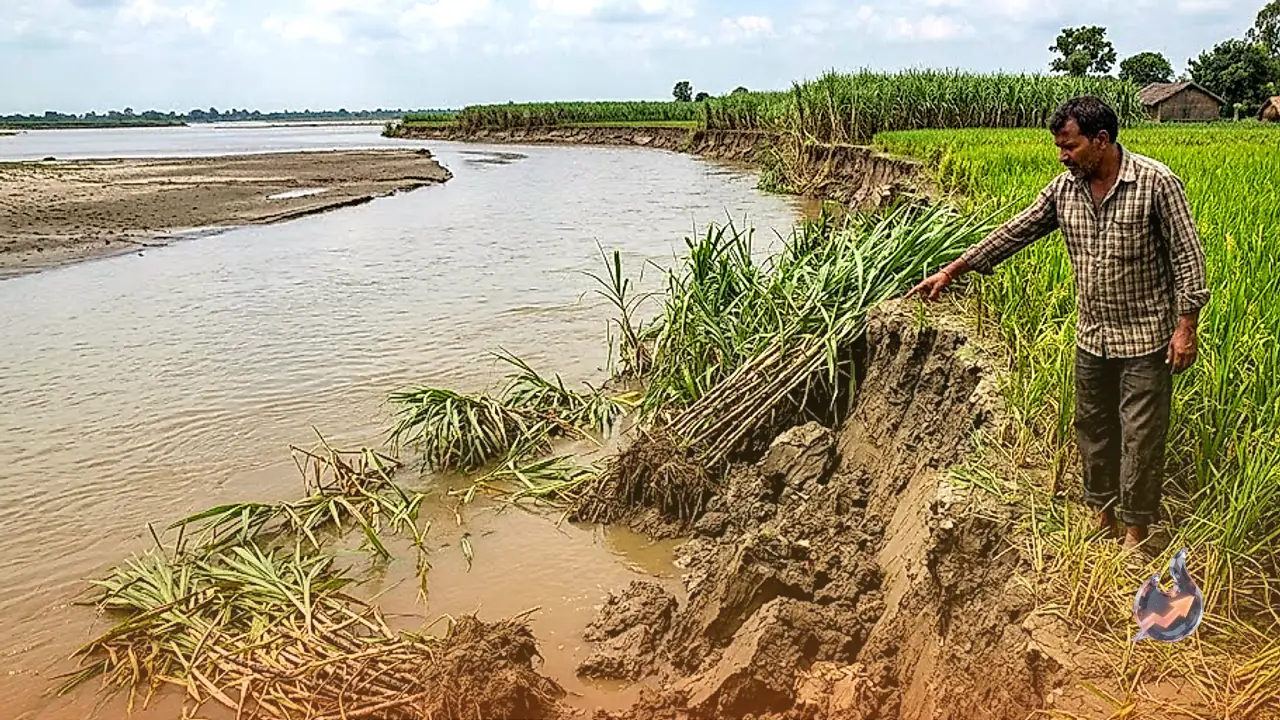

Severe land erosion along the Sharda River has triggered widespread agricultural distress in the low lying Tarai region of Lakhimpur Kheri district. While receding river water levels typically offer respite to coastal communities, the situation has turned critical as lower water levels have accelerated bank erosion across several areas. The river current is rapidly veering directly toward agricultural lands, engulfing vast stretches of fertile soil into its stream. Local farmers are helplessly watching their months of hard labor wash away within moments. Lush paddy crops standing in the fields are collapsing into the river, while extensive sugarcane plantations are equally falling victim to the relentless erosion.
Fertile Land and Agricultural Dreams Swallowed by River Erosion
Living along the banks of the Sharda River has become an agonizing ordeal for the farming community this season. Farmers had cultivated paddy and sugarcane with high expectations of a fruitful harvest. To finance these agricultural activities, many farmers exhausted their personal savings, while others borrowed funds to purchase seeds, fertilizers, pesticides, and other essential farming supplies. During the heavy rainfall and peak water levels, cultivators held onto the hope that conditions would stabilize once the river receded, allowing them to salvage their crops. However, the sudden surge in bank erosion following the drop in water levels has severely compounded their anxieties.
The land collapse is occurring with such sudden intensity that farmers receive no time to harvest or rescue their standing crops. Before cultivators can assess the situation or formulate a rescue plan, massive blocks of farmland break away and plunge into the flowing water. Paddy fields across multiple patches have been completely ruined due to prolonged waterlogging and sharp bank cuts. Similarly, sugarcane crops continue to sink into the river stream step by step. The most alarming aspect of this catastrophe is that the river is not merely destroying standing crops, but permanently eroding the arable land itself. Once a portion of a farm disappears into the riverbed, landowners lose all means of reclaiming their property.
Debt Burden and a Farmer's Personal Anguish
Highlighting the severity of the crisis, local farmer Mangatram explained that continuous soil erosion has been taking place for about a week. Four acres of his paddy crop have already been completely submerged and swept away by the Sharda River. In addition, his three acres of sugarcane crop are gradually being swallowed by the expanding riverbed. The most painful aspect for him is that cultivating these crops required not only physical exertion but also substantial financial investment. With crops flourishing earlier in the season, expectations were high for a profitable return. However, the unyielding erosion by the Sharda River has dashed all hopes of recovering their investment.
Administrative Survey and Compensation Assurances
In response to the escalating crisis affecting agricultural livelihoods, local administrative machinery has initiated steps to assess the damage. Regional Lekhpal Zainab confirmed over the phone that an official on site inspection will be conducted shortly in the affected regions. The official assured that authorities will inspect the location, conduct a comprehensive survey of crop damage and land loss, and initiate measures to ensure affected farmers receive appropriate financial compensation as per government norms.