





















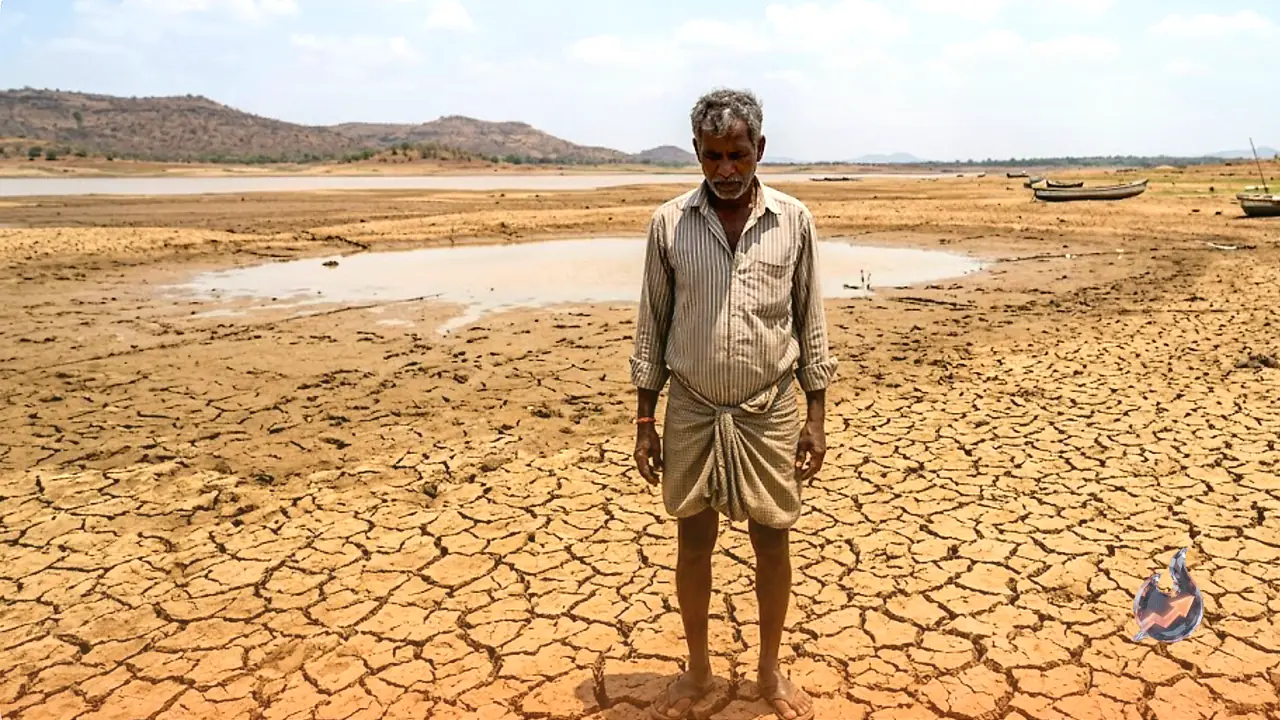

India is experiencing a severe deficit in monsoon rainfall, with precipitation levels dropping by approximately 40 percent below the normal average. Meteorological experts attribute this sluggish phase to the active Super El Nino, which has significantly weakened the monsoon's advance across the country. The slow progress is already raising alarms over potential impacts on agricultural output and the national power grid.
Critical Reservoirs Running Low on Storage
According to data from the Central Water Commission (CWC) cited in a report by TrendKia, water levels across India's 166 primary reservoirs have plunged to just 27.5 percent of their total capacity. While current reserves remain marginally higher than the ten-year historical average, authorities and experts warn of an imminent crisis if dry spells persist into the coming weeks.
These 166 major reservoirs account for an estimated live storage capacity of 183.6 BCM, representing over 71 percent of the nation's total created water storage capacity of 257.8 BCM. Consequently, any severe depletion directly threatens irrigation channels, municipal drinking water supplies, industrial operations, and hydroelectricity generation.
This reservoir network includes 20 crucial hydroelectric facilities, such as the Gobind Sagar in Himachal Pradesh, the Thein Dam in Punjab, the Rana Pratap Sagar in Rajasthan, the Hirakud in Odisha, the Panchet Hill in Jharkhand, the Ukai and Sardar Sarovar in Gujarat, and the Pench Dam in Maharashtra. Experts note that falling water levels at these sites could sharply curtail electricity generation capacities across several states.
Regional Disparities: North and Central India Safe, Others in Trouble
A closer look at the CWC statistics reveals stark regional differences. While 11 reservoirs in North India and 28 in Central India maintain healthier water levels compared to the same period last year, the picture is far more troubling in the East, West, and South.
In total, 27 reservoirs in the eastern region, 47 in the south, and 53 in the west report significantly weaker reserves than last year. States displaying improved water storage include Assam, Bihar, Chhattisgarh, Gujarat, Himachal Pradesh, Madhya Pradesh, Nagaland, Odisha, Punjab, Uttar Pradesh, and Uttarakhand. Conversely, states like Andhra Pradesh, Goa, Jharkhand, Karnataka, Kerala, Maharashtra, Meghalaya, Mizoram, Rajasthan, Tamil Nadu, Telangana, Tripura, and West Bengal are witnessing lower water levels, triggering fears of an impending localized water crisis.
Agricultural and Power Grid Risks Loom
The contrast with last year's monsoon cycle is striking. In the previous season, the monsoon reached Kerala eight days ahead of schedule, facilitating robust rainfall throughout June and rapidly replenishing the country's water bodies. This year, the monsoon was delayed by three days in Kerala and has struggled to gain momentum since then.
With weak rainfall persisting across multiple regions, all eyes are now on the weather patterns in July. If precipitation does not recover in the next few weeks, the sowing of Kharif crops could face severe disruptions, forcing state administrations to implement emergency irrigation measures. Such steps could further stretch municipal water utilities and put additional strain on industrial power distribution.