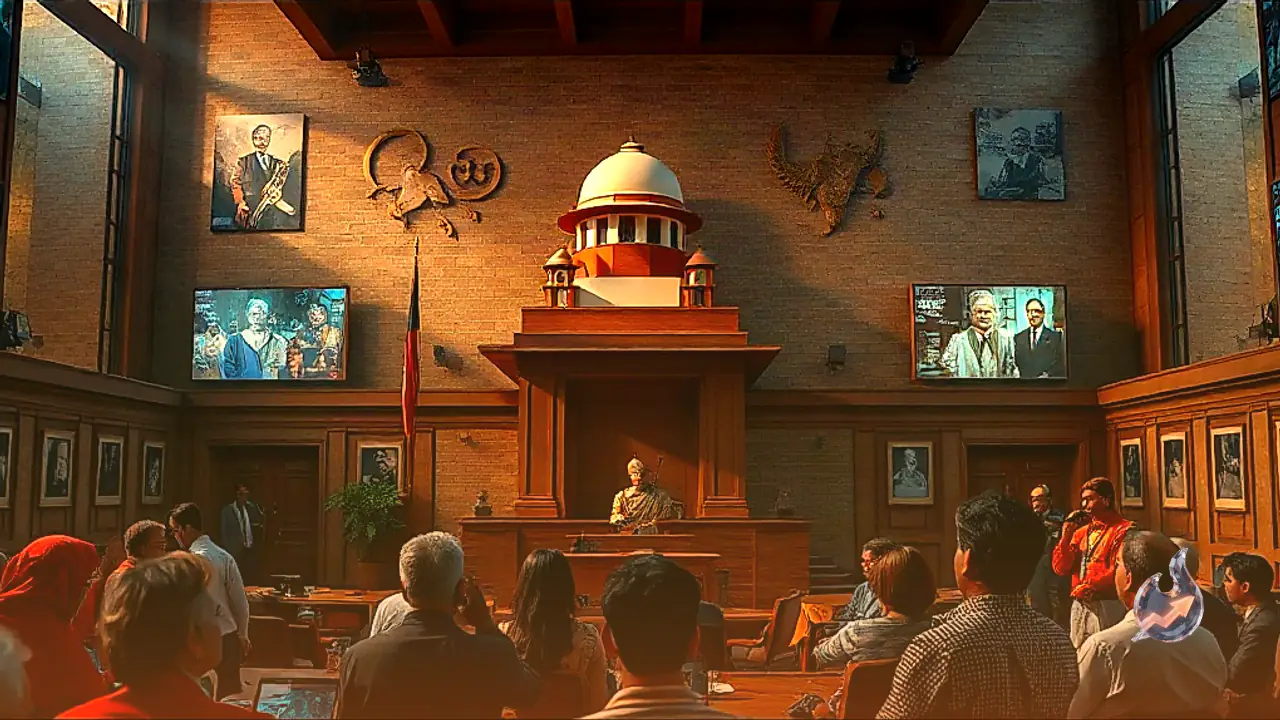























The Supreme Court witnessed sharp arguments during a hearing regarding police actions during protests held at Jantar Mantar in Delhi and in Bihar, where a lawyer demanded a strong message and accountability from law enforcement. The counsel argued that in cases involving alleged mistreatment of female demonstrators, mere investigation is not enough and action against responsible personnel is necessary. In response, Chief Justice Surya Kant stated that if the court directly begins investigating and issuing directives, it could impact the scope and functioning of the designated inquiry committee.
Counsel Demands Strong Message to Police
Arguing before the bench, advocate Gopal S stated that his only plea is that it is crucial to send a strong message to the police. Citing a reply filed by a Deputy Commissioner of Police, he noted that the police admitted some personnel were present in plain clothes at the protest site and action was taken against them. He also pointed out that several officers were not wearing name tags or identification badges. According to the lawyer, for the past two months, there has been a persistent demand for the police to disclose what actions were taken following these alleged incidents.
Demand for Accountability and Evidence
The lawyer emphasized that if female protesters faced alleged mistreatment and harassment, responsibility must be fixed. He urged the court to direct the relevant authorities to produce records of action and evidence regarding the incidents. He contended that while an inquiry committee can look into these events, it should not prevent immediate and necessary actions against erring officers.
CJI Notes Inquiry Committee Scope
Addressing the arguments, the Chief Justice remarked that the court must proceed carefully in the matter. He stated that if the Supreme Court itself initiates investigations and continuously issues directives, it could interfere with the mandate and work of the already established committee. The CJI indicated that the committee should be allowed to examine the matter. However, the court also acknowledged that there may be certain issues requiring immediate attention, signaling willingness to consider concrete suggestions for interim relief if presented by the counsel.
The Solicitor General also argued against rushing into actions, submitting that if the inquiry committee finds any officer guilty, action will be taken accordingly. He told the court that arbitrary action cannot be taken against any individual before the inquiry concludes, maintaining that the process must proceed based on facts and evidence without causing unnecessary sensationalism.
Issue of Compensation for Pellet Gun Injuries
During the proceedings, the matter of granting interim compensation to individuals injured by pellet guns during the protests was also raised. The Solicitor General stated that he would look into this specific aspect. Meanwhile, senior advocate Shadan Farasat referred to alleged videos involving certain police officers and argued that while committee investigations have their place, prima facie action against a policeman should not be delayed until the full inquiry finishes.
Delhi High Court Protection Order and Directions
The bench also touched upon the protection order previously issued by the Delhi High Court, with the CJI clarifying that the court has already passed orders on that front and they will remain in effect. The Supreme Court directed authorities to place all relevant material before the inquiry committee. Additionally, the court ordered the appointment of nodal officers. Regarding petitions concerning the accountability of protest organizers, the bench noted that notices are being issued in all connected matters without any hindrance.