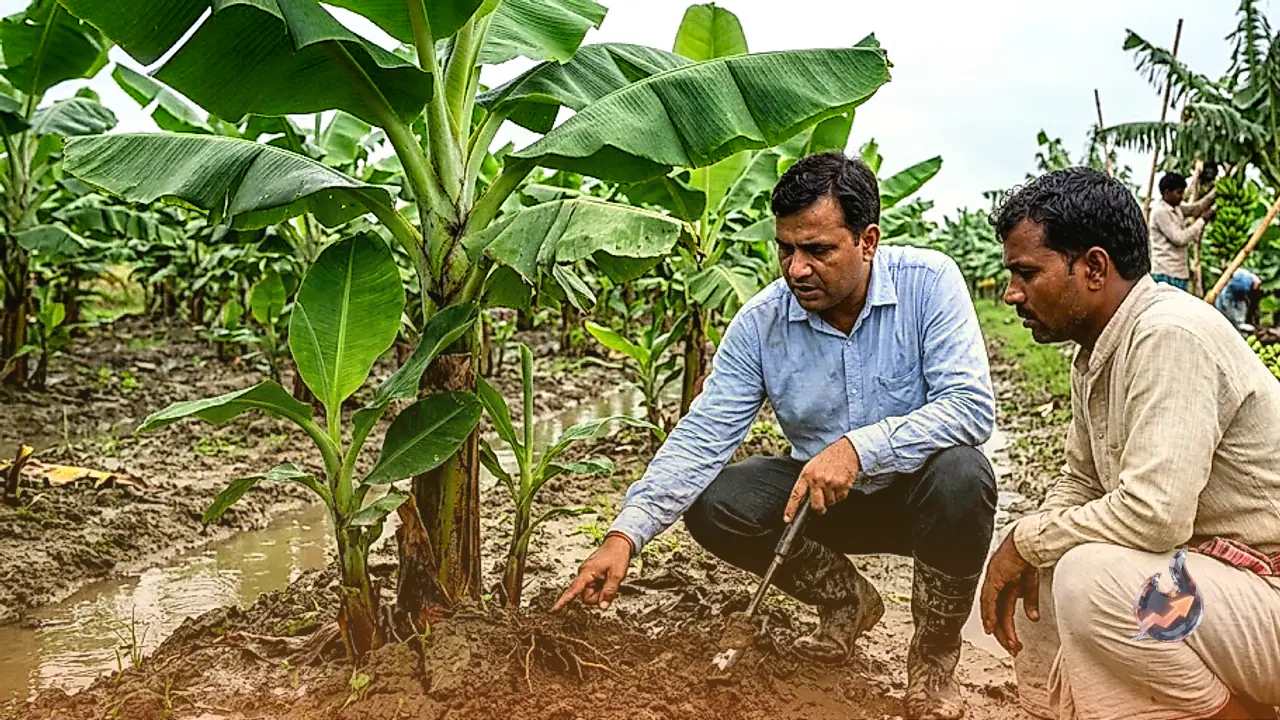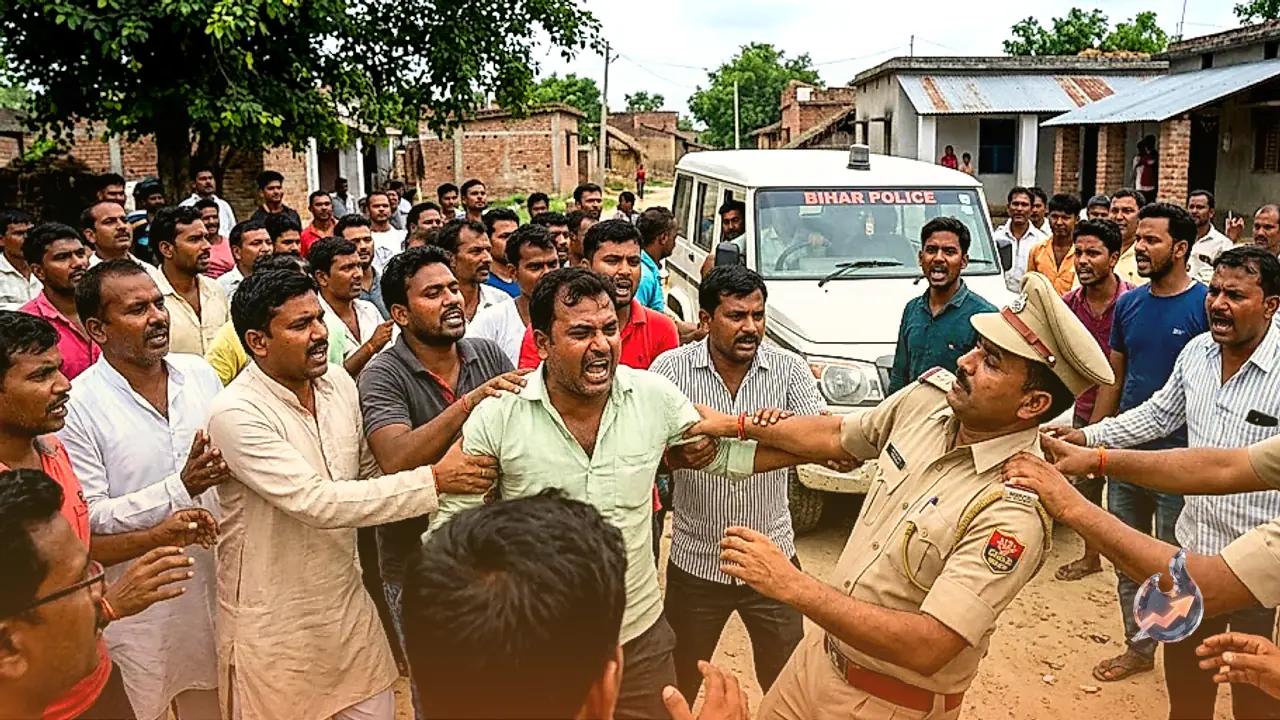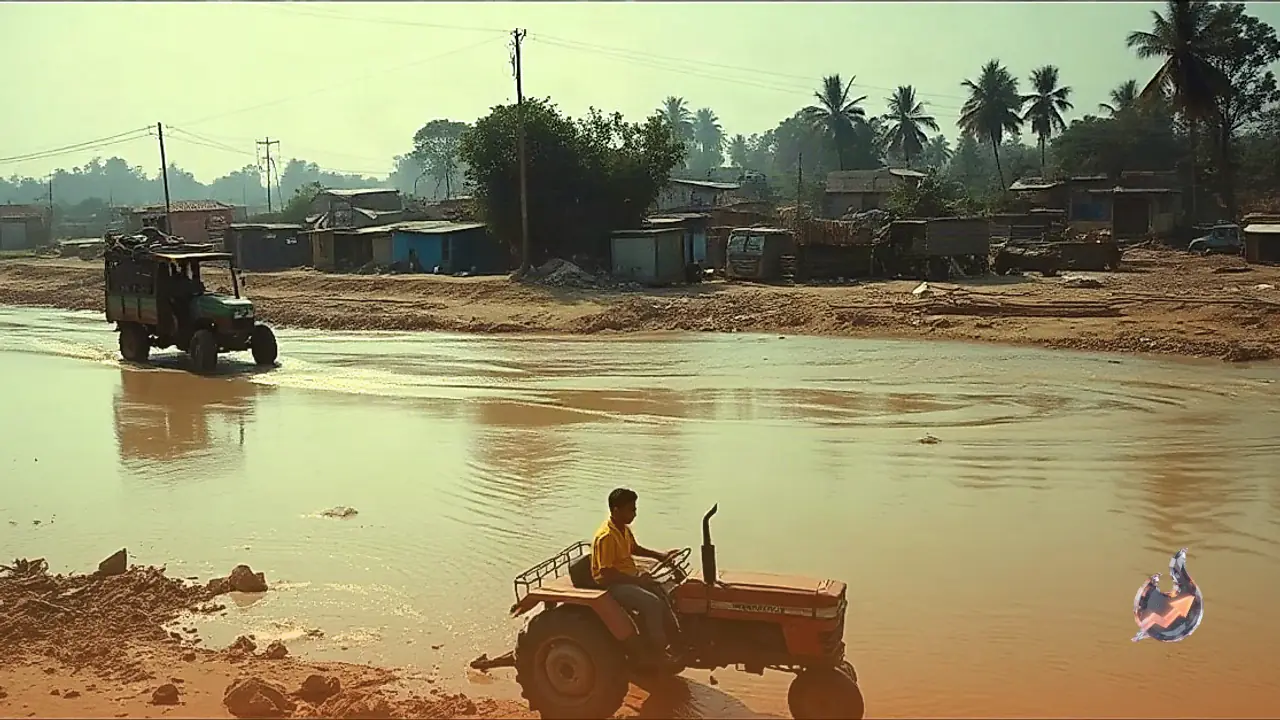





















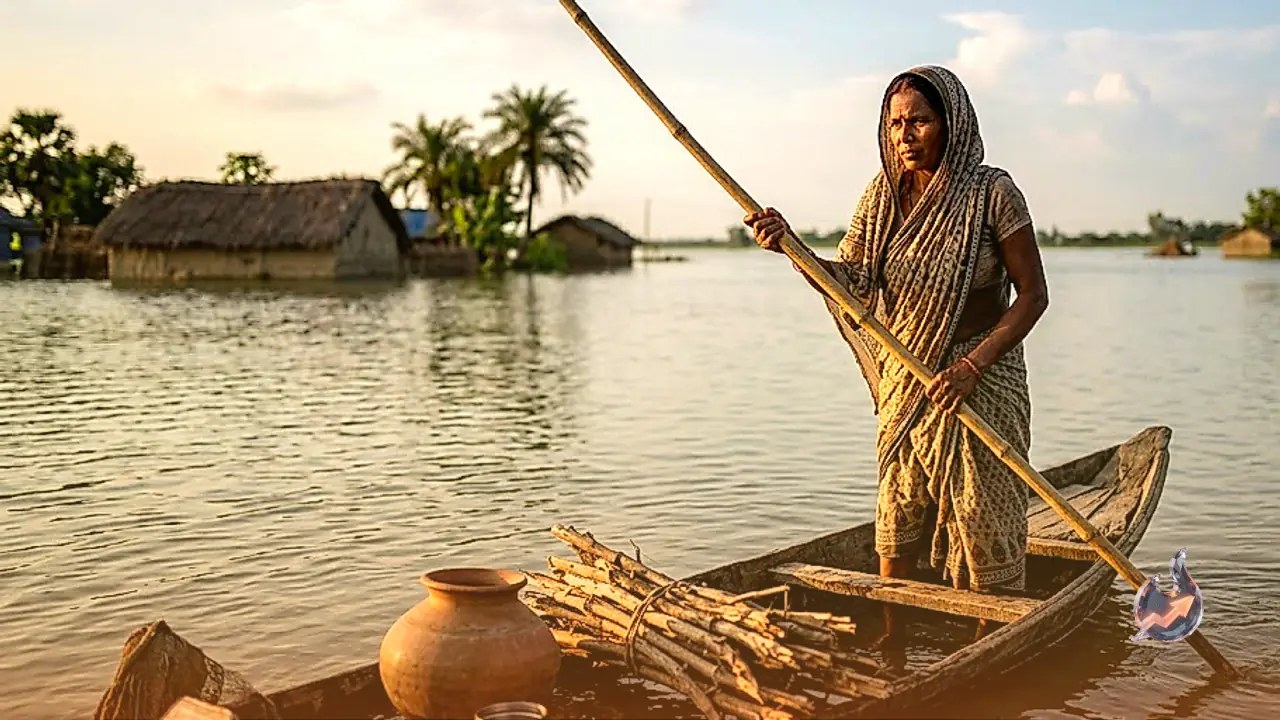

The Mohanpur block in Bihar's Samastipur district becomes the epicenter of a severe natural disaster every year. During the monsoon season, the region's Ganga diara transforms completely into a heavily inundated landmass, cutting off its residents from the rest of the world. Surrounded by the surging waters of the river, life comes to a grinding halt for the local population. This massive waterlogging is not just a geographical inconvenience; it brings a multitude of severe hardships, with women bearing the heaviest and most painful burden. As the floodwaters breach village pathways and enter homes, all movement stops, and the vital connection to local markets is completely severed. Procuring two meals a day and other essential household items becomes a monumental challenge. The situation deteriorates so drastically that many families are left without a single grain of food for one or two days, forcing them to spend sleepless nights on empty stomachs. Furthermore, the rising waters force venomous creatures like snakes and scorpions into residential spaces, leaving every family member in a constant state of terror.
The Severe Lack of Sanitation and Basic Dignity
Recounting the horrifying scenes of the deluge, local resident Jeera Devi explains that the reality of those terrible days is impossible for anyone to fully describe in words. "Men somehow manage to go outside the house and fulfill their needs," Jeera Devi said. However, for the women, the situation becomes worse than hell. The most significant and undignified challenge they face is finding a place to relieve themselves. With waist-deep water submerging the entire landscape, women have no safe or private space to step out during daylight hours. They are forced to wait all day long for the cover of darkness just to attend to their most basic natural calls. Because the area remains flooded, this physical and psychological torture endures for weeks. When the household rations are completely exhausted, they have to fight a battle against hunger and sheer helplessness. During such testing times, waiting for government assistance becomes their only hope, yet it frequently proves to be highly inadequate.
Flawed Relief Distribution and Institutional Failure
The reality of the relief materials provided by the government machinery is also deeply disappointing. Essential food items distributed by the authorities, such as chuda and sattu, fail to reach every person in need. The condition is particularly pathetic in households where the earning men have migrated to cities in search of employment, leaving behind only women and innocent children. Several non-governmental organizations arrive in boats carrying rations to help the flood victims. However, these boats remain anchored in the middle of the deep water, requiring villagers to wade through treacherous currents to access them. In such scenarios, women and young children find it completely impossible to plunge into the deep waters to retrieve the much-needed supplies. Consequently, they are often forced to return to their homes empty-handed, without any help. This flawed distribution system exacerbates the helplessness of the women, putting their very survival at stake.
Unlit Stoves and Exhausted Rations
Kalasiya Devi, another woman residing in Sarsawa village, has accepted this tragedy as her inescapable destiny. She states that this extreme struggle has now become an integral part of their daily existence. Kalasiya Devi explains that even on normal, dry days, crossing the Ganga river to bring everyday groceries from the market is no easy task. But when the floodwaters engulf the entire region, this chore becomes utterly impossible. According to Kalasiya Devi, the firewood stored at home gets completely soaked due to the flooding. Because of the widespread waterlogging, kitchen stoves remain unlit for several consecutive days. With absolutely no means left to cook food, families are forced to rely entirely on sattu, chuda, or whatever meager dry rations are left in the house. There is a glaring absence of government schemes designed specifically to address the unique hardships faced by women and children during these disasters. Every year, the floods wreak havoc in exactly the same manner, yet the administration has failed to implement any permanent solution to date.
The Cattle Crisis and the Fear of Kutcha Houses
The anxiety of these women is not limited merely to feeding their families. Sundar Devi, another rural woman, points out that the biggest crisis during the floods revolves around saving the lives of their cattle. As the water levels rise, a severe shortage of fodder emerges for cows and buffaloes, leaving the livestock starving. In addition to this, living in mud-built houses amidst continuous torrential rainfall and a swelling river is akin to risking one's life every second. Sundar Devi revealed that while many of her neighbors have received permanent pucca houses under government housing schemes, she has not been fortunate enough to get one yet. The constant fear of the fragile mud walls collapsing haunts her every moment, and the family frequently spends days without adequate food and water. This is not just the story of one or two households; it is the harsh reality of thousands of families living in the diara region. Even after the floodwaters eventually recede, the terrifying memories of fear, hunger, and helplessness become permanently etched in the minds of these women, and their mental struggle continues long after the disaster has passed.