




















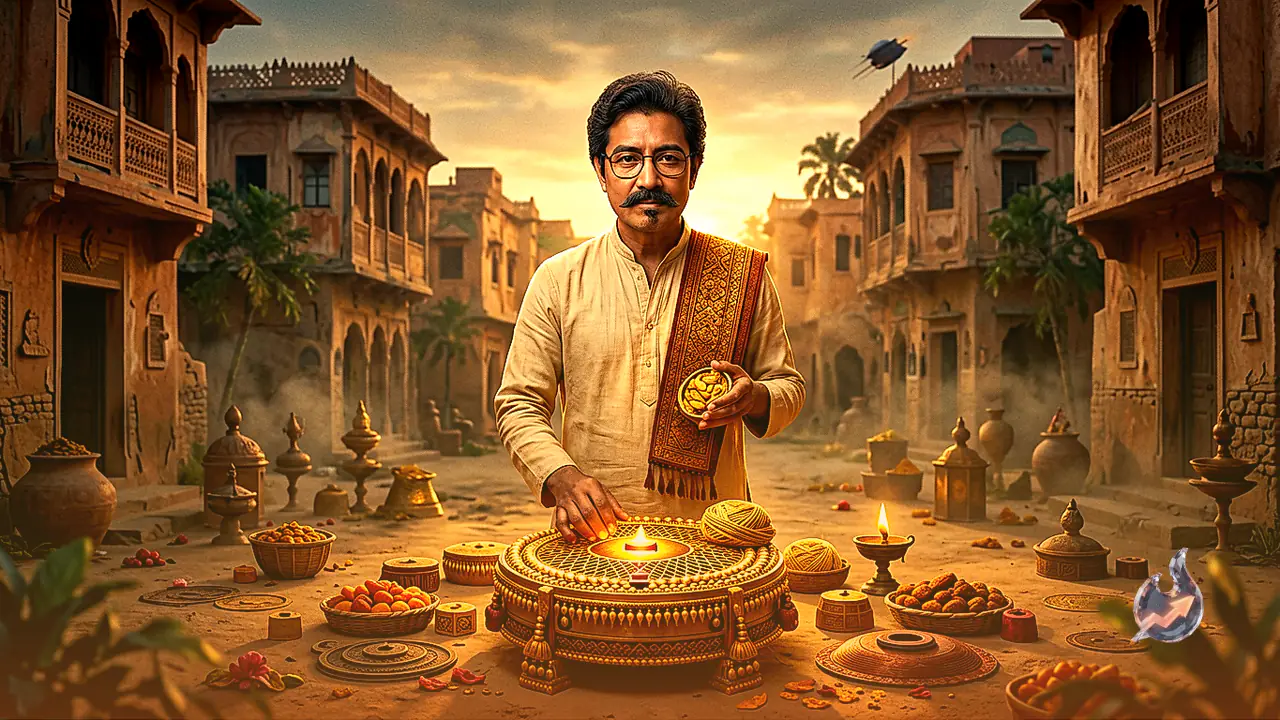

On August 27, a uniquely soulful melody fills the air around the historic lanes of Nai Sarak and Chahalpuri in Old Delhi. Radios echoing from local shops and traditional residences continually play evergreen classics such as ‘Zinda Hoon Main Is Tarah Se’, ‘Mera Joota Hai Japani’, ‘Yeh Mera Deewanapan Hai’, ‘Kisi Ki Muskurahaton Pe Ho Nisar’, ‘Ik Din Bik Jayega Maati Ke Mol’, ‘Main Pal Do Pal Ka Shair Hoon’, and ‘Duniya Banane Wale Kya Tere Man Mein Samayi’. The solemn occasion marks the 50th death anniversary of the legendary Indian playback singer Mukesh Chand Mathur. Passing away on August 27, 1976, the icon whose hauntingly expressive voice defined generations of Hindi cinema remains deeply cherished by music lovers across the nation five decades later.
Early Childhood in Delhi and Initial Musical Footsteps
Mukesh Chand Mathur was born on July 22, 1923, into a middle-class Mathur Kayastha family in the Chahalpuri neighborhood of Old Delhi. He was the sixth of ten children born to Lala Zorawar Chand Mathur, who worked as an engineer, and Chand Rani, a dedicated homemaker. Mukesh received his early schooling at the MB School on Mandir Marg, an institution later renamed NP School and currently known as Atal Adarsh Bal Vidyalaya. Notably, Indian cricketer Mohinder Amarnath also completed his education at this very school in later years.
From an early age, Mukesh was an ardent admirer of legendary singer K.L. Saigal and constantly hummed his classic compositions. His devotion to vocal music was evident as he sang devotional bhajans during Janmashtami celebrations at Birla Mandir by day and performed at neighborhood cultural gatherings around Chahalpuri by evening. These informal performances laid the groundwork for his singing career. However, after completing his 10th grade examinations, he decided to leave formal education behind and briefly worked as a clerk in the Delhi Public Works Department.
Relocation to Mumbai and the Journey from Struggles to Stardom
The turning point in Mukesh's life occurred when actor Motilal, a distant relative, heard him sing at his sister's wedding reception and recognized his exceptional vocal talent. Motilal brought the young singer to Mumbai and arranged for formal classical music instruction under veteran guru Pandit Jagannath Prasad. The initial phase in Mumbai was fraught with hardship. His debut feature film ‘Nirdosh’, in which he both acted and sang, flopped at the box office, plunging him into severe financial distress. To earn a living during this challenging period, Mukesh resorted to working as a sharebroker and selling dry fruits.
His major career breakthrough arrived in 1945 with the iconic song ‘Dil Jalta Hai To Jalne De’ from the movie ‘Pehli Nazar’. Composed by Anil Biswas, Mukesh's rendition sounded so strikingly similar to K.L. Saigal that Saigal himself was bewildered upon hearing it. Saigal famously remarked, "It is strange, I do not remember singing this song." Subsequently, legendary music directors Anil Biswas and Naushad advised Mukesh to step out of Saigal's shadow and cultivate his own natural vocal tone, leading him to establish a distinctive and enduring identity in playback music.
Artistic Bond with Raj Kapoor and a Legacy of Over 1200 Songs
The most celebrated partnership of Mukesh's career was formed with showman Raj Kapoor. Their artistic synergy was so profound that Raj Kapoor often declared, "Mukesh is my soul, I am merely the body." Over his career, Mukesh rendered approximately 110 memorable playback songs for Raj Kapoor's on-screen characters. Beyond Raj Kapoor, he also provided iconic playback for other cinema stalwarts, including Dilip Kumar and Manoj Kumar. Throughout his illustrious journey, Mukesh recorded between 1200 and 1300 timeless tracks that enriched Indian cinema.
His exceptional contributions were recognized with major industry accolades. He won the prestigious National Film Award for Best Male Playback Singer for the song ‘Kai Baar Yuhi Dekha Hai’ from the film ‘Rajnigandha’. Additionally, he was honored with four Filmfare Awards over his career. Known for his deeply emotional temperament, Mukesh often stated that he would willingly exchange ten cheerful tracks for a single melismatic song of heartbreak and longing.
Marriage, Final International Tour, and Passing in Detroit
Mukesh's personal life was marked by romance and deep devotion. On his 23rd birthday on July 22, 1946, he eloped and married Saral Trivedi in a simple temple ceremony. Exactly thirty years later, on July 22, 1976, the couple celebrated their 30th wedding anniversary. Just four days after this milestone, Mukesh departed for an extensive musical tour of the United States and Canada alongside legendary vocalist Lata Mangeshkar, accompanied by his son Nitin Mukesh.
In Detroit, Michigan, right before a scheduled concert performance, Mukesh suffered his fifth heart attack. While being rushed to the hospital in an ambulance, he requested a copy of the Ramcharitmanas and remembered his mother in his final moments. His sudden demise in Detroit sent shockwaves across the film industry. A distraught Raj Kapoor lamented that their dear friend had departed as a passenger but returned as cargo, adding that his own screen voice was gone forever. Shortly before his passing, Mukesh completed his final song recording for the title track of the film ‘Satyam Shivam Sundaram’.
Ancestral Roots, Annual Memorials, and Old Delhi Cultural Heritage
Despite rising to immense national stardom in Mumbai, Mukesh maintained a deep connection with his hometown of Delhi, frequently visiting relatives, siblings, and childhood friends. A commemorative plaque has not yet been placed outside his ancestral house in Chahalpuri, a cause that music scholar and close relative Ashok Mathur has advocated for over many years. Following his passing, an annual memorial concert was instituted in Delhi on August 27, starting in 1983. His sisters Shyam Pyari, Rajesh Pyari, and Usha Chandra, along with his younger brother Parmeshwari Das, regularly attended these gatherings.
The annual memorial events were organized primarily through the efforts of Amarjeet Singh Kohli, with music composer Anil Biswas and singer Meena Kapoor frequently serving as judges. School friends such as Daljeet Singh, Chander Pal Mehra, Som Sikand, and Sukhmal Jain gathered to share fond memories, though the event has been paused in recent years. The Mathur Kayastha community residing in historic Old Delhi localities including Nai Sarak, Kinari Bazar, Chahalpuri, Anar Ki Gali, Chowk Raiji, Chirakhana, and Bivi Gauhar Ka Kucha continues to hold Mukesh in high esteem.
This community boasts a distinguished heritage, connected to prominent figures such as freedom fighter Lala Hardayal of the Ghadar Party, ‘Mughal-e-Azam’ photographer F.C. Mathur, and former Indian cricket team manager and author Amrit Mathur. Furthermore, Maharaja Lal Lane in Civil Lines carries the name of a Mathur family whose firm, Maharaja Lal & Sons, served as major distributors for HMV with famous showrooms in Chandni Chowk, Connaught Place, and Karol Bagh. Five decades after his departure, the poignant warmth of Mukesh's voice continues to reverberate through the historic lanes of Delhi.