























In the golden archive of Hindi cinema, certain songs rise far beyond the commercial fate of their films to achieve immortality. The 1970 release Prem Pujari stands as a classic example of this phenomenon. Featuring the celebrated on-screen pair of Dev Anand and Waheeda Rehman, who dominated the silver screen throughout the 1970s and 1980s, the film brought together a partnership that audiences deeply admired. Although the movie itself did not meet commercial expectations upon release, its iconic track Rangeela Re, Tere Rang Mein Yun Ranga Hai Mera Man continues to enchant generations of music lovers.
Dev Anand's Directorial Debut and the Narrative of Prem Pujari
Released in theaters on February 6, 1970, Prem Pujari remains a significant milestone in Dev Anand's legendary career, primarily because it marked his debut as a film director. The feature starred Dev Anand alongside Waheeda Rehman, Zaheeda, and an ensemble of talented actors. Built around thematic pillars of war, patriotism, and romance, the story sought to deliver a high-stakes dramatic experience. Despite its ambitious canvas, powerful themes, and stellar star cast, the film failed to perform as expected at the box office. However, while the cinematic narrative struggled commercially, its musical soundtrack emerged as an enduring masterpiece.
The Dramatic Context and Emotion of Rangeela Re
The song Rangeela Re, Tere Rang Mein Yun Ranga Hai Mera Man serves as the emotional centerpiece of Prem Pujari. Within the film's narrative, the sequence arrives at a pivotal moment of heartbreak when Waheeda Rehman's character discovers Dev Anand in the arms of another woman. Shaken by this betrayal, she channels a complex web of conflicting emotions—love, jealousy, agony, and helplessness—through her extraordinary dance performance and expressive screen presence.
As Dev Anand's character watches silently from a distance, the heroine confronts the tragedy of her broken affection. Through the lyrics, she expresses that while her mind remains immersed in her lover's colors, her heart is consumed by profound pain and jealousy. She questions how a third person could inhabit a space reserved for the cherished dreams and sacred bond she had nurtured in her heart. Waheeda Rehman's compelling expressions combined with the poetic narrative to turn this sequence into an iconic moment in Indian cinema.
The Masterful Collaboration of SD Burman, Gopaldas Neeraj, and Lata Mangeshkar
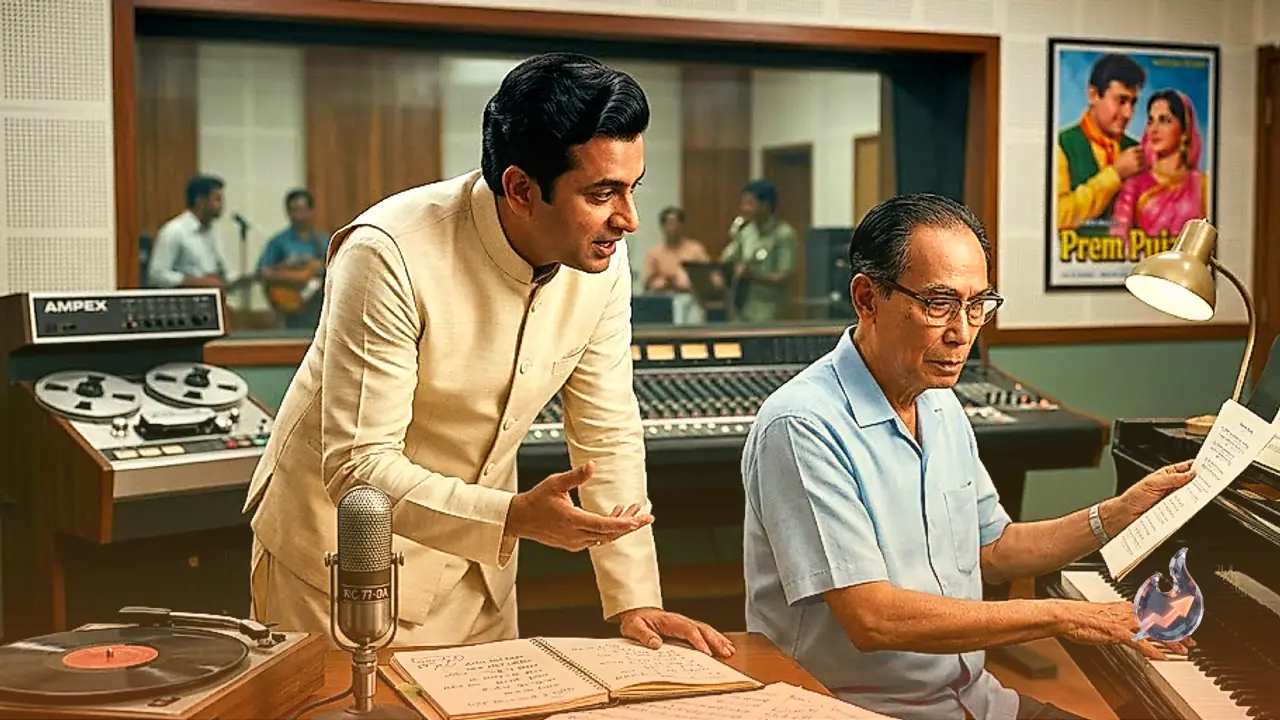
The artistic creation of Rangeela Re involved a legendary gathering of musical talent. The lyrics were penned by the renowned poet and lyricist Gopaldas Neeraj. When Neeraj presented his written verses to the iconic music director S. D. Burman, Burman was immediately captivated by the emotional depth of the poetry. Impressed by the raw sentiment poured into the words, Burman felt instantly compelled to compose the musical score without delay.
To complete the masterpiece, the song was recorded in the voice of singer Lata Mangeshkar. The union of Gopaldas Neeraj's evocative poetry, S. D. Burman's melody, and Lata Mangeshkar's vocal rendition produced an unforgettable musical creation. Consequently, even as Prem Pujari stumbled at the box office following its 1970 release, Rangeela Re transcended the film's fate, growing into an ever-greater blockbuster success that remains cherished by music enthusiasts to this day.