





















The years immediately following India's independence were marked by intense political idealism and creative ferment across literature and cinema. During that passionate era, an outspoken lyricist known for his revolutionary temperament frequently stirred literary gatherings and mushairas with hard-hitting poetry. Prominent actor Balraj Sahni shared a deep personal friendship with him. On one occasion, both attended a convention organised for industrial labourers. As they arrived together, the gathered workers enthusiastically requested the poet to recite a few spirited lines reflecting their struggles and aspirations.
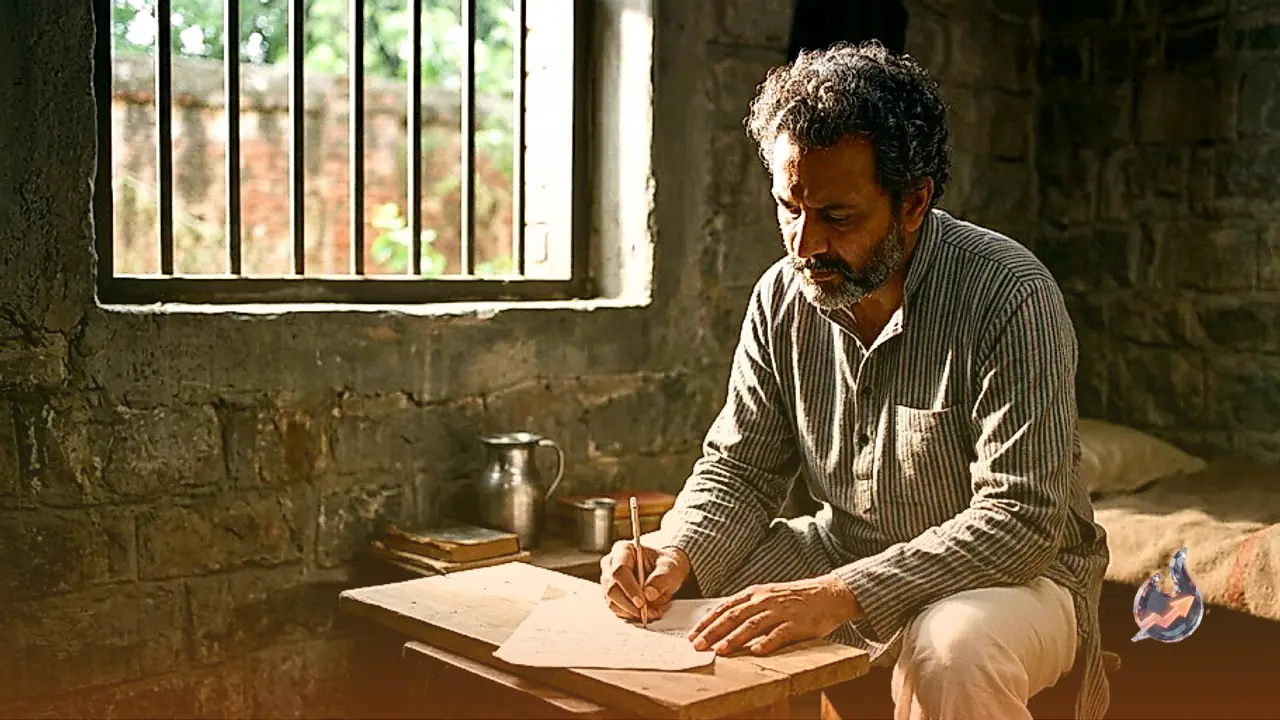
Obliging the audience, the poet delivered an incisive critique of the prevailing political direction. The verses included the striking thought, 'Dil mein khwab dollar ka basakar phirti hai Bharat ki ahimsa.' The crowd cheered passionately, and the bold observation gained considerable traction. However, authorities and influential figures within the establishment took serious offence at the poem. Consequently, both the outspoken writer and Balraj Sahni were handed two-year prison sentences. The incarceration arrived at an exceptionally distressing moment, as the writer's wife was pregnant and his household faced severe economic hardship.
Raj Kapoor's dignified gesture of financial support
When Raj Kapoor learned about the lyricist's plight behind bars and the precarious financial condition of his family, he immediately decided to intervene. At the same time, the filmmaker understood that the imprisoned artist possessed immense self-respect and would flatly refuse any unconditional charity or handout. To offer assistance without bruising his dignity, Raj Kapoor devised an ingenious creative assignment.
Raj Kapoor met him and explained that he wanted a song reflecting on the universe, asking the writer to pen lines pondering why and how the world was created. The poet instantly delivered a profound opening hook that asked the Almighty why this difficult existence had been shaped: 'Duniya banane wale kya tere dil mein samayi, kahe ko duniya banayi.' The man behind those lines was Majrooh Sultanpuri. In return for the opening couplet, Raj Kapoor handed him 1000 rupees, an enormous sum of money in 1948-49. Through this dignified gesture, Majrooh's pregnant wife and family received critical financial relief during their darkest hour.
A 17-year journey to Teesri Kasam
Nearly 17 years slipped by after that prison transaction before those lines found their way into a feature film. While working on the cinematic classic 'Teesri Kasam', Raj Kapoor shared Majrooh's archived opening couplet with lyricist Shailendra. Because Shailendra was heavily occupied producing the film himself, he handed the lines over to Hasrat Jaipuri, asking him to compose the stanzas and complete the track.
Hasrat Jaipuri crafted the verses surrounding the original hook, while the legendary musical duo Shankar-Jaikishan composed its haunting melody. Rendered in the evocative vocals of Mukesh, the composition turned into a monumental musical masterpiece that continues to resonate decades later. When the finished track was eventually presented to Majrooh Sultanpuri, he magnanimously insisted that official songwriting credit should belong entirely to Hasrat Jaipuri. While formal records credit Hasrat Jaipuri, cinema lore preserves the reality that the foundational couplet was born out of Majrooh Sultanpuri's prison resilience.