





















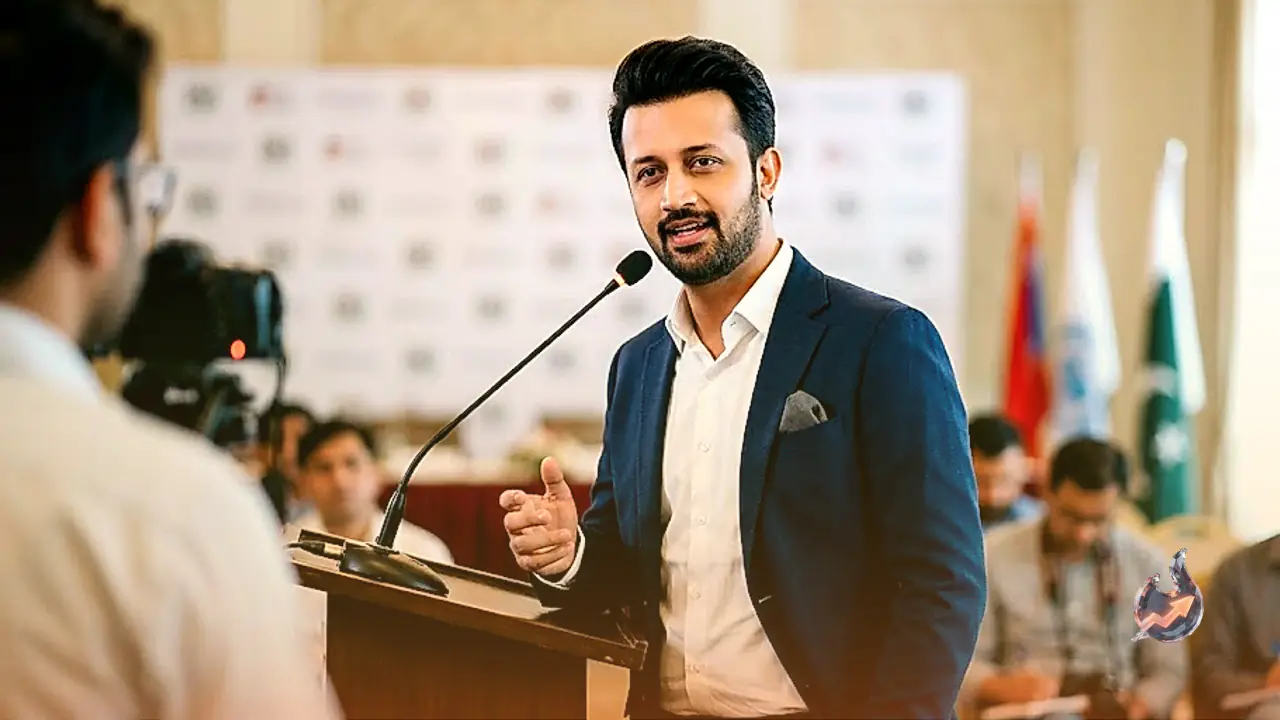

Renowned vocalist Atif Aslam has opened up regarding the decade long restriction on Pakistani artists performing in India, sharing his thoughts on how music continues to transcend borders despite formal bans. In a detailed conversation with host Chris Fade, the singer addressed the current geopolitical realities affecting the entertainment industry, expressing complete respect for the official decisions made by government authorities in both nations. He noted that while formal cross border cultural exchanges remain paused, the bond between artists and their listeners often finds unexpected avenues to endure.
Fan Loyalty and Unconventional Listening Habits
During the discussion, Atif Aslam pointed out that Indian listeners have consistently found technical workarounds to access his newer songs. Over the past 10 years, since the enforcement of policies prohibiting Pakistani talent from working in India, his fanbase across the border has relied on Virtual Private Networks (VPN) and physical media sharing. Fans have been burning CDs and distributing recordings to ensure his voice reaches fellow music lovers. Addressing the ethics of digital distribution, the singer clarified that while he does not advocate or endorse copyright piracy, the phenomenon highlights how creative work moves beyond artificial boundaries.
To illustrate this point, he recalled the early days of his career when his breakthrough composition initially circulated among audiences. When his initial single gained popularity, listeners were completely unaware of his identity or background. Despite the lack of formal promotional campaigns, the track achieved remarkable success across radio broadcasts, cassette tapes, and compact discs. Reflecting on that experience, Atif Aslam observed:
"Music naturally finds its own path to reach where it belongs."
Gratitude Toward Audiences and Personal Reflection
Addressing his supporters directly, the singer urged listeners not to feel disheartened or aggrieved by the ongoing restrictions. He expressed deep affection for his audience, assuring them that true music enthusiasts will always find a way to stay connected with an artist whose work resonates with them. He highlighted that true musical appreciation transcends geopolitical barriers and official censorship measures.
Reflecting on his emotional connection with India, Atif Aslam explained that his main longing is for the people who appreciated his art. While he does not particularly miss working within the Bollywood film apparatus, he deeply misses the warmth and enthusiasm of the Indian audience. He encouraged fans to maintain a positive outlook, emphasizing that the underlying connection between creator and listener remains intact regardless of venue or location.
Transformation into Independent Artistry
The singer also provided a fresh perspective on the career impact of the 10 year ban, framing the situation as a vital catalyst for his professional evolution. Prior to the restrictions, much of his artistic energy was dedicated to commercial playback singing for film soundtracks. The sudden pause in film projects forced him to reevaluate his creative priorities and pivot toward producing independent music releases.
Atif Aslam expressed genuine gratitude for the turn of events, noting that playback assignments had offered valuable technical experience, but independent projects allowed him to explore his true capabilities. He remarked that without the enforcement of the work prohibition, he might never have taken the initiative to construct his own independent catalog. In his view, the restriction ultimately pushed him to discover his full artistic potential outside the structured confines of cinema production.
A Look Back at an Iconic Film Legacy
Before the implementation of restrictions, Atif Aslam established an extensive catalog in Indian cinema that remains popular across streaming platforms. His musical journey began with the Pakistani rock group Jal and their hit track Aadat, followed by his debut solo album Jal Pari in 2004. His formal entry into Hindi cinema occurred in 2005 with the film Zeher, where his track Wo Lamhe became an instant sensation nationwide.
Over the subsequent decade, he delivered numerous chart topping songs for major feature films. His vocal contributions enriched successful cinematic releases such as Kalyug, Bas Ek Pal, Race, Kismat Konnection, Ajab Prem Ki Ghazab Kahani, Prince, Tere Naal Love Ho Gaya, and Baaghi 2. Though his active playback tenure ended a decade ago, these recordings continue to maintain strong listenership across digital platforms in the region.