























From busy offices to quiet homes and bustling street corners, hot cups of tea form an essential part of daily life across India. When discussing the finest qualities of this beloved beverage, Assam invariably takes center stage as the nation's largest producer. A rare and exceptional variety produced in this very state has been turning heads recently due to its premium pricing and unconventional preparation methods. Known as Puer tea cake, this specialty brew commands an astonishing price of up to 12,000 rupees per kilogram, backed by a production technique as fascinating as its cost.
Record-Breaking Auction in Guwahati
During a recent auction held in Assam's capital city of Guwahati, the specialty Puer tea cake commanded a remarkable price of 12,000 rupees per kilogram. Industry officials noted that achieving such a high valuation for Puer tea cake stands as a moment of great pride for the regional tea sector. A five-kilogram batch of Puer tea cake manufactured by the Golaghat-based Gauripur Tea Industry was successfully traded at this peak rate. The entire auction transaction was executed smoothly through its broker, J. Thomas.
Roots Tied to China's Yunnan Province
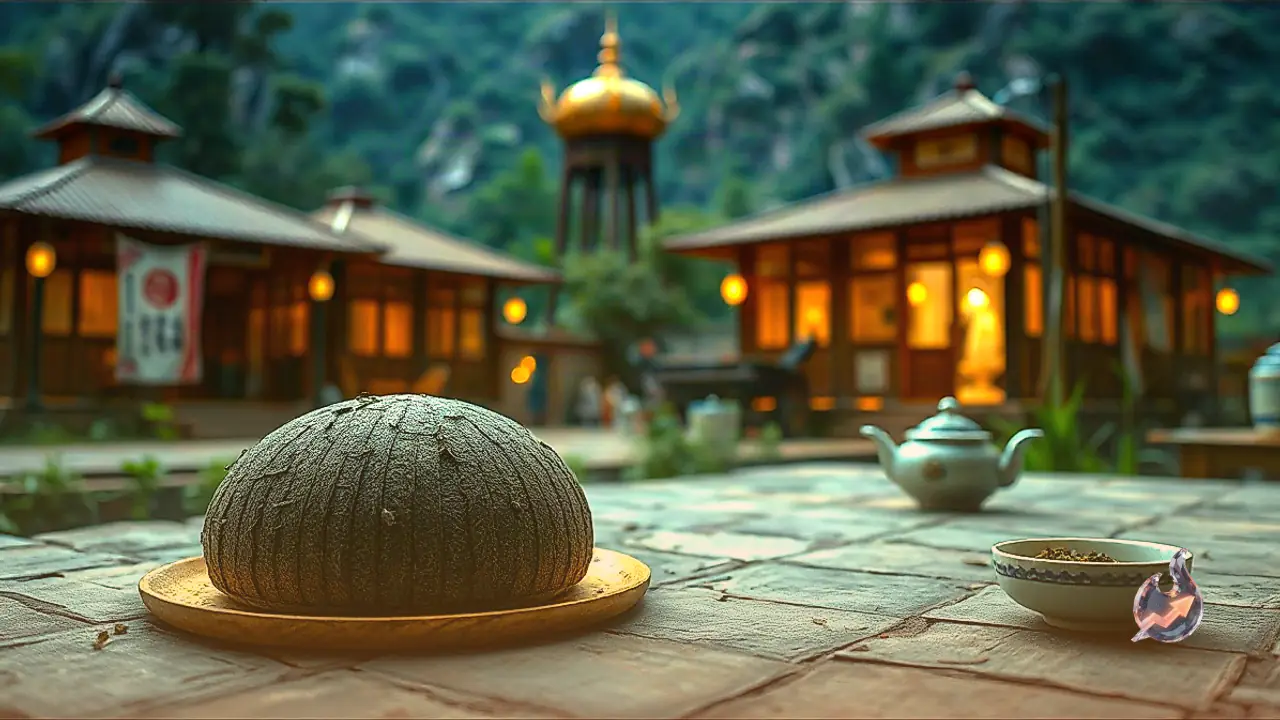
Bidyanand Barkakoty, advisor to the North Eastern Tea Association or NETA, explained that Puer tea is traditionally a fermented variety crafted in China's Yunnan province. It is primarily derived from the large leaves of Camellia sinensis, specifically the assamica variety. Puer tea is traditionally shaped into solid blocks resembling cakes or bricks. The extended fermentation and aging processes allow it to develop a distinct flavor profile and a rich aroma that sets it apart from standard teas.
Opening Doors for Falap Tea
Barkakoty added that the successful commercialization of Puer tea at the Guwahati Tea Auction Centre will soon pave the way for featuring Phalap tea through public auction platforms. Phalap represents a traditional tea variety brewed by the Singpho community residing in Tinsukia and Margherita regions of Assam. It is likewise crafted using large leaves of the assamica variety of Camellia sinensis. Although domestic market demand for this specialty tea remains modest at present, such unique regional brews are gradually gaining wider acclaim.
The Unique Production Steps
The method involved in crafting this specialty tea relies on traditional techniques that give it its distinctive market value
- Large tea leaves are carefully harvested and lightly pan-fried to regulate moisture levels and control enzyme activity within the foliage.
- The treated leaves are subsequently packed tightly inside hollow sections of bamboo, forming the most distinctive step of the entire procedure.
- The stuffed bamboo cylinders are then slowly roasted over an open fire, infusing the leaves with a delicate smoky and woody flavor profile.
- Following successful processing, the tea is stored for a specific duration to allow its aroma and taste characteristics to mature further.
It is precisely this elaborate and meticulous preparation process that generates the exceptional taste profile, driving up the market value of this rare tea variety significantly.