
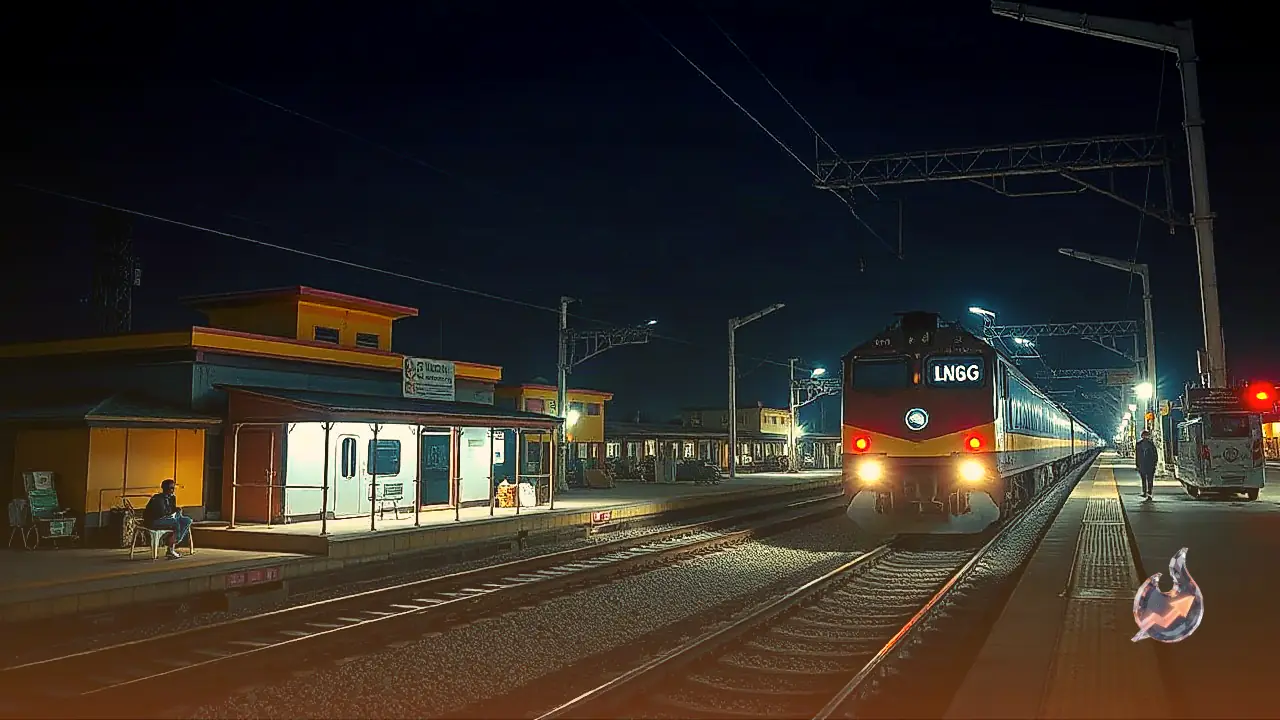




















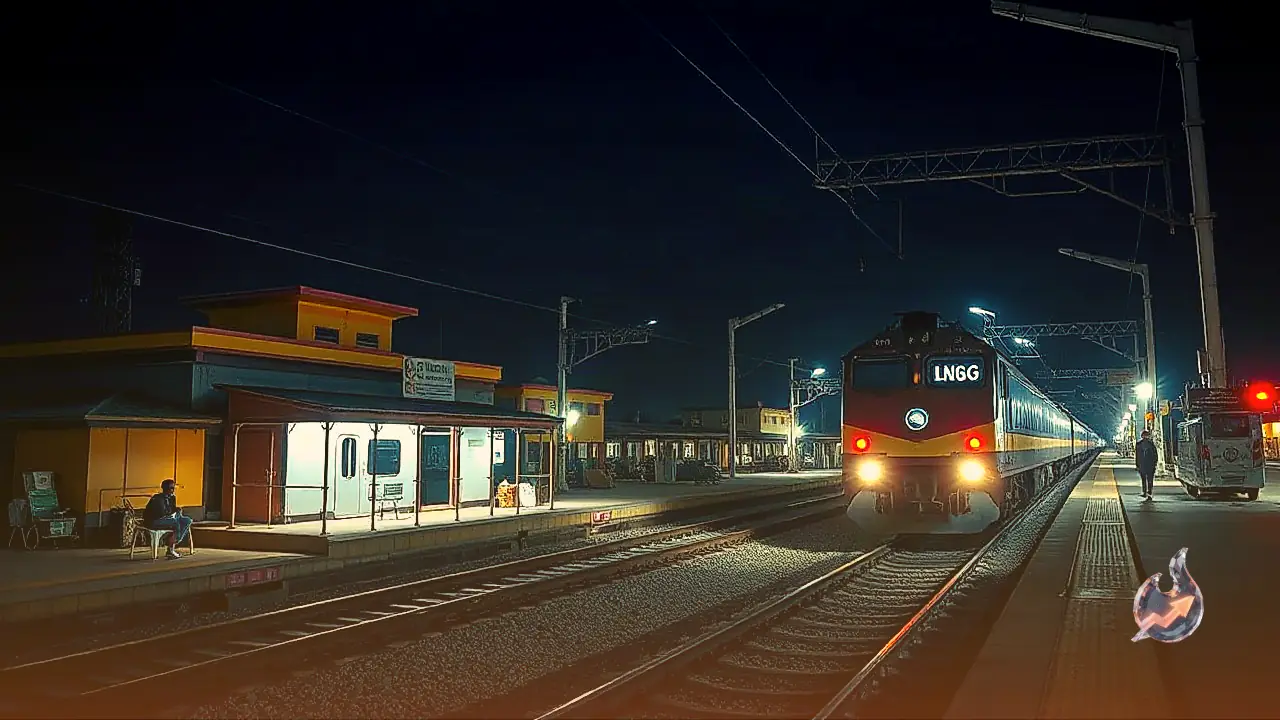

Indian Railways is taking a major leap toward sustainable, clean, and cost-effective train operations with the introduction of the nation's first Liquefied Natural Gas (LNG) fueled train. Union Minister of Home Affairs and Cooperation Amit Shah is scheduled to formally flag off this inaugural service from Sabarmati railway station in Gujarat on Sunday. The initiative underlines a critical shift in the national transporter's energy strategy, aimed at drastically lowering heavy reliance on traditional diesel fuel while adopting cleaner alternative energy sources.
Integration of Dual-Fuel Technology in Driving Power Cars
For the first time in the history of Indian rail infrastructure, a driving power car (DPC) has been successfully retrofitted with an advanced LNG-based fuel delivery system. This technological breakthrough grants the power car dual-fuel capabilities, allowing the locomotive engine to run on a flexible combination of Liquefied Natural Gas and standard diesel fuel. Should LNG supply run out or become unavailable along a route, the system is designed to seamlessly switch back to standard diesel mode without halting the train or interrupting power delivery, providing maximum operational redundancy.
Extensive 2,000 km Field Trials on 1400 HP Locomotives
To bring this project from concept to reality, two 1400 HP capacity driving power cars (DPCs) were fully converted to the LNG dual-fuel framework. Before approving the technology for passenger operations, railway engineers subjected the modified units to rigorous line testing. The converted DPCs successfully completed comprehensive field trials covering over 2,000 kilometers under varied running conditions. Throughout the testing phase, experts carefully monitored fuel combustion efficiency, engine thermal stability, hauling capacity, and long-term mechanical reliability, all of which met stringent safety and operational benchmarks.
Significant Cost Reduction and Projected Annual Savings of ₹25 Lakh
Incorporating LNG into the fuel mix delivers substantial economic advantages. Because natural gas is generally available at a lower price point than diesel fuel, partial substitution cuts operating overhead directly. Data collected during the extensive field trials indicates that each converted DPC is expected to generate operational cost savings of approximately ₹25 lakh per year. Scaling this dual-fuel implementation across wider regional routes could save Indian Railways crores of rupees annually while simultaneously reducing national foreign exchange expenditure on crude oil imports.
2,200-Liter Custom Storage Tank for 1,600 km Operational Range
Under the standardized engineering design, each upgraded DPC is equipped with an integrated high-capacity LNG storage tank capable of holding roughly 2,200 liters. This accommodates between 850 kg and 900 kg of usable LNG per refueling cycle. When fully charged with gas, the system provides enough fuel to operate the train continuously for approximately 1,600 kilometers. This extended operational range reduces the need for frequent refueling stops at intermediate depots, streamlining train scheduling and improving overall fleet productivity.
Uncompromised Engine Power Output and Future Outlook
The dual-fuel conversion system has been meticulously engineered to preserve the exact horsepower, pulling strength, and speed profiles of traditional diesel engines. Drivers and engineers experience no drop in locomotive torque or operational responsiveness when switching between fuel modes. Indian Railways considers the successful deployment of LNG dual-fuel technology a foundational milestone that will help construct a cleaner, more resilient, and environmentally responsible rail transport network for the future.