























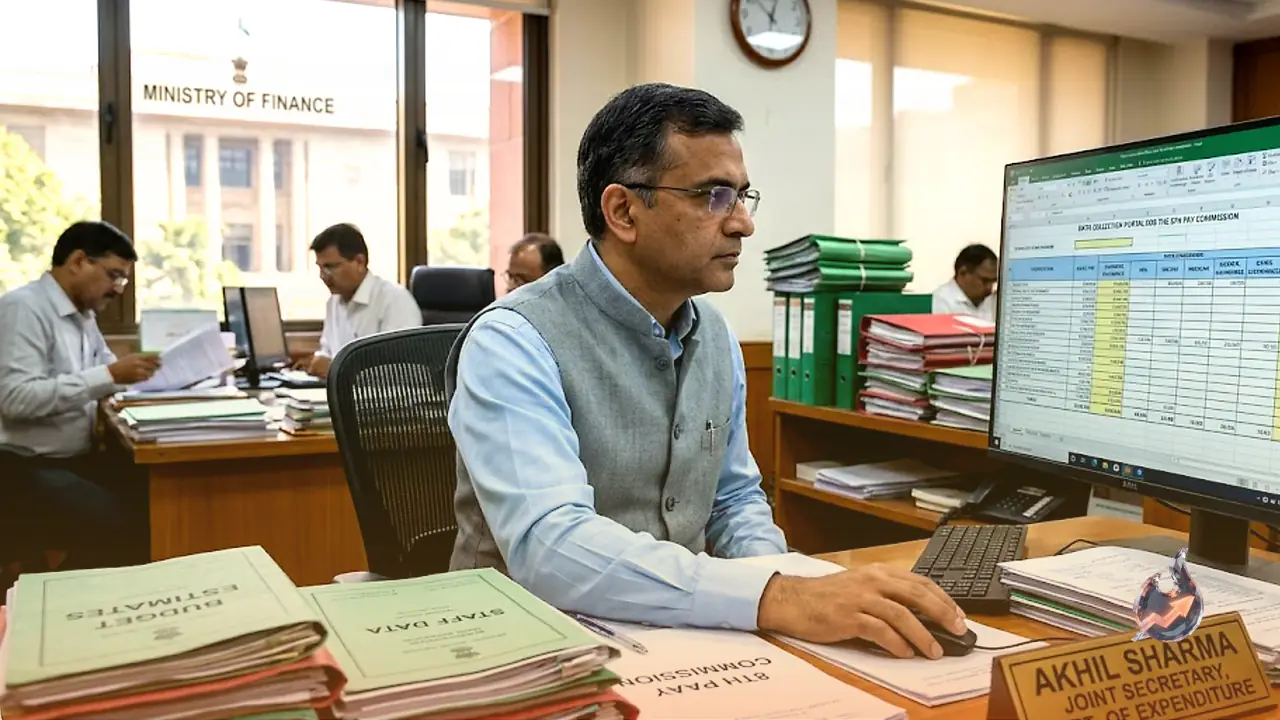

There is significant news for government employees tied to the 8th Pay Commission. The panel has decided that before recommending any change in salaries or allowances, it first wants a complete picture of how much the government is spending on its workforce right now. With that aim, the commission has asked all ministries and organisations to upload every detail about employee pay and allowances to their online data portal by June 30. The straightforward goal is to build a single digital database that can be used as the basis for its recommendations.
A full account of the last three financial years
The commission has also asked ministries and departments for detailed expenditure figures for three financial years, namely 2022-23, 2023-24 and 2024-25. The numbers must reveal how much was spent on salaries and various allowances at every pay matrix level, from Level 1 to Level 18. Notably, the commission does not want to stop at basic salary alone; it is keeping a close watch on the total spending across different heads as well.
The information that has to be submitted
The details sought include basic pay and military service pay (where applicable), dearness allowance (DA), house rent allowance (HRA), transport allowance (TPTA), risk and hardship allowance, running staff allowance for railway employees, non-practising allowance (NPA) and the other allowances paid to employees. In addition, the total expenditure on allowances for each financial year has to be reported separately.
An early but crucial step
Gathering this kind of data is considered one of the earliest and most important steps a pay commission takes before finalising any recommendation. By closely studying how much the government currently spends at different pay levels, the commission will be able to gauge the economic impact of the changes that lie ahead. This very information will help it frame suggestions on revised pay scales, allowances, overall government spending and long-term financial stability.
What comes after the data is collected
Given the sheer volume of figures involved, the commission may extend the deadline if required. Once the data collection is complete, the panel is expected to begin analysing the numbers before moving to the next stage of work on its report.