






















In Purnia, Bihar, makhana has grown from a local crop into a genuine identity. Known widely as a superfood and as white gold, it has moved beyond Purnia to build recognition abroad. That global appeal has pushed large numbers of farmers into cultivating makhana on a big scale. Yet prices for the crop swing constantly, and this season farmers are visibly anxious about how much profit they will actually see.
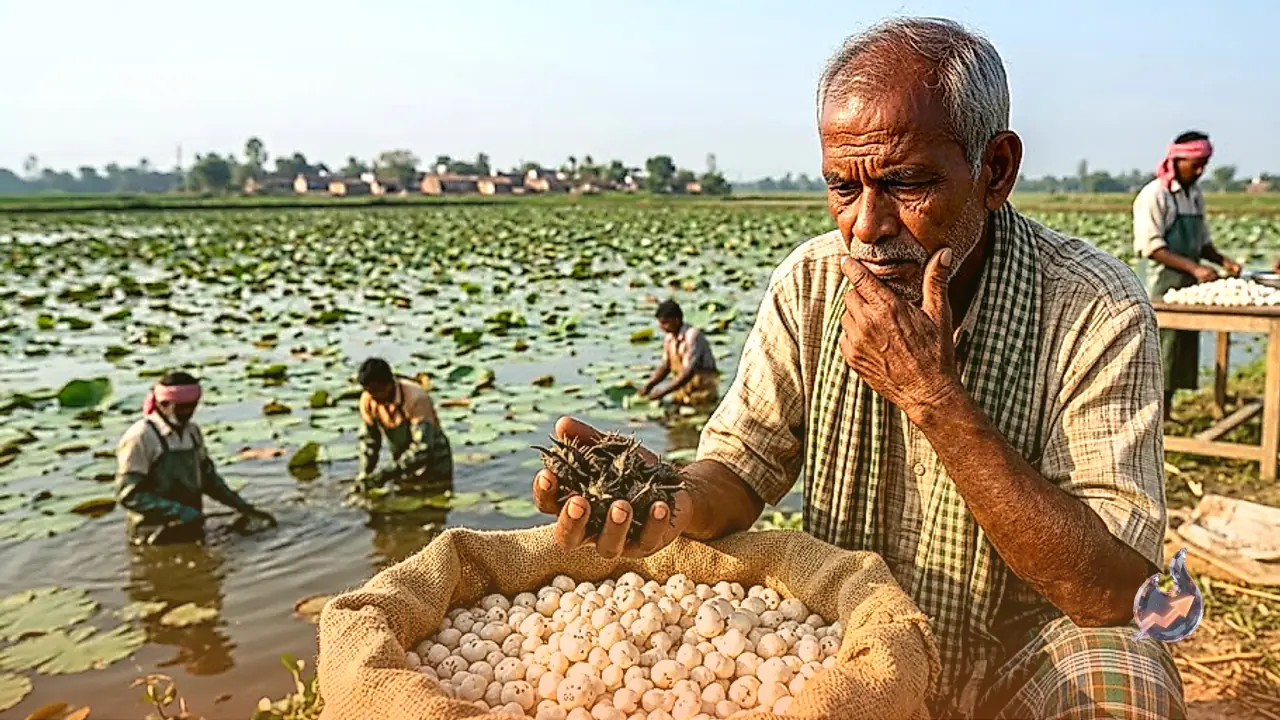
The white makhana laba seen in markets and homes does not arrive there easily. Behind it lies punishing labour and real risk for the farmers and workers who grow it. Pulling makhana out from among thorns submerged deep in water is genuinely difficult work, and labourers on site say it regularly leaves scratches on their hands. That is why those who work the fields consider makhana farming among the riskiest kinds of farming there is.
How raw guriya becomes white makhana
About six months after planting, the raw makhana crop, known as guriya, is pulled out of the water. It is then cleaned thoroughly before being taken to a makhana processing unit, where it goes through several stages. First it is dried in the sun, then heated over a sand fire. After that, it is beaten according to size to crack the guriya open, at which point the white makhana laba is finally ready. This processed makhana is then sold in the market.
Guriya price stuck at Rs 21,000 a quintal
The price of the raw guriya is what ultimately determines how much profit farmers make from the finished white makhana. Farmers, along with the labourers and traders who extract and sell the raw guriya, said that in earlier seasons the price of the black raw guriya used to stay high. This time, though, the price has dropped, and raw guriya is currently selling at Rs 21,000 per quintal. Workers present at the site, including Khairu, Waseer, Sumit and Mojim, said farmers growing makhana this season are worried about their profits.
More farmers, more output, but not enough demand
According to the farmers and labourers, the number of people taking up makhana farming keeps rising. That has pushed production higher without a matching rise in consumption. With supply outpacing demand, this imbalance could end up causing losses for makhana farmers this season. In other words, the very crop that has earned a superfood reputation abroad is now leaving the farmers who grow it uncertain about their returns.