























Once the signature crop of the kharif season in Madhya Pradesh's Vindhya region, soybean is increasingly becoming a source of worry for farmers. Repeated losses over the past few years, thinning profit margins and unpredictable weather have pushed many growers away from it, and that is exactly why the area under soybean cultivation in the region has shrunk. Yet agriculture specialists believe the same crop can become profitable again if it is grown the scientific way.
According to farm advisor Avnish Patel, the key to a better harvest is for farmers to cultivate thoughtfully and with a clear plan. Successful soybean farming rests on three things: choosing the right variety, the method of sowing, and the geography of the field. Whether the land is level or uneven, and whether there is a risk of waterlogging, should all be assessed before selecting the seed.
What to check before choosing your seed
Avnish Patel says soil quality, the natural resources available on the farm and the size of the land should not be ignored while deciding on a seed. For higher-altitude areas, early-maturing varieties are better suited. For such places, JS-2034, JS-2029 and JS-9560 are considered the better choices, ripening in just 80 to 85 days.
Among the medium-duration varieties, JS-2098 and JS-2172 are seen as profitable for farmers. These mature in 90 to 95 days and have the capacity to yield up to 20 to 25 quintals per hectare.
Why the ridge-and-furrow method pays off
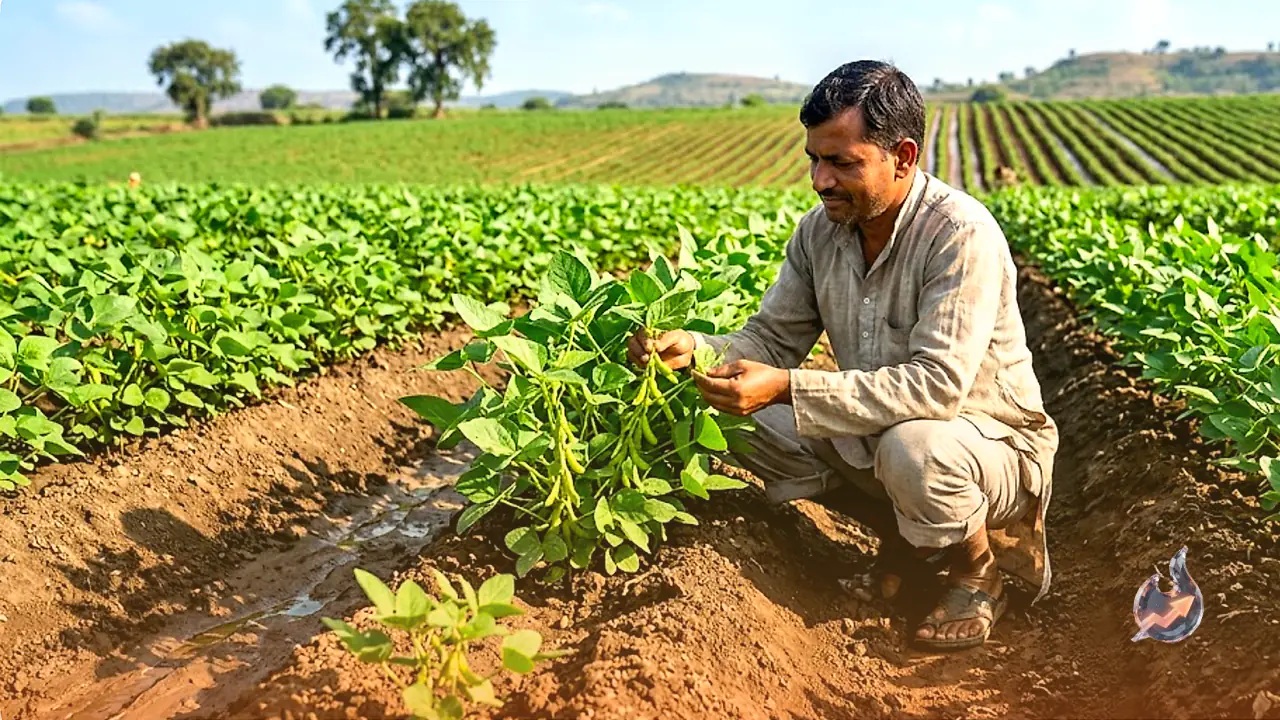
Agricultural scientist Shailendra Gautam says that for a bigger yield, farmers should sow soybean using the ridge-and-furrow method. The technique uses a special seed drill that forms ridges in the field as it sows, with the seeds dropping onto the top of each ridge.
The biggest advantage of this approach is that even when rainfall is excessive, the plants stay protected from waterlogging. Because they sit on top of the ridge, the risk of rot and fungus is greatly reduced. At the same time, the water that collects in the furrow keeps supplying moisture to the plants whenever they need it. That is why the crop stays safe whether the rain is too little or too much. Experts say that by adopting modern technology, farmers can get a better harvest at lower cost and raise their income.