






















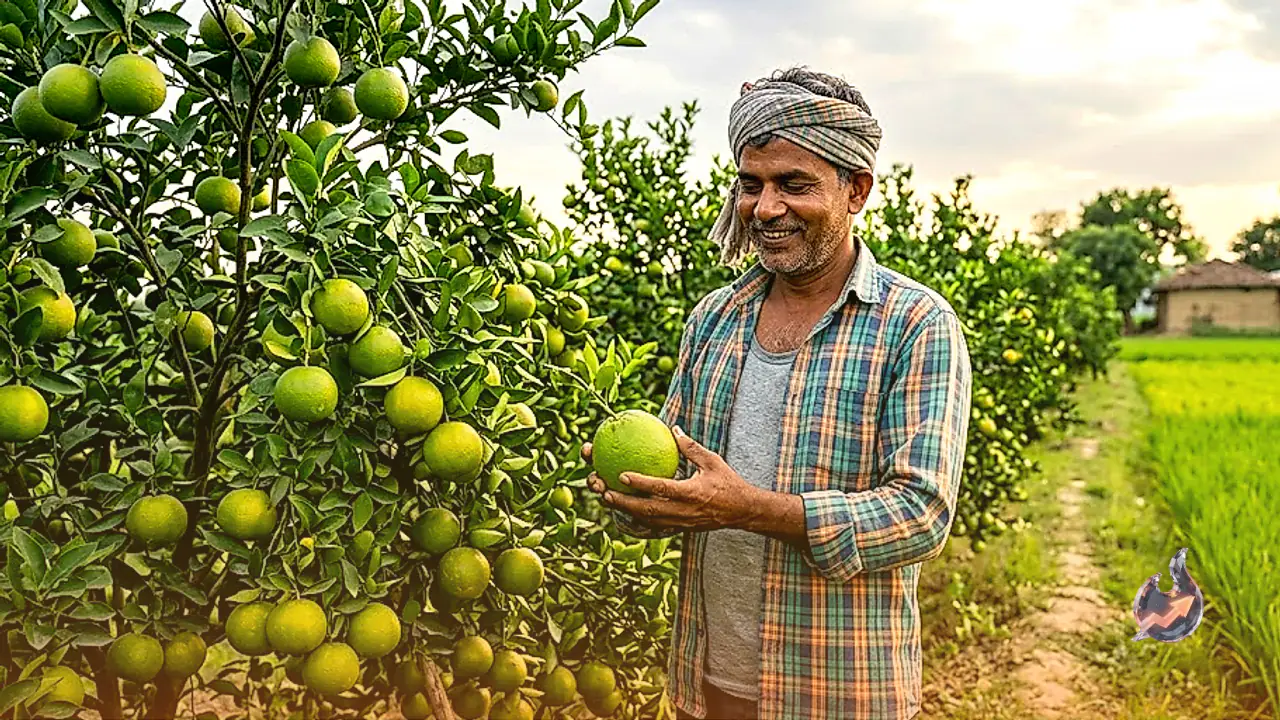

Agricultural practices in rural Bihar are witnessing a refreshing shift as cultivators move beyond conventional cash crops and green vegetables to embrace innovative horticulture. In the Chhapra district, alongside traditional orchards of mango, guava, and banana, farmers are now successfully growing top-quality sweet lime, known locally as mosambi. This impressive feat has been brought to life by a dedicated grower in the region.
An Innovative Experiment in Khanpur Village
The story unfolds in Khanpur village, located within the Dariapur block of the district. Progressive farmer Ranjeet Singh utilized his determination and agricultural insights to demonstrate what careful planning can achieve. As an initial trial, he decided to plant mosambi saplings along the unused boundaries and edges of his agricultural fields. Today, those very plants are yielding a rich harvest of juicy fruits that easily surpass commercial varieties in both flavor and quality.
The Training and Nursery Visit That Sparked the Idea
The journey toward this horticultural success began with proper guidance. Ranjeet Singh received valuable agricultural training from scientists at the Manjhi Krishi Vigyan Kendra, where he gained critical knowledge about modern fruit cultivation techniques. Following the training program, a routine visit to a nursery in Hajipur introduced him to healthy mosambi saplings.
Finding them reasonably priced at 50 rupees per plant, he purchased around 15 saplings and brought them back to his village. Approximately two and a half to three years ago, these young plants were carefully set into the soil along the borders of his farmland, setting the stage for his current agricultural milestone.
Superior Taste and Size Compared to Market Varieties
Recalling how the idea developed, Ranjeet Singh mentioned that he originally spotted the plants while visiting the Sonepur Hajipur fair. Now, after a waiting period of nearly two and a half to three years, the trees have produced their very first crop. He noted that while this initial harvest is still modest and experimental, subsequent seasons will yield significantly higher volumes as the trees mature.
Notably, the home-grown mosambi fruits boast a noticeably larger size and a distinctly sweeter natural flavor than the fruits typically imported from outside markets. Encouraged by these promising results, Singh envisions expanding this modest boundary plantation into a full-scale commercial horticulture project in the near future, hoping to inspire other cultivators in the region to follow suit.