





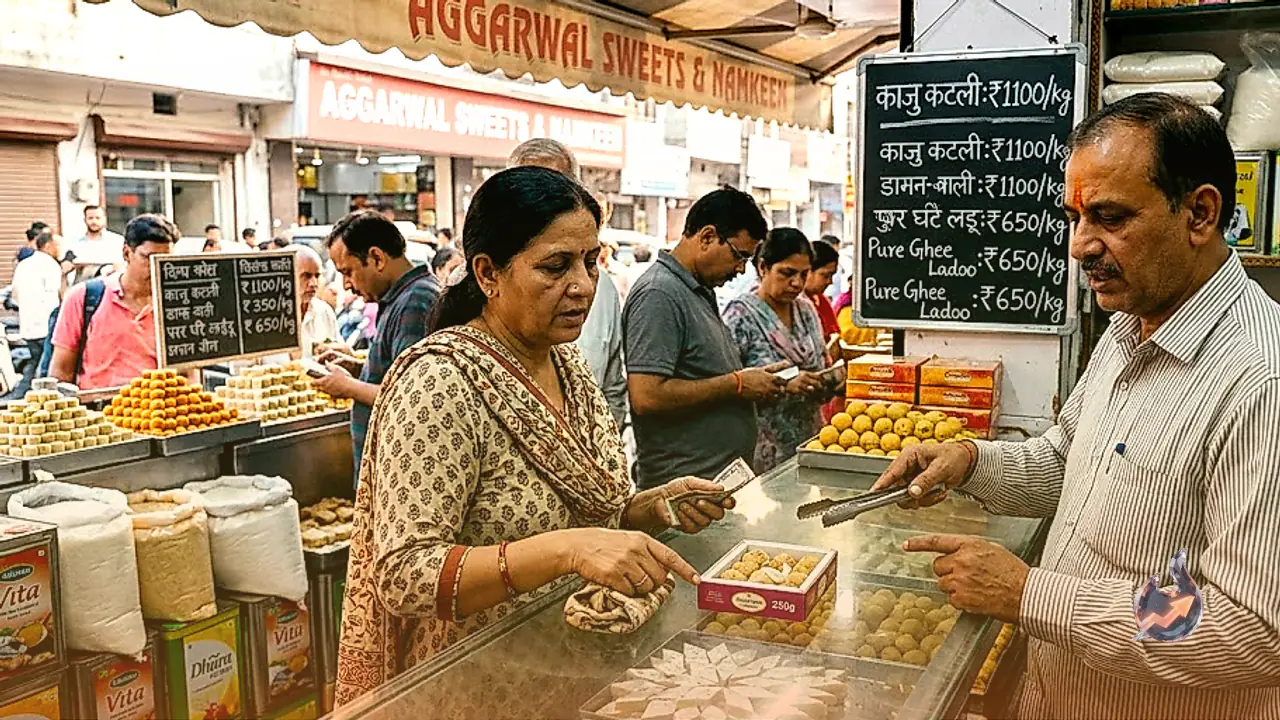

















The upcoming Rakshabandhan and festive season in Ambala is set to hit household budgets hard as surging raw material costs send sweet prices soaring across local markets. While festive cheer is beginning to fill the air, sweet shops are presenting a grim picture for buyers due to steep hikes in the prices of sugar, pure ghee, and dry fruits. Traders report that rising costs of essential ingredients have left them with no choice but to raise prices, which in turn has severely impacted their sales as customers cut down their purchases from a full kilo to just half a kilo.
With the festive season kicking off around Rakshabandhan, demand for traditional sweets, dry fruits, and other edible items has spiked in the markets. However, the sweetness of the celebrations is being heavily overshadowed by inflation. Escalating rates of sugar alongside cashews, almonds, raisins, pistachios, and ghee have disrupted the financial planning of both shopkeepers and ordinary households, making festive preparations an expensive affair.
Wholesale Sugar Prices Reach Unprecedented Highs
Elaborating on the situation, Vikash, a local sugar trader with nearly 25 years of experience in the industry, stated that he has never witnessed such a massive price surge before. According to him, wholesale sugar prices have touched approximately 65 rupees per kilo. A truckload of sugar that previously cost around 1.5 million rupees is now priced between 2.2 million and 3 million rupees.
Vikash pointed out that a major catalyst behind the soaring sugar prices is market panic and hoarding. As rumors spread among people that sugar was bound to get even more expensive, consumers began buying well beyond their actual needs. Those who only required 5 kilos ended up hoarding up to 50 kilos at home. This sudden surge in artificial demand put immense upward pressure on market prices.
Crop Production and Ethanol Dynamics
Additionally, poor sugarcane quality and reduced overall output have heavily impacted sugar production this season. The lower juice content extracted from sugarcane has directly affected supply. While market discussions often attribute the rising sugar rates to ethanol production, Vikash clarified that direct sugar is not being used for ethanol. Instead, ethanol production utilizes sugarcane juice and associated byproducts. He expressed optimism that sugar prices might soften in the coming days.
Dry Fruits and Ghee Add to the Financial Burden
The dry fruit market is facing a similar inflation wave. Driven by high demand ahead of Rakshabandhan, almond kernel prices have jumped by roughly 100 to 150 rupees per kilo. Affected supply chains and increased handling costs have driven these rates higher, with traders warning that if the trend continues, almond kernels could soon hit 1,250 rupees per kilo.
Prices for cashews, raisins, and pistachios have climbed as well. Compounding the issue for confectioners, ghee and refined oil prices have witnessed an astonishing spike of up to 500 rupees. Higher packaging and box costs have added an extra financial burden on commercial operators.
Gurमीत सिंह, a local sweet vendor, explained that inflated prices of sugar, ghee, and dry fruits have continuously pushed up the cost of manufacturing sweets. Where customers previously bought a full kilo of sweets, they are now managing with just half a kilo. While hiking prices is unavoidable for vendors, it has directly dampened overall sales volumes.
The sting of inflation has reached deep into domestic kitchens. Ramesh Malhotra, a local resident, noted that while personal incomes have remained stagnant, everyday commodities continue to get costlier, making it extremely difficult to afford festive treats. He appealed to the authorities to take strict steps to control rising prices.
Echoing similar struggles, Sukhविंदर Singh, a daily wage worker, shared that managing daily expenses has become an uphill battle. With everything getting expensive during the festive season while wages remain unchanged, buying sweets for Rakshabandhan feels nearly impossible for working-class families this year.