






















The Indian institutional real estate market has demonstrated remarkable resilience, achieving its most significant performance in recent years despite a challenging global economic climate. Data from JLL India reveals that institutional investment reached $4.33 billion during the January-June 2026 period, representing a 23% year-on-year growth. This timeframe also saw a record-breaking 54 transactions, the highest volume of deals in the nation’s history of real estate investment.
The Rise of Domestic Capital
A defining trend of H1 2026 is the substantial shift in funding sources. Domestic institutional capital now commands a record 64% of the total investment share, with local investors deploying $2.8 billion during these six months. This surge was primarily fueled by domestic private equity funds and REITs, which accounted for 72% of all domestic deployment. Furthermore, equity investments made up 83% of the total domestic capital, signaling a clear move away from the debt-equity balance that previously defined the market landscape.
Foreign Investor Cautiousness
While domestic participation has grown, foreign investors have adopted a more defensive strategy. Foreign institutional investment declined by 37% compared to the previous year, hindered by global macroeconomic uncertainty and inflationary pressures. Consequently, foreign capital’s contribution to total investment dropped to 36% in H1 2026, a stark contrast to the 98% share recorded in 2020, highlighting a significant rebalancing in the composition of real estate funding in India.
Lata Pillai, Senior MD and Head of Capital Markets at JLL India, believes that as geopolitical stabilization occurs, foreign investor interest will likely see an upward trajectory. She anticipates that the combination of a solidified domestic foundation and renewed overseas participation will foster a more balanced and durable investment environment.
Dominance of the Office Sector
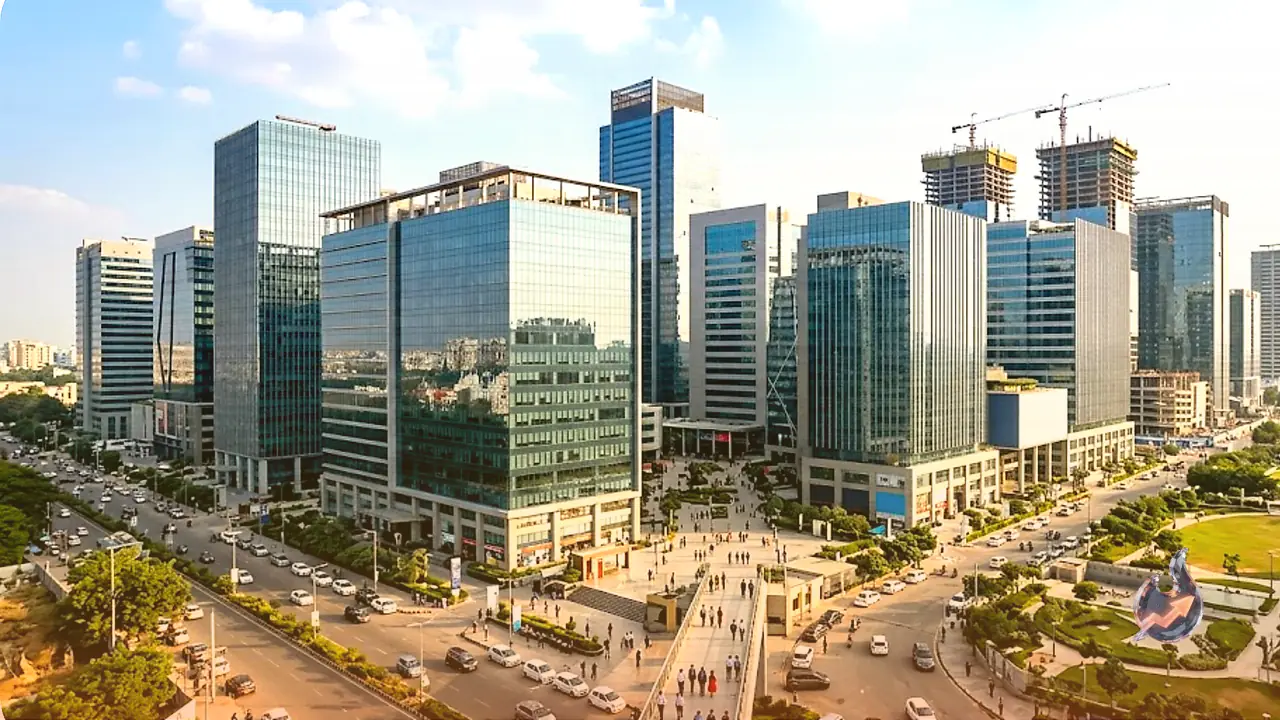
The office sector re-emerged as the primary beneficiary of institutional capital in H1 2026, surpassing residential assets. Investments in office properties climbed 34% year-on-year, totaling $2.3 billion across 17 distinct transactions, which accounts for 54% of the overall investment volume. Domestic investors were the main participants here, contributing 89% of the total office investment volume.
Industry experts attribute this sector's robust performance to several strategic factors, including the continued expansion of the Global Capability Centre (GCC) ecosystem, the sustained trend of employees returning to office spaces, and competitive rental yields ranging between 7.8% and 8%. These factors provide institutional investors with stable income streams during a period of interest rate volatility.
Geographic and Structural Shifts
Geographically, Bengaluru and Chennai attracted 34% of the total institutional capital, supported by large-scale commercial and technology-focused real estate acquisitions. Diversification also remained a priority, with non-core assets such as data centers and logistics accounting for 57% of the total investment volume during the half-year period.
Additionally, the average deal size saw a notable contraction, falling 40% from $133 million in the previous year to $80 million in H1 2026. This reflects a strategic risk-calibrated approach where investors are spreading capital across multiple deals rather than relying on massive single-asset transactions. Saurabh Rathi, Co-Head of Real Estate Funds at Motilal Oswal Alternates, noted that strong occupier demand and improved asset performance continue to underpin investment confidence. As geopolitical tensions subside, the sector is expected to maintain its long-term growth trajectory throughout the remainder of 2026.